
Catalogue Search | MBRL


Are you sure you want to remove the book from the shelf?

{{itemTitle}}
79
result(s) for
"Lebanon Fiction."
Sort by:

Season of Betrayal
Snipers, shelling, car bombs, suicide attacks. This is Beirut 1983, and Lara McCauley is an outsider in a city at war. Against this chaotic canvas, Lara tries to hold her marriage together, but her life is quietly falling apart. Lara and Mac arrive to take up his new posting, not long after the Marines are sent in as peacekeepers to help restore stability in this fractured land, but the Marines quickly become embroiled in Lebanons political problems. Her husband, Mac, an American journalist, has his hands full with work and a new circle of comrades in arms at the Commodore Hotel. Lonely and scared, Lara increasingly seeks out the friendship of a Polish journalist, and their desperate affair sets into motion events with unforeseen, fatal consequences. A crisp, clear, tough voice reminiscent of Joan Didions journalism. Her portrait of Beirut -- at once vivid and meticulous -- displays a reporters gift for detail.--Wall Street Journal A captivating journey into war-torn Beirut--Anderson Cooper ..An exceptional first novel...--Library Journal (Starred Review).
eBook


Post-War Anglophone Lebanese Fiction
This book examines the phenomenon of the post-civil war Anglophone Lebanese fictional narrative. The texts chosen for study have been produced in, and are substantially about, life in exile. They therefore deal not only with the brutal civil strife in Lebanon (1975-1990) but with one of its crucial and long-standing by-products: expatriation. Syrine Hout shows how these texts characterise a distinctly new literary and cultural trend and have founded an Anglophone Lebanese diasporic literature. The authors discussed in the book are Rabih Alameddine, Tony Hanania, Rawi Hage, Nada Awar Jarrar, Patricia Sarrafian Ward and Nathalie Abi-Ezzi. In her exploration of their writings Hout teases out the different meanings and reformulations of home, be it Lebanon as a nation, a house, a host country, an irretrievable pre-war childhood, a state of in-between dwelling, a portable state of mind, and/or a utopian ideal.
eBook

The broken wings (illustrated) : poetic romance novel
\"A tale of tragic love, set in-turn-of-the-century Beirut. The book highlights many of the social issues of the time in the Eastern Mediterranean, including religious corruption, the lack of rights of women, and the weighing up of wealth and happiness.\" -- back cover.
Book

Imagining the Mediterranean Again and Again: Touristic Imaginaries of the Mediterranean Sea, and How It Appears from a Lebanese Literary Perspective
In this article, I analyze the contemporary literary narratives that capture and (re)construct Lebanese imaginaries of the Mediterranean and compare these imaginaries to the ways in which tourists imagine and describe the Mediterranean and its coasts. My aim is to explore the Lebanese multifaceted local perceptions of the Mediterranean, which is viewed not only as sublime and life-giving but also as perilous and polluted. To this end, I analyze four texts: Lost in Beirut: A True Story (2021) by Ashe and Magdalena Stevens, Between Beirut and the Moon (2020) by A. Naji Bakhti, Spring Rain (2020) by Andy Warner, and “The Sea Closes at 7:00” (2022) by Sabah Ayoub. By juxtaposing these narratives with those constructed from a tourist perspective—or targeted toward tourists—I seek to illustrate how the generalized imaginary of the Mediterranean as a tourist haven fails to align with the Lebanese perspective, and how it is adapted to suit the unique reality of Lebanon. This reality often diverges significantly from the Mediterranean experience as rendered by the tourist industry of the Global North.
Journal Article


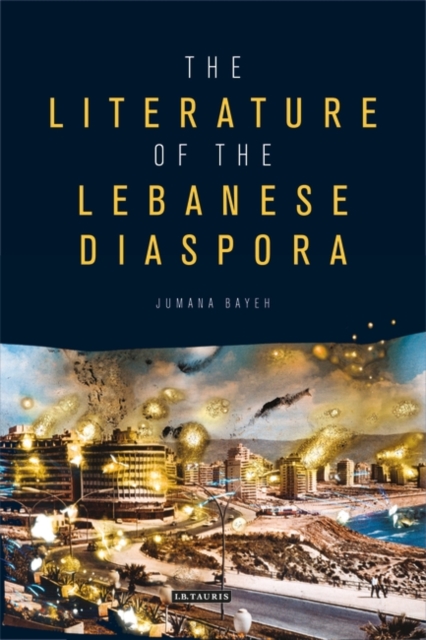
The Literature of the Lebanese Diaspora
The Lebanese civil war, which spanned the years of 1975 to 1990,caused the migration of hundreds of thousands of Lebanese citizens, many of whom are still writing of their experiences. Jumana Bayeh presents an important and major study of the literature of the Lebanese diaspora. Focusing on novels and writings produced in the aftermath of Lebanon's protracted civil war, Bayeh explores the complex relationships between place, displacement and belonging, and illuminates the ways in which these writings have shaped a global Lebanese identity. Combining history with sociology, Bayeh examines how the literature borne out of this expatriate community reflects a Lebanese diasporic imaginary that is sensitive to the entangled associations of place and identity. Paving the way for new approaches to understanding diasporic literature and identity, this book will be vital for researchers of migration studies and Middle Eastern literature, as well as those interested in the cultures, history and politics of the Middle East.
eBook