
Catalogue Search | MBRL


Are you sure you want to remove the book from the shelf?

{{itemTitle}}
451
result(s) for
"Legal stories."
Sort by:

Sing a worried song
Everything is going well for Arthur Beauchamp in his early middle age. Life is so good for the top-notch defence lawyer that, in a moment of career restlessness, he decides to switch sides, just the once, and prosecute a young man charged with murdering a clown. Beauchamp is confident he can prove Randolph Skyler is guilty. Confident, but still worried and surprisingly blind to how precarious the evidence is--and, worse, to the fissures opening in his personal life. It's a case Beauchamp will never forget, not even years later, when he's happily remarried and retired to a bucolic life on Garibaldi Island in the glorious Salish Sea. As Beauchamp is about to learn, the older you get, the greater the chance is that the past will come back to bite you. In Deverell's latest marvel in his Beauchamp series, Arthur has causes aplenty to sing a worried song.
Book

Troubled Legacies
Last wills and testaments create tensions between those who inherit and those who imagine that they should inherit. As Victorian, modern, and contemporary novels amply demonstrate, seldom is more energy expended than at the reading of a will. Whether inheritances bring disappointment or jubilation, they create a pattern for the telling of stories, stories that involve the transmission of legacies – cultural, political, and monetary – from one generation to the next. Troubled Legacies examines these narratives of inheritance in British and Irish fiction from 1800 to the present.
The essays in this collection set out to juxtapose legal and novelistic discourse. This reading of literature against law produces intriguing and often provocative assertions about the specific relationship between novels and inheritance. As the contributors argue, novels reinforce property law, an argument bolstered by the examples of women, workers, Jews, and Irishmen dispossessed of their rights and unable to claim their cultural inheritances. Troubled Legacies thoroughly examines the connection between narrative and claims to legal entitlement, a topic that has not, to date, been comprehensively broached in literary studies.
eBook
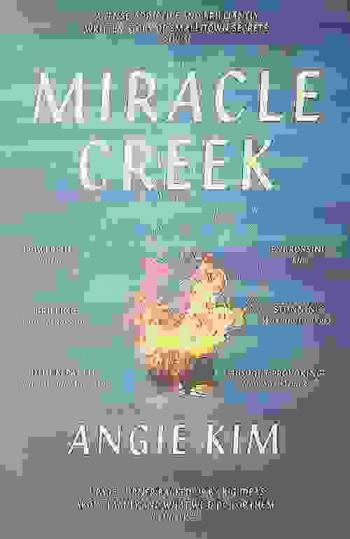
Miracle Creek
In rural Virginia, Young and Pak Yoo run an experimental medical treatment device known as the Miracle Submarine: a pressurized oxygen chamber that patients enter for \"dives\", used as an alternative therapy for conditions including autism or infertility. But when the Miracle Submarine mysteriously explodes, killing two people, a dramatic murder trial upends the Yoos' small community. Who or what caused the explosion? Was it the mother of one of the patients, who claimed to be sick that day but was smoking down by the creek? Or was it Young and Pak themselves, hoping to cash in on a big insurance payment and send their daughter to college? The ensuing trial uncovers unimaginable secrets from that night-trysts in the woods, mysterious notes, child-abuse charges-as well as tense rivalries and alliances among a group of people driven to extraordinary degrees of desperation and sacrifice.

The Legal Thriller from Gardner to Grisham
This book offers a critically informed yet relaxed historical overview of the legal thriller, a unique contribution to crime fiction where most of the titles have been written by professionals such as lawyers and judges.
eBook

Against the law
Fresh out of prison, former lawyer Edward Hall thinks his days in the courtroom are behind him. Until his sister, Dr. Amy Hall, is arrested for murder. She's accused of shooting the ex-husband she supposedly reconciled with and is convinced that her ex-convict brother is the only one able to save her. To make matters worse, the media won't ignore Amy's high profile case; an example needs to be made of a doctor murdering another doctor. So Edward promises to do everything he can to protect his sister, because she is innocent, isn't she?
Book

Reading for the Law
Taking her title from the British term for legal study, \"to read for the law,\" Christine L. Krueger asks how \"reading for the law\" as literary history contributes to the progressive educational purposes of the Law and Literature movement. She argues that a multidisciplinary \"historical narrative jurisprudence\" strengthens narrative legal theorists' claims for the transformative powers of stories by replacing an ahistorical opposition between literature and law with a history of their interdependence, and their embeddedness in print culture. Focusing on gender and feminist advocacy in the long nineteenth century,Reading for the Lawdemonstrates the relevance of literary history to feminist jurisprudence and suggests how literary history might contribute to other forms of \"outsider jurisprudence.\"
Krueger develops this argument across discussions of key jurisprudential concepts: precedent, agency, testimony, and motive. She draws from a wide range of literary, legal, and historical sources, from the early modern period through the Victorian age, as well as from contemporary literary, feminist, and legal theory. Topics considered include the legacy of witchcraft prosecutions, the evolution of the Reasonable Man standard of evidence in lunacy inquiries, the fate of female witnesses andpro selitigants, advocacy for female prisoners and infanticide defendants, and defense strategies for men accused of indecent assault and sodomy. The saliency of the nineteenth-century British literary culture stems in part from its place in a politico-legal tradition that produces the very conditions of narrative legal theorists' aspirations for meaningful social transformation in modern, multicultural democracies.
eBook

Face value : a Rachel Gold mystery
When her genius Asperger's syndrome colleague rules a friend's suspicious death a homicide in spite of police opinions, St. Louis attorney Rachel Gold investigates clues that lead her into the heart of a dark criminal enterprise.
Book

Justice Denoted
White provides the most comprehensive scholarly compilation of fictional work of legal suspense in existence. Primarily a bibliography of novels, it also annotates plays, scripts for film and television, novelizations, and short-story collections about lawyers and the law. The idea behind the principal of selection is to disdain labels that reduce the variety of the legal thriller to a subgenre of mystery fiction. Novels that range from suspense thrillers through science fiction to the philosophical novel are included if justice is thematically important. It is therefore an eclectic reference source beyond a compilation of books about lawyers as protagonists. Its biographical and scholarly information about authors, major and minor, and their novels or works is traditionally encyclopedic and objective regardless of whether the work has been genre-defined, or worse—deified as a classic or denigrated as a bestseller. Many novels included are long out of print, but historically interesting for their contribution to the lineage of the courtroom drama, showing that the history of the legal thriller is one of the major branches of modern literature since the Age of Reason. The criterion of justice denoted moves beyond the fact of lawyers and courtrooms to select seminal novels like Robert Travers' Anatomy of a Murder as well as the romantic potboiler. Among the more than 2, 000 works are the Perry Mason novels of Erle Stanley Gardner, John Mortimer's Rumpole series, along with a staple of fiction by major authors of the genre like John Lescroart, Lisa Scottoline, Margaret Maron, Scott Turow, and John Grisham. There are also individual works by Shakespeare, Goethe, Kafka, Camus, and Twain delineating humanity's obsession with the law as its shining prop of civilization and, alternative, béte-noire of the common individual caught up in its maw. The appendices include comments by lawyer-novelist Michael A. Kahn, a historical introduction to the legal thriller, craft notes by writers and prominent trial lawyers responding to author and lawyer questionnaires, bibliography of critical sources and articles, series characters, and the legal terminology found in courtroom dramas and novels. An essential reference tool for scholars, researchers as well as the occasional reader of legal thrillers.
eBook


Practice extended
Written by a renowned literary critic and legal historian,Practice Extendedilluminates the intricacies of legal language and thought and the law's relationship to society, literature, and culture. Robert A. Ferguson details how judicial opinions are written, how legal thought and philosophy inform ideas, and how best to appreciate a courtroom novel. With chapters touching on a wide range of subjects, including immigration, eloquence, the U.S. Constitution, and the Supreme Court case over James Joyce'sUlysses,Practice Extendedprovides an ambitious argument for the importance of language in law and a much-needed analysis of the often vexed relationship between law and literature.
Ferguson challenges the notion of law as a hermetic enterprise only accessible to experts. He reveals the discipline's relationships to history, religion, philosophy, psychology, anthropology, and the visual arts, offering a rich account of how the law has shaped and has been shaped by communal thought. He also recognizes the critical role of literature and other outside views in showcasing the social problems that law takes up.Practice Extendedreflects Ferguson's crucial role as a pioneer in developing the field of law and literature. His writing reminds us of the need for a critical approach to the law that draws on the insights of literature to better understand political and legal history and the documents, laws, and arguments that shape our present. At the same time, this volume also showcases the ways in which the law has been integrated into works of literature, fromBilly Buddto contemporary courtroom thrillers.
eBook