
Catalogue Search | MBRL


Are you sure you want to remove the book from the shelf?

{{itemTitle}}
1,728
result(s) for
"Legends Fiction."
Sort by:

The last
Fearing she may be the last of her kind, Byx sets off to find a safe haven and to see if the legends of hidden dairnes are true.
Book

The Story of the Odyssey
A fantastic retelling of the ancient Greek epic 'The Odyssey' for a young audience, written by English classical scholar Alfred John Church.
eBook

Whittington
Whittington, a feline descendant of Dick Whittington's famous cat of English folklore, appears at a rundown barnyard plagued by rats and restores harmony while telling his ancestor's story.
Book

Old Norse Folklore
The medieval northern world consisted of a vast and
culturally diverse region both geographically, from roughly
Greenland to Novgorod and culturally, as one of the last areas of
Europe to be converted to Christianity . Old Norse
Folklore explores the complexities of thisfascinating world in
case studies and theoretical essays that connect orality and
performance theory to memory studies, and myths relating to
pre-Christian Nordic religion to innovations within late medieval
pilgrimage song culture.
Old Norse Folklore provides critical new perspectives
on the Old Norse world, some of which appear in this volume for the
first time in English. Stephen A. Mitchell presents emerging
methodologies by analyzing Old Norse materials to offer a better
understandings ofunderstanding of Old Norse materials. He examines,
interprets, and re-interprets the medieval data bequeathed to us by
posterity-myths, legends, riddles, charms, court culture,
conversion narratives, landscapes, and mindscapes-targeting largely
overlooked, yet important sources of cultural insights.
eBook

The Devil's Chair
\"In the peaceful setting of the National Trust near Church Stretton, south of Shrewsbury, Tracey Walsh drives herself and her four-year-old daughter Daisy up the remote Burway in the early hours of the morning, tragically [losing] control of her car and [crashing] into the valley below. Tracey is rushed to hospital, but where is Daisy? She has vanished, provoking an intense police search of the area around the Devil's Chair, land that is rife with legends and strange stories of witchcraft, sorcery, and unexplained disappearances\"--Amazon.com.
BOOK

A Calabash of Cowries
A Calabash of Cowries: Ancient Wisdom for Modern Times is a collection of tales featuring the Orishas and the wonders of the natural world. Suitable for adults and children, artists and teachers, readers of all cultures will discover in these retellings of traditional tales a resource that illuminates the mythic and the real, the ancient past and the emerging present. An offering of spiritual wisdom and cultural celebration through stories that have and will continue to endure the test of time.
eBook

The bloody chamber and other stories : Wise children : Fireworks
\"A hardcover omnibus edition of three classic works by British writer Angela Carter: two story collections (The Bloody Chamber and Fireworks) and one novel (Wise Children). A bibliography and chronology and a new introduction by Joan Acocella are included\"-- Provided by publisher.
BOOK
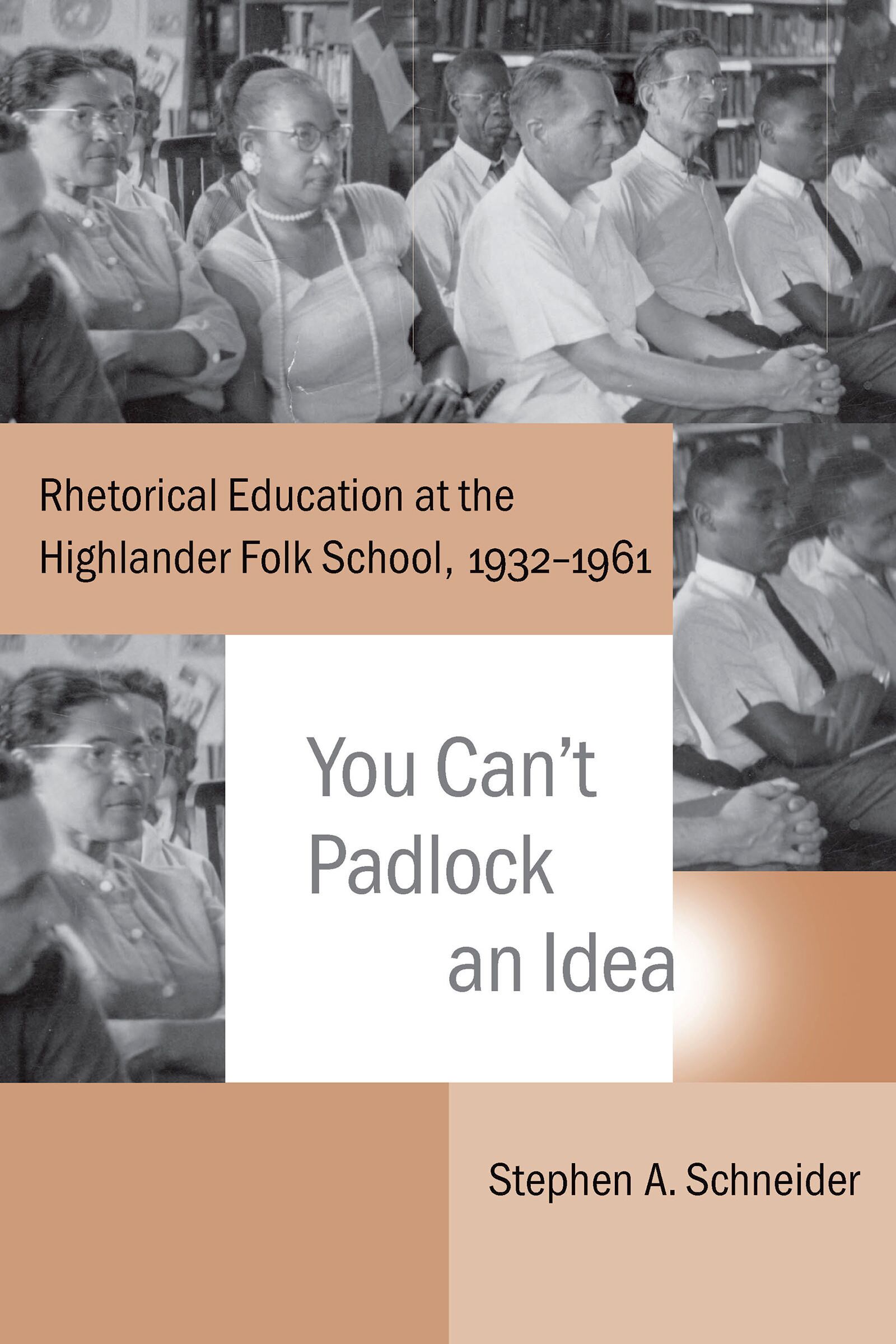
You Can't Padlock an Idea
You Can’t Padlock an Idea examines the educational programs undertaken at the Highlander Folk School in Tennessee and looks specifically at how these programs functioned rhetorically to promote democratic social change. Founded in 1932 by educator Myles Horton, the Highlander Folk School sought to address the economic and political problems facing communities in Appalachian Tennessee and other southern states. To this end Horton and the school’s staff involved themselves in the labor and civil rights disputes that emerged across the south over the next three decades. Drawing on the Highlander archives housed at the Wisconsin Historical Society, the Avery Research Center in South Carolina, and the Highlander Research and Education Center in Tennessee, Stephen A. Schneider reconstructs the pedagogical theories and rhetorical practices developed and employed at Highlander. He shows how the school focused on developing forms of collective rhetorical action, helped students frame social problems as spurs to direct action, and situated education as an agency for organizing and mobilizing communities. Schneider studies how Highlander’s educational programs contributed to this broader goal of encouraging social action. Specifically he focuses on four of the school’s more established programs: labor drama, labor journalism, citizenship education, and music. These programs not only taught social movement participants how to create plays, newspapers, citizenship schools, and songs, they also helped the participants frame the problems they faced as having solutions based in collective democratic action. Highlander’s programs thereby functioned rhetorically, insofar as they provided students with the means to define and transform oppressive social and economic conditions. By providing students with the means to comprehend social problems and with the cultural agencies (theater, journalism, literacy, and music) to address these problems directly, Highlander provided an important model for understanding the relationships connecting education, rhetoric, and social change.
eBook

Melmoth : a novel
\"It has been years since Helen Franklin left England. In Prague, working as a translator, she has found a home of sorts--or, at least, refuge. That changes when her friend Karel discovers a mysterious letter in the library, a strange confession and a curious warning that speaks of Melmoth the Witness, a dark legend found in obscure fairy tales and antique village lore\"-- Provided by publisher.
BOOK
