
Catalogue Search | MBRL


Are you sure you want to remove the book from the shelf?

{{itemTitle}}
5
result(s) for
"Lenin, Vladimir Ilʹich, 1870-1924 Political and social views."
Sort by:

Lenin and the logic of hegemony : political practice and theory in the class struggle
In Lenin and the Logic of Hegemony Alan Shandro traces the emergence of the concept of hegemony in Lenin's engagement with the concrete characteristics of the class struggle in Russia and thereby clarifies how the concept works.
eBook

Lenin's brother : the origins of the October Revolution
Probing the Ulyanov family archives, historian Philip Pomper uncovers Alexander Ulyanov's transformation from ascetic student to terrorist, and the impact his fate had on his younger brother Lenin. Vividly portraying the psychological dynamics of a family that would change history, \"Lenin's Brother\" is a perspective-changing glimpse into Lenin's formative years--and his subsequent behavior as a revolutionary.
BOOK

The Russian Social-Democratic Labour Party, 1899-1904 : documents of the \Economist\ opposition to Iskra and early Menshevism
Much has been written about the activity of Lenin and his colleagues on the editorial board of the Iskra newspaper, whereas little has been said about the opponents of Leninism, who unsuccessfully fought for control of the Russian Social-Democratic Labour Party during the Iskra period. To redress the balance, Richard Mullin has translated 25 documents from this period, most of which express an anti-Lenin view. They include articles from Rabochee Delo, the Jewish Bund's Poslednie Izvestiia and the post-Lenin Iskra, pamphlets by Plekhanov and Martov, the resolutions of Party meetings and some very revealing private correspondence. However, the result is not an anti-Bolshevik polemic: through these documents a clearer, and curiously flattering picture of Lenin's thought and activity is obtained.
eBook
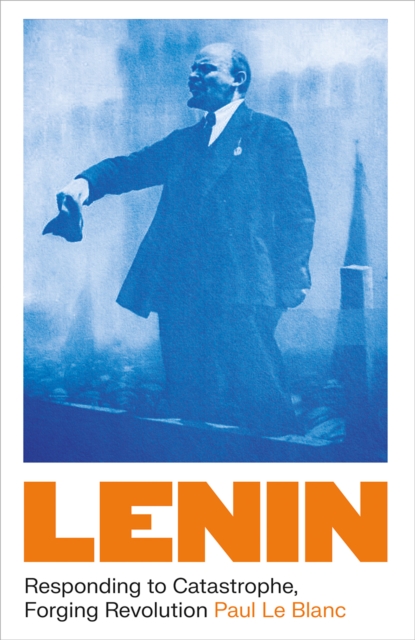
Lenin
\"A welcome gift... Highlighting Lenin's flexibility and cultivation of collective leadership, Le Blanc brings out the practical activism and revolutionary patience crucial to organizing the oppressed on a rapidly over-heating planet\" Jodi Dean, author of Comrade \"Crackling with intellectual life\" Lars T. Lih, author of Lenin Rediscovered \"A wonderful sketch of Lenin's life and times... Perhaps the best introduction available in English\" Michael D. Yates, author of Can the Working Class Change the World? Vladimir Lenin lies in a tomb in Moscow's Red Square. History has not been kind to this Russian leader, his teachings reviled by modern mainstream politics. But in today's capitalist society, riven by class inequality and imperialist wars, perhaps it is worth returning to this communist icon's demand for \"Peace, Land and Bread\", and his radical understanding of democracy. Lenin was wrestling with the question of \"what is to be done?\" when facing the catastrophes of his own time. Against the odds, the Bolshevik party succeeded in rejecting both the corrupt and decaying Romanov dynasty, as well as the capitalist economic system which had started to take root in Russia. To understand how this happened, and what we can learn from him today, Paul Le Blanc takes us through Lenin's dynamic revolutionary thought, how he worked as part of a larger collective and how he centered the labor movement in Russia and beyond, uncovering a powerful form of democracy that could transform our activism today. Paul Le Blanc is an activist and acclaimed American historian teaching at La Roche University, Pennsylvania. He is the author of many books.
eBook