
Catalogue Search | MBRL


Are you sure you want to remove the book from the shelf?

{{itemTitle}}
9
result(s) for
"Lese majesty"
Sort by:

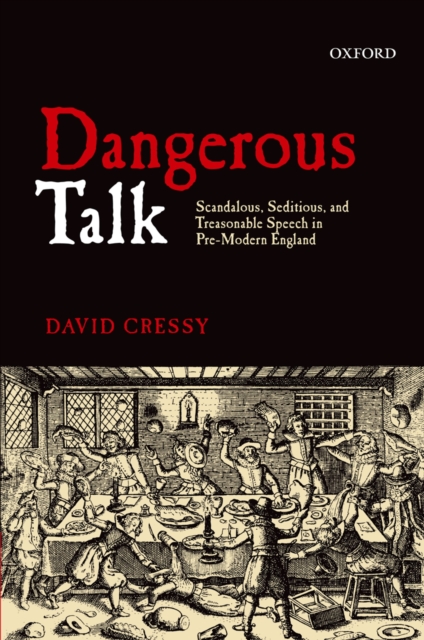
Dangerous talk : scandalous, seditious, and treasonable speech in pre-modern England
This book, filled with insults through the ages, is the full history of scurrilous political speech. Giving a voice to those gossips, rumourmongers and traitors, usually left out of history, this book examines the speech of ordinary people, who spoke scornfully of monarchs. The book reveals the lost conversations and expressions that got people into trouble, as well as unveiling moments when private words had public consequence. Although the proverb reads, ‘words were but wind’, tongues caused social damage, words challenged political authority, and treasonous speech imperilled the crown. Royals monitored talk they deemed dangerous in various ways: policing and surveillance, judicial intervention, political propaganda, and the crafting of new law. In early Tudor times, to speak ill of the monarch could risk execution, whereas by the end of the Stuart era, similar words could be dismissed with a shrug. This book traces the development of free speech across five centuries of popular political culture, and demonstrates how formerly treasonable talk, finally gained protection as ‘the birthright of an Englishman’.
eBook


Truth on Trial in Thailand
Since 2005, Thailand has been in crisis, with unprecedented political instability and the worst political violence seen in the country in decades. In the aftermath of a military coup in 2006, Thailand’s press freedom ranking plunged, while arrests for lèse-majesté have skyrocketed to levels unknown in the modern world. Truth on Trial in Thailand traces the 110-year trajectory of defamation-based laws in Thailand. The most prominent of these is lèse-majesté, but defamation aspects also appear in laws on sedition and treason, the press and cinema, anti-communism, contempt of court, insulting of religion, as well as libel. This book makes the case that despite the appearance of growing democratization, authoritarian structures and urges still drive politics in Thailand; the long-term effects of defamation law adjudication has skewed the way that Thai society approaches and perceives \"truth.\"
Employing the work of Habermas, Foucault, Agamben, and Schmitt to construct an alternative framework to understand Thai history, Streckfuss contends that Thai history has become \"suspended\" since 1958, and repeatedly declining to face the truth of history has set the stage for an endless state of crisis.
This book will be of interest to students and scholars of South East Asian politics, Asian history, and media and communication.
David Streckfuss is an independent scholar who has lived in Thailand for more than 20 years. His work primarily concerns human rights, and political and cultural history.
David Streckfuss is an independent scholar who has lived in Thailand for more than 20 years. His work primarily concerns human rights, and political and cultural history.
Introduction: The Defamation Dilemma of Thailand 1. The Truth Recently Discovered 2. Regimes of Truth, Regimes of Defamation 3. Truth and Treason in Old Siam 4. Chronology of Thai Defamation-Based Laws 5. Normalizing \"Abnormal Times\" and the Endless State Of Exception 6. Intent and Import 7. The Insulted and Defamed (The Individual to the Nation) 8. The Insulted and Defamed (Monarchy and Lèse-Majesté) 9. The People 10. Culture and Traitor 11. Thai-ification And Colonisation 12. Defamation and Truth 13. Conclusion Appendix – Thai Defamation-Based Laws, 1900 to Present
\"This big, brave and important book argues that defamation laws are the cornerstone of Thailand's authoritarian political culture. They have strangled the media, wrecked public debate, undermined artistic and intellectual work, and ensured impunity for a long litany of state crimes. They underpin an authoritarian control of thought and expression that is extraordinary in a country that likes to think of itself as a democracy... This book is a brilliant essay on Thailand's legal history based on very detailed research into legislation and case law. In addition, it offers a complex, thoughtful and wide-ranging diagnosis of current discontents. Its rich historical and international perspective should make Thailand's democrats and Democrats pause to wonder where the country is heading.\" Chris Baker, Bangkok Post, November 2010
\"David Streckfuss has done a great service to the study of lèse-majesté law and of its role in protecting the political and economic interests of the Thai monarchy. [ Truth on Trial in Thailand ] is a fine, exhaustively referenced study of the history of lèse-majesté law and of Thailand’s defamation laws more generally. It will be an authoritative reference book for a public now very much focused on the problem that lèse-majesté poses for Thai democracy.\" Patrick Jory, NM-TLC Reviewer
\"The book’s thirteen chapters are rich in detail and observation... Thematically organized, the chapters offer an incomparable history of lèse-majesté, law and Thai-ness, public opinion, and the science of traitorology. Of especial relevance given the recent discussion of the judicialization of politics in Thailand is Streckfuss’s remarkable account... of the institutionalization of the “state of exception” by Thai courts working in conjunction with the police and military. This monumental volume is destined to take a leading place in the field of critical studies of Asia.\" Michael K. Connors, Critical Asian Studies, 43:1 (2011), 139–149
\"[T]he real strength of the book is its fascinating analysis of a vast quantity of primary source material, including the analysis of a number of court decisions and some wonderful interviews with government censors.\" David M. Engel , SUNY Distinguished Service Professor, School of Law, State University of New York at Buffalo; South East Asia Research
'This book is an important one, and the author’s research chops are formidable. The book serves as a critical history of Thai law, with a discussion of how lèse-majesté encompasses the world of the monarchy, politics, law enforcement, and religion in Thailand.' - Geoff Alexander, WOwasis 2013.
eBook


L'assassinat de Thomas More: le tribunal d'une conscience annihilé par un tribunal tyrannique
This study hinges around two perspectives: the first one concerns the inner work accomplished by Thomas More through the writing of his prison letters, in which the author's \"conscience\" is often solicited and ends up playing the role of a tribunal. The second examines the interrogations conducted by the King's Tribunal and during More's trial for high treason. The death sentence inflicted on More still elicits many debates among scholars. We wish to contribute to such a debate by analyzing the cogency of the pre-trial investigation and of the hearings which would lead to capital punishment. Even admitting that the sentence was the result of a legal procedure, there is cause for wondering whether it was also legitimate. Judging from an analysis of the documents based on English jurisprudence, many are the flaws inherent in the trial which lead us to conclude that its legal inconsistency forged a death sentence. Therefore, the word \"assassination\" is no longer an exaggeration but a rigorous repositioning of the trial as the travesty of a trial. This assassination then becomes the work of a tyrant and his accomplices, forming a tyrannical system which manipulates law regulations to its convenience.
Journal Article

WITCHCRAFT AND POLITICS IN MUSCOVY AND THE HETMANATE
Politics at the early modern Russian (or Muscovite) court was very much focused on personal connections of kinship, marriage, and patronage, so the choice of brides for the rulers was of utmost political importance. Witchcraft, or rumors of witchcraft, frequently arose in connection with royal marriages. Witchcraft charges also arose when competition among rival factions at court grew particularly fierce, as during the minorities of rulers, when members of the inner circle jockeyed for position, or when a ruler was selecting his royal bride. Royal brides, called grand princesses before 1547 and tsaritsas after that date, were selected through ceremonial
Book Chapter

À propos d'une correspondance inédite de Charles V et de Louis de Mâle : étapes, moyens et enjeux d'une négociation politique
RéSUMé L’édition de la correspondance – jusque-là inédite – échangée par le roi Charles V et le comte de Flandre Louis de Mâle à propos de la libération de leur parente Yolande de Flandre constitue, en même temps qu’un corpus d’une exceptionnelle rareté, une source de premier ordre pour l’analyse du processus de la négociation politique : elle permet en effet d’en décrire les étapes, parmi lesquelles on distingue l’intervention de médiateurs, le jeu des émotions et le recours à la grâce royale toute-puissante. Mais au-delà du mécanisme des tractations, c’est leur enjeu majeur qu’elle permet de dégager : plus qu’un cas individuel, le « cas Yolande » apparaît ainsi comme un moyen de réajuster, de reformuler la position du corps nobiliaire vis.à-vis de l’État monarchique à un moment où ce dernier est justement en cours de définition.
Journal Article