
Catalogue Search | MBRL


Are you sure you want to remove the book from the shelf?

{{itemTitle}}
16
result(s) for
"Lesotho Rural conditions."
Sort by:


Searching for Sweetness
Traversing from the rapidly urbanising county-level city of Fuqing to the remote mountainous kingdom of Lesotho in Southern Africa, Searching for Sweetness is one of the first and most extensive ethnographies linking rural-to-urban migration in China with Chinese migration to Africa. Against the backdrop of China’s national struggle for modernity and globalisation, Sarah Hanisch examines Chinese migrant women’s complex and ever-shifting struggles for upward social mobility across different generations and localities in China and Lesotho. Embedding the women’s individual portraits into larger historical contexts, Hanisch illustrates how these women interpret and narrate their migratory and everyday experiences through and beyond powerful state metanarratives on ‘sweetness’ and ‘bitterness’. In her exploration of migratory identities and projects that have been overlooked by previous studies, Hanisch brings uniquely gendered, multi-sited, and intergenerational perspectives to existing scholarship on Chinese internal and international migration.
eBook

Family Medicine Training in Lesotho: A Strategy of Decentralized Training for Rural Physician Workforce Development
Family medicine is a relatively new but rapidly expanding medical discipline in Sub-Saharan Africa. Specialization in family medicine is an effective means for building and retaining a highly skilled rural physician workforce in low- and middle-income countries. The Lesotho Boston Health Alliance Family Medicine Specialty Training Program is the first and only postgraduate family medicine program and the only accredited postgraduate training program in the Kingdom of Lesotho. Lesotho has unique challenges as a small mountainous enclave of South Africa with one of the lowest physician-to-patient ratios in the world. Most health professionals are based in the capital city, and the kingdom faces challenging health problems such as high human immunodeficiency virus prevalence, high maternal mortality, and malnutrition, as well as increasing burdens of non-communicable diseases such as hypertension, diabetes, and obesity. In response to these health crises and the severe shortage of health professionals, Lesotho Boston Health Alliance partnered with the Lesotho Ministry of Health in 2008 to introduce family medicine as a new specialty in order to recruit home and retain Basotho doctors. Family medicine training in Lesotho uses a unique decentralized, non-university-based model with trainees posted at rural district hospitals throughout the country. While family medicine in Lesotho is still in the early stages of development, this model of decentralized training demonstrates an effective strategy to develop the rural health workforce in Lesotho, has the potential to change the physician workforce and health care system of Lesotho, and can be a model for physician training in similar environments.
Journal Article

'Because it's Our Culture!' (Re)negotiating the Meaning of Lobola in Southern African Secondary Schools
Payment of bridewealth or lobola 1 is a significant element of marriage among the Basotho of Lesotho and the Shona of Zimbabwe. However, the functions and meanings attached to the practice are constantly changing. In order to gauge the interpretations attached to lobola by young people today, this paper analyses a series of focus group discussions conducted among senior students at two rural secondary schools. It compares the interpretations attached by the students to the practice of lobola with academic interpretations (both historical and contemporary). Among young people the meanings and functions of lobola are hotly contested, but differ markedly from those set out in the academic literature. While many students see lobola as a valued part of 'African culture', most also view it as a financial transaction that necessarily disadvantages women. The paper then seeks to explain the young people's interpretations by reference to discourses of 'equal rights' and 'culture' prevalent in secondary schools. Young people make use of these discourses in (re)negotiating the meaning of lobola, but the limitations of the discourses restrict the interpretations of lobola available to them.
Journal Article
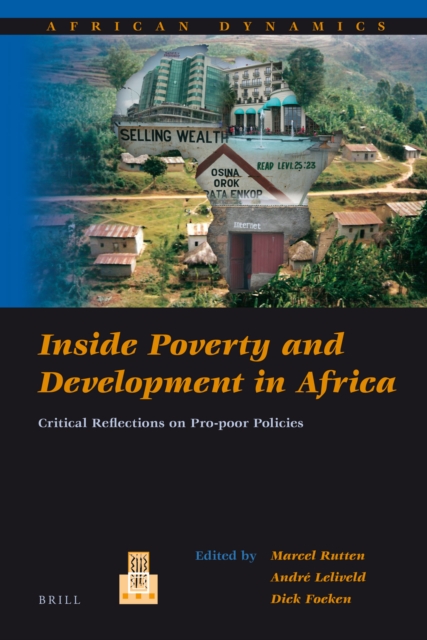
Inside Poverty and Development in Africa
Thinking about development in Africa requires an appreciation of at least two sets of ideas. It is not sufficient to stress the ubiquity of failure, malnutrition, disease, predatory states and war; one also has to recognize that important aspects of the lives of millions of ordinary people have been transformed over the last five decades. All contributions in this book give insight into the heterogeneity of poverty and development processes in Sub-Saharan Africa, and confront the ideas, concepts and assumptions that lie behind pro-poor policies with their empirical findings.
eBook
Regional economic outlook, May 2013
Growth remained strong in the region in 2012, with regional GDP rates increasing in most countries (excluding Nigeria and South Africa). Projections point to a moderate, broad-based acceleration in growth to around 5½ percent in 2013¬14, reflecting a gradually strengthening global economy and robust domestic demand. Investment in export-oriented sectors remains an important economic driver, and an agriculture rebound in drought-affected areas will also help growth. Uncertainties in the global economy are the main risk to the region's outlook, but plausible adverse shocks would likely not have a large effect on the region's overall performance.
eBook

Quantitative bacterial examination of domestic water supplies in the Lesotho Highlands : water quality, sanitation, and village health
Reported are the results of an examination of domestic water supplies for microbial contamination in the Lesotho Highlands, the site of a 20-year-old hydroelectric project, as part of a regional epidemiological survey of baseline health, nutritional and environmental parameters. The population's hygiene and health behaviour were also studied. A total of 72 village water sources were classified as unimproved (n = 23), semi-improved (n = 37), or improved (n = 12). Based on the estimation of total coliforms, which is a nonspecific bacterial indicator of water quality, all unimproved and semi-improved water sources would be considered as not potable. Escherichia coli, a more precise indicator of faecal pollution, was absent (P < 0.001) in most of the improved water sources. Among 588 queried households, only 38% had access to an \"improved\" water supply. Sanitation was a serious problem, e.g. fewer than 5% of villagers used latrines and 18% of under-5-year-olds had suffered a recent diarrhoeal illness. The study demonstrates that protection of water sources can improve the hygienic quality of rural water supplies, where disinfection is not feasible. Our findings support the WHO recommendation that E. coli should be the principal microbial indicator for portability of untreated water. Strategies for developing safe water and sanitation systems must include public health education in hygiene and water source protection, practical methods and standards for water quality monitoring, and a resource centre for project information to facilitate programme evaluation and planning.
Journal Article

Attacking Africa's poverty : experience from the ground
By all measures, poverty in Africa as a whole has increased and deepened. But in fact, Africa contains a number of undocumented success stories of poverty reduction. This book presents case studies of thirteen of these success stories, giving grounds for some real hope, and providing useful learning for all ? policymakers, governments, businesses, service providers, NGOs, and donors.
eBook


Socio-economic factors influencing sustainable water supply in Botswana
The paper examines the socio-economic and political issues of sustainable water supply in Botswana. It pays particular attention to the actual and potential role of economic instruments. Water consumption occurs both in a market and non-market contexts (producer = consumer). Due to rapidly increasing water demand and the fact that the \"easy\" solutions to increase water supply have largely elapsed, Botswana is concerned with water shortages which may hamper people's basic needs and industrial development in the future. Other sustainability concerns relate to the environment (pollution), social factors (equity and affordability) and economic considerations (cost recovery and efficiency). Prices, costs and the value of water are instrumental in striking a compromise between these goals. Trends in pricing and their relationship with costs and resource value are presented, and the impact of prices and subsidies on water demand and supply reviewed in order to assess their contribution towards a sustainable equilibrium. There is a substantial scope to improve the performance of economic instruments such as price subsidies and tax relief. The long-term marginal costs calculated in the Botswana National Water Master Plan contribute to prices approaching the costs of water production, but it excludes the environmental considerations. Resource scarcity is partly reflected where it increases the water supply costs; the indirect use and non-use values and external impacts are not incorporated in the water charges. Higher prices would increase the economic feasibility of water recycling and water harvesting and generate investment capital needed for the expansion of the water supply systems. Government subsidies may discourage efficient resource use. It is generally concluded that there is need for greater emphasis on re-use of waste water and control of the demand by harmonizing fees or tariffs between urban and rural areas as far as non-essential use is concerned; and provide more incentives for large-scale consumers to increase water use efficiency and sustainability.
Journal Article