
Catalogue Search | MBRL


Are you sure you want to remove the book from the shelf?

{{itemTitle}}
3,664
result(s) for
"Lessing, Doris"
Sort by:

Doris Lessing
This study examines the writing career of the respected and prolific novelist Doris Lessing, who was awarded the Nobel Prize for Literature in 2007 and has recently published what she has announced will be her final novel. Whereas earlier assessments have focused on Lessing's relationship with feminism and the impact of her 1962 novel, The Golden Notebook, this book argues that Lessing's writing was formed by her experiences of the colonial encounter; it makes use of postcolonial theory and criticism to examine Lessing's continued interest in ideas of nation, empire, gender and race and the connections between them. The book examines the entire range of her writing, including her most recent fiction and non-fiction, which have been comparatively neglected. The book is aimed at undergraduate and postgraduate students of Doris Lessing's work as well as the general reader who enjoys her writing. This is the first significant book-length critical evaluation in ten years.
eBook
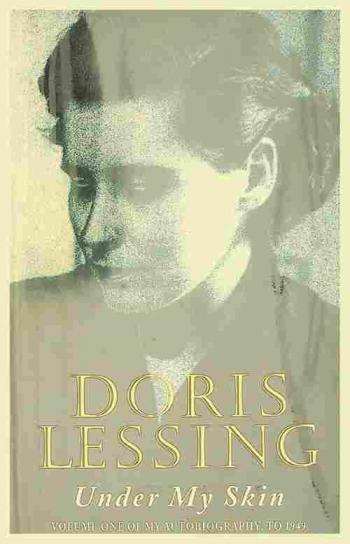

Doris Lessing at 100: roving time and space
On the centenary of the Nobel laureate’s birth, Patrick French explores her science-infused series Canopus in Argos.
On the centenary of the Nobel laureate’s birth, Patrick French explores her science-infused series Canopus in Argos.
Doris Lessing in 1990
Journal Article

Alfred and Emily
Nobel Laureate Doris Lessing provides a fictional account of her parent's experiences during World War I, when her father was a farmer turned soldier who lost a leg, and her mother was a nurse stationed at Royal Free Hospital; and also describes their relationship after the close of the Great War, based on the real-life memories of the author.
BOOK
Doris Lessing
Despite winning the Nobel Prize for Literature, Doris Lessing has received relatively little critical attention.One of the reasons for this is that Lessing has spent much of her lifetime and her long published writing career crossing both national and ideological borders.
eBook
Women's utopian and dystopian fiction
Womens Utopian and Dystopian Fiction explores the genres of utopian and dystopian recent fiction. It is about how this literature of both imagined perfection and disaster creates new worlds and critiques gender roles, traditions, and values. Essays range in subject matter from Charlotte Perkins Gilman, P. D. James, Joanna Russ, and Marge Piercy, to Ursula Le Guin, Fay Weldon, and Toni Morrison. Two of the three sections focus on Doris Lessing and Margaret Atwood. Examining especially the twe.
eBook

Moses and Power: Mimetic Desire in Doris Lessing’s the Grass Is Singing
This paper addresses the issue of cross-racial desire in Doris Lessing’s 1950 novel, The Grass Is Singing. It draws upon Rene Girard’s theory of mimetic desire and combines it with Fanon’s insights into the nature of interracial intimacies in racist societies to argue Lessing’s novel depicts a mimetic situation where the black man’s attraction to the white woman cannot be spontaneous and is in essence a desire for the power and privilege of the white mediator. Girardian analysis proves fruitful in explaining Moses’ conduct and his eventual murder of his white mistress. In this mimetic situation, Moses is mimetically carried away, and the white woman for him represents a means to an end, and when she decides to leave the farm and become, in Girardian terms, an inaccessible object, he murders her. The novel, then, this paper suggests, becomes an indictment of racist structures as it renders evident the distorting effects of structural racism on interracial and inter-human relationships.
Journal Article

Mental Writing and Mental Health and Cultural Identity in Doris Lessing’s Science Fiction
As one of the most outstanding female writers in post-war Britain, Doris Lessing, winner of the Nobel Prize for Literature, has a strong spirit of the times in her works. In order to further understand the characteristics and spirit of the times in Doris Lessing’s novels, Doris Lessing’s science fiction is taken as the research object in this study, through in-depth research on novel storytelling, philosophical psychology, thematic forms, etc., from the perspective of emotional psychology model, to deeply analyze the characteristics of psychological writing, mental health, and cultural identity in their science fiction. Doris Lessing’s science fiction reflects the political, cultural, and historical background of the times, and on this basis, it reflects humanitarian concerns through characters’ psychological writing and cultural identity. It is shown in the results of the study.
Journal Article

'Oh, there are so many things I want to write' Becoming an author: Doris Lessing and the Whitehorn Letters from 1944 to 1949
This paper explores the narrative process identified in the Whitehorn Letters, written by Doris Lessing from 1944 to 1949, as historical documents that form a single, coherent whole. Their significance is assessed by means of an epistemological reflection that sheds light on the path by which the young Lessing established her identity as an author (Bieder, 1993). In the letter-writing process, Lessing declares her aim to become a writer. The letters also characterise the writer as a historical subject, and describe the relationship between this historical subject and the individual who writes the correspondence. Since the letters formulate a coherent discourse about Lessing's authorial identity, I investigate whether using a model for reading them may be beneficial. I believe that additional nuances could be detected in her narratives by revisiting Lessing and examining, in the centenary of her birth, some hitherto unknown parts of her writings, as these letters represent.
Journal Article