
Catalogue Search | MBRL


Are you sure you want to remove the book from the shelf?

{{itemTitle}}
4,878
result(s) for
"Li Wei"
Sort by:


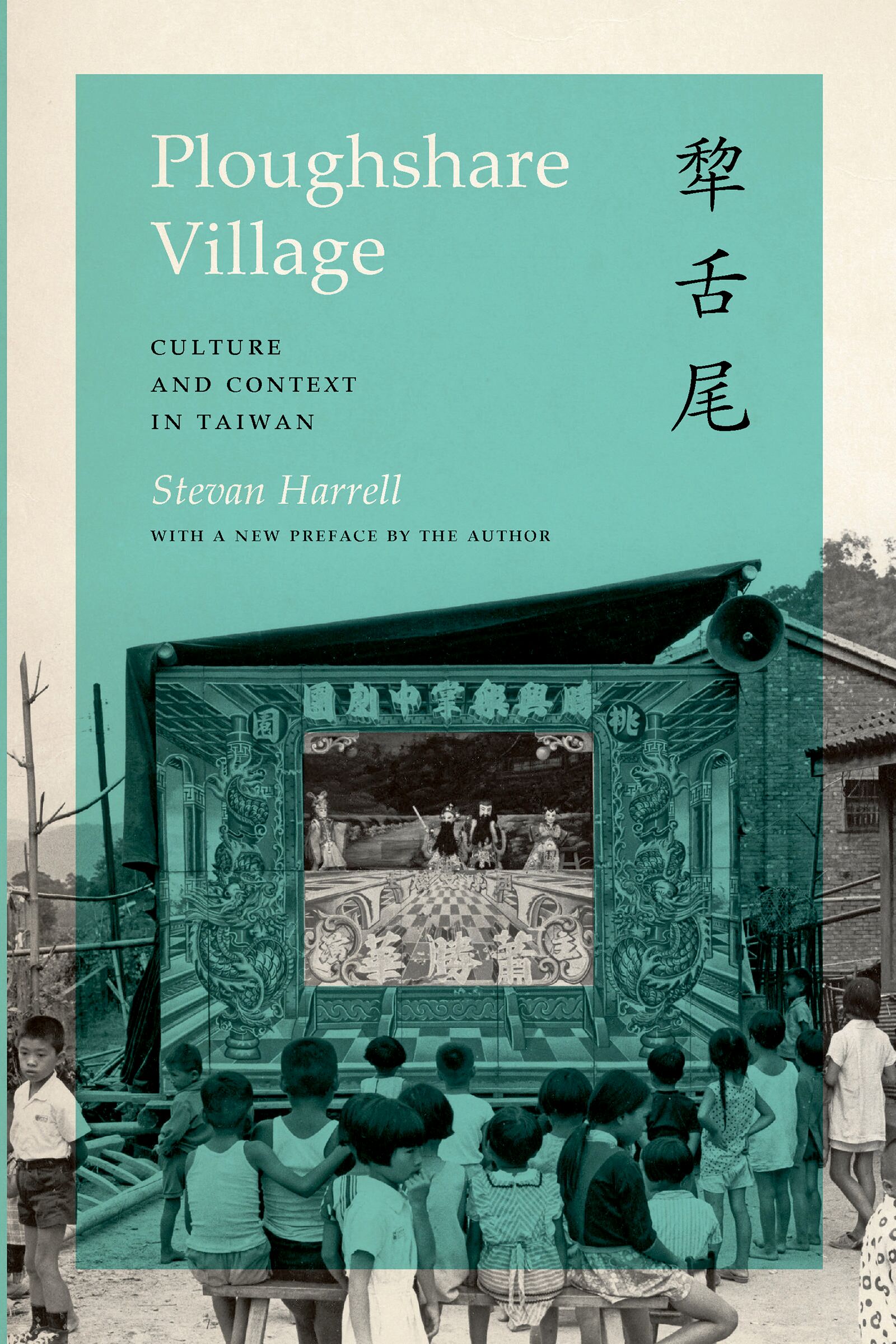
Ploughshare Village
This anthropological study of a workers village in North Taiwan makes an important contribution to the comparative literature on Chinese and Taiwanese social organization. Based on fieldwork conducted in 1973 and 1978, the study is exceptional not only because of its excellent data but also because the village itself was unique. Unlike villages previously studied and written about, Ploughshare was neither an agricultural nor a fishing village, but rather one whose inhabitants earned their living mostly from coal mining, knitting, and other non-agrarian activities. Culture and environmental context thus shaped social organization there differently than in other Taiwanese villages. This ethnography links local data to surrounding socioeconomic spheres: it shows the village s relationship to its region, to Taiwan as a whole, and to the international economy. It also captures an important point in time, as Taiwan was undergoing the economic miracle that brought it into the ranks of developed countries. Stevan Harrell s new preface highlights changes not only in the village over the last several decades, but also in the ways that anthropologists think about culture and Taiwan.
Ploughshare Village, with its rich descriptions and analyses, will be of value to anthropologists, sociologists, economists, and China specialists.
eBook




English as a Southern language
Drawing on the epistemologies of the Global South and the sociolinguistic reality of English in postcolonial Bangladesh, this article conceptualises English as a Southern language. This conception recognises the imperative of English for postcolonial societies in an English-dominant world while also emphasising the necessity of breaking away from its hegemony as represented by so-called native speaker or Standard English norms. It is argued that since English works as the principal epistemic tool for knowledge construction and theorising in most disciplines, decolonising knowledge and epistemology in favour of Southern perspectives may not be achieved without decolonising the language in the first place. While English as a Southern language builds on the paradigms of world Englishes, English as a lingua franca, and translanguaging, the proposed conception also seeks a notable departure from them. Calls for the co-existence of epistemologies of the North and South need to recognise English along the same lines. (English as a Southern language, epistemologies of the South, English in Bangladesh, English and representation of the world)*
Journal Article

Editorial
The headline 'Students shouldn't pay to study gobbledegook' (The Times, 5 March 2015) is likely to have everyone interested in education nodding in agreement at once: 'gobbledegook' is a wonderful word that describes language that is meaningless or unintelligible, especially when it is too technical or pompous, and surely no sensible person would want to subject students to this. [...]the author of the article does insist that academic writing is widely made deliberately hard to understand, and, still worse, that students are actively encouraged by their teachers to write unclearly too, and we might begin to ask whether its author really knows much about education when they claim this. The author of the Times piece cites an unnamed 'social science professor' as complaining that nowadays '[a]ccessible writing is sneered at as unsophisticated', linking deliberately inaccessible writing with a need to gain success in professional promotion and in the obtaining of research funding.
Journal Article