
Catalogue Search | MBRL


Are you sure you want to remove the book from the shelf?

{{itemTitle}}
127
result(s) for
"Liberalism Denmark."
Sort by:

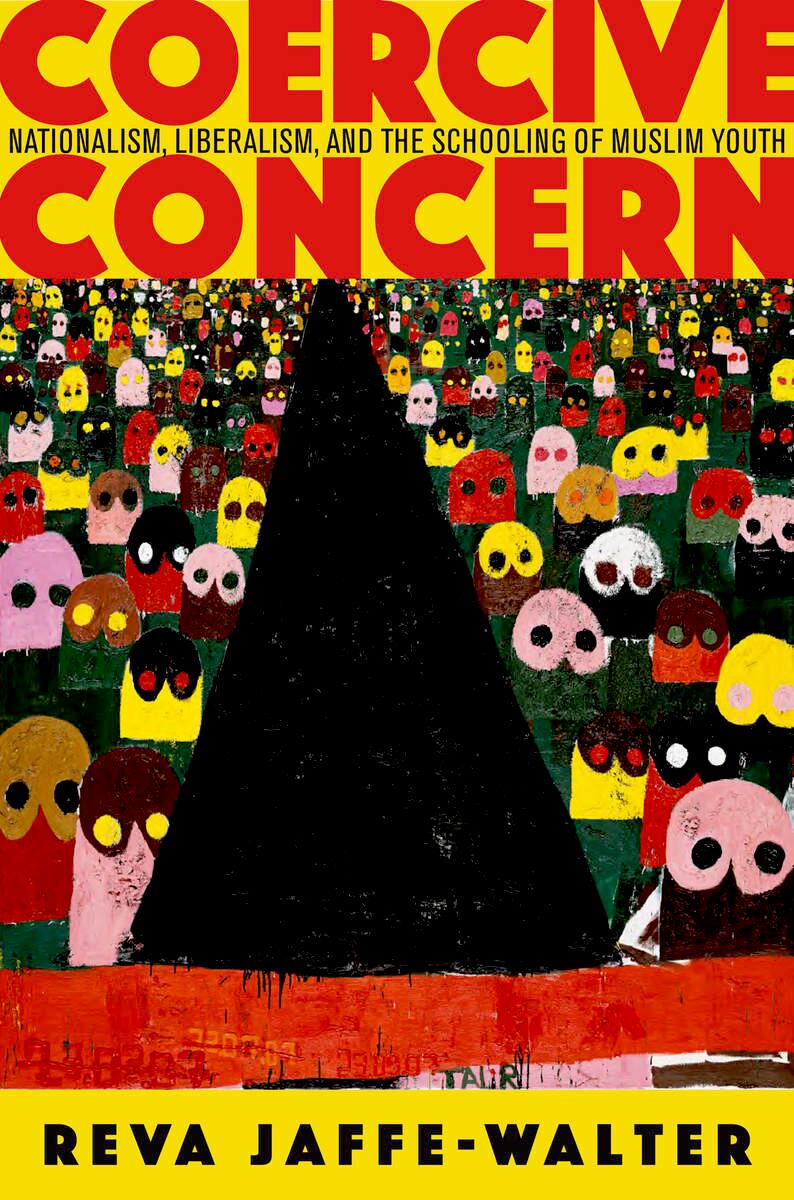
Coercive concern : nationalism, liberalism, and the schooling of Muslim youth
Many liberal-minded Western democracies pride themselves on their commitments to egalitarianism, the fair treatment of immigrants, and the right to education. These environments would seem to provide a best-case scenario for the reception of immigrant youth. But that is not always the case. Coercive Concern explores how stereotypes of Muslim immigrants in Western liberal societies flow through public schools into everyday interactions, informing how Muslim youth are perceived by teachers and peers. Beyond simply identifying the presence of racialized speech in schools, this book uncovers how coercive assimilation is cloaked in benevolent narratives of care and concern.
Coercive Concern provides an ethnographic critique of the \"concern\" that animates integration policy in Danish schools. Reva Jaffe-Walter focuses on the experiences of Muslim youth at a public school where over 40% of the student body is of immigrant descent, showing how schools operate as sites of governance. These efforts are led by political leaders who promote national fears of immigrant take-over, by teachers in schools, and by everyday citizens who are concerned about \"problems\" of immigration. Jaffe-Walter exposes the psychic and material costs immigrant youth endure when living in the shadow of social scrutiny, but she also charts a path forward by uncovering the resources these youth need to attain social mobility and success.
eBook

Crowding Out Culture: Scandinavians and Americans Agree on Social Welfare in the Face of Deservingness Cues
A robust finding in the welfare state literature is that public support for the welfare state differs widely across countries. Yet recent research on the psychology of welfare support suggests that people everywhere form welfare opinions using psychological predispositions designed to regulate interpersonal help giving using cues regarding recipient effort. We argue that this implies that cross-national differences in welfare support emerge from mutable differences in stereotypes about recipient efforts rather than deep differences in psychological predispositions. Using free-association tasks and experiments embedded in large-scale, nationally representative surveys collected in the United States and Denmark, we test this argument by investigating the stability of opinion differences when faced with the presence and absence of cues about the deservingness of specific welfare recipients. Despite decades of exposure to different cultures and welfare institutions, two sentences of information can make welfare support across the U.S. and Scandinavian samples substantially and statistically indistinguishable.
Journal Article

Liberals lecture, conservatives communicate: Analyzing complexity and ideology in 381,609 political speeches
There is some evidence that liberal politicians use more complex language than conservative politicians. This evidence, however, is based on a specific set of speeches of US members of Congress and UK members of Parliament. This raises the question whether the relationship between ideology and linguistic complexity is a more general phenomenon or specific to this small group of politicians. To address this question, this paper analyzes 381,609 speeches given by politicians from five parliaments, by twelve European prime ministers, as well as speeches from party congresses over time and across countries. Our results replicate and generalize earlier findings: speakers from culturally liberal parties use more complex language than speakers from culturally conservative parties. Economic left-right differences, on the other hand, are not systematically linked to linguistic complexity.
Journal Article

Children’s Sexuality and Nudity in Discourse and Images in a Danish Education and Care Journal over 50 Years (1970–2019): The Emergence of “The Child Perpetrator of Sexual Abuse” in an International Perspective
In the late twentieth century, a new view of children as potential sexual abusers emerged. Today, more research addresses children’s “problematic sexual behavior” than their natural sexuality, and even young children are stigmatized and criminalized because of species-typical sexual behavior. Despite the importance of this new field of research and view of childhood sexuality, studies of this development, its origins, and consequences are extremely rare. This study analyzed the discourse and images related to childhood sexuality in a Danish education and care journal for childcare professionals, from 1970 to 2019, to examine the emergence of “the child perpetrator of sexual abuse” in Denmark in the late 1990s, and traced the travelling of these ideas back to the United States, where this figure originated in the mid-1980s. The study revealed a radical change in views of childhood sexuality in Denmark from 1970 to 2019: from an extreme liberalism in the early decades—illustrated by a rare collection of photos of children’s nudity and sexuality, of which a selection is reprinted in this article—to a view that strongly associates children’s sexuality with sexual abuse. The study showed that the significant attention to and fear of child sexual abuse influenced the new view of childhood sexuality, and that this progressively took root in Danish childcare institutions, creating a panic. This article examines the knowledge, narratives, and the question of proportion regarding the cross-cultural view of children as potential sexual abusers, and discusses its consequences, combining a historical study and a dissection of an important, current phenomenon.
Journal Article

Infrastructure imaginaries
In the last decade light rail transit systems have become a popular mode of public transport in many cities around the world to upgrade the existing public transportation network, but also, and perhaps more importantly, to support neoliberal urban development strategies. The paper takes its starting point in the growing critical literature discussing the politics of light rail and related transport infrastructure projects in the context of neoliberalism. The paper uses the case of Aalborg, Denmark, to demonstrate how light rail projects are embedded in particular infrastructure imaginaries, which reflect wider political agendas of promoting urban development and economic growth. In the case of Aalborg, the city’s spatial strategies have played an important role in constructing an imaginary of the city as the region’s ‘growth dynamo’, which in turn have led to a growth-fixated conceptualisation of the city’s spatiality, and contributed to rationalising the need for investments in light rail. The paper argues that light rail projects are first and foremost politically rationalised as important investments for facilitating urban development and supporting entrepreneurial city strategies of urban and economic growth, whilst their social objectives of providing affordable public transportation play a less prominent role in the contemporary imaginary of the city.
在过去的十年中,轻轨交通系统已经成为世界上许多城市的一种流行的公共交通方式,旨 在升级现有的公共交通网络,同时,也许更重要的是,支持新自由主义的城市发展策略。 本文以讨论新自由主义背景下轻轨和相关交通基础设施项目政治的、日益增长的批判性文 献为出发点。本文以丹麦奥尔堡为例,展示轻轨项目是如何嵌入到特定的基础设施想象中 的,这些想象反映了促进城市发展和经济增长的更广泛的政治议程。在奥尔堡的例子中, 该城市的空间策略在将该城市想象成该地区的“增长发电机”方面发挥了重要作用,这反过 来又导致了该城市空间的增长导向概念化,并有助于使轻轨投资需求合理化。本文认为, 轻轨项目首先在政治上被合理化,因其是促进城市发展和支持城市和经济增长的创业型城 市战略的重要投资,而其提供负担得起的公共交通的社会目标在城市的当代想象中发挥着 不太突出的作用。
Journal Article

Fortifying Citizenship: Policy Strategies for Civic Integration in Western Europe
Why have European states introduced mandatory integration requirements for citizenship and permanent residence? There are many studies comparing integration policy and examining the significance of what has been interpreted as a convergent and restrictive “civic turn,” a “retreat from multiculturalism,” and an “inevitable lightening of citizenship.” None of these studies, however, has puzzled over the empirical diversity of integration policy design or presented systematic, comparative explanations for policy variation. This article is the first to develop an argument for what, in fact, amounts to a wealth of variation in civic integration policy (including scope, sequencing, and difficulty). Using a historical institutionalist approach, the author argues that states use mandatory integration to address different membership problems, which are shaped by both existing citizenship policy (whether it is inclusive or exclusive) and political pressure to change it (in other words, the politics of citizenship). She illustrates this argument by focusing on three case studies, applying the argument to a case of unchallenged restrictive retrenchment and continuity (Denmark), to a case of negotiated and thus moderated restriction (Germany), and to a case that recently exhibited both liberal continuity (the United Kingdom, 2001–6) and failed attempts at new restriction (the United Kingdom, 2006–10). These cases show that although states may converge around similar mandatory integration instruments, they may apply them for distinctly different reasons. As a result, new requirements augment rather than alter the major contours of national citizenship policy and the membership association it maintains.
Journal Article

Neo-liberalism and universal state education: the cases of Denmark, Norway and Sweden 1980-2011
This article investigates neo-liberal policy on education in Denmark, Norway and Sweden. Traditionally, the edifice of the education system in these Scandinavian countries has been built on egalitarian values, but over the last 20 years they have increasingly adopted market-led reforms of education. The extent of neo-liberal policy varies between the countries. Denmark and Norway have remained more hostile toward such policies, thus protecting the education system from extensive deregulation and privatisation. Conversely, in Sweden a greater credence has been given to market forces, allowing private providers to play a much more significant role in delivering education services. This variation in neo-liberal policy on education in Scandinavia is usually ascribed to the increasing power of the Right. However, this article differs from most other education research in that it argues, on the contrary, that the answer is to be found mainly within the social democratic parties themselves.
Journal Article
Scandinavian politics today
This fully revised and updated second edition of Scandinavian politics today describes, analyses and compares the contemporary politics and international relations of the five nation-states of Denmark, Finland, Iceland, Norway and Sweden and the three Home Rule territories of Greenland, Faeroes and Åland that together make up the Nordic region. Thirteen chapters cover Scandinavia past and present; parties in developmental perspective; the Scandinavian party system model; the Nordic model of government; the Nordic welfare model; legislative-executive relations in the region; the changing security environment and the transition from Cold War ‘security threats’ to the ‘security challenges' of today; and a concluding chapter looks at regional co-operation, Nordic involvement in the ‘European project’ and the Nordic states as ‘moral superpowers’. The book will be of interest not only to students of Scandinavia but to those wishing to view Scandinavian politics and policy-making in a wider comparative perspective.
eBook

The ideational robustness of liberal democracy in the wake of the pandemic: comparing the Danish and Swedish cases
Abstract
The Covid-19 pandemic sparked unprecedented political responses dramatically affecting societies, markets, and the lives of individuals. Under great uncertainty and turbulent conditions, governments adopted far-reaching political interventions to curb the pandemic. These interventions might therefore be expected to challenge key ideas underpinning liberal democracy. We analyze and compare how the political interventions seeking to curb the spread of the coronavirus in Denmark and Sweden challenged and possibly adapted three key ideas underpinning liberal democracy, namely, constitutionality, parliamentarism, and public responsiveness. When ideas are adapted in ways that advance their ability to stay relevant when faced with turbulence, we understand them as robust. Our study found both similarities and differences between the two countries. The idea of constitutionality was challenged in Denmark but remained robust in Sweden. The idea of parliamentarism appeared robust in both countries, whereas the idea of public responsiveness was adapted in neither country but challenged further in Sweden than in Denmark. Paradoxically, Denmark saw fewer adaptations to the liberal democratic ideas than Sweden yet appeared better prepared to protect lives during turbulent times. Our study suggests that liberal democracies must very carefully balance trade-offs between individual liberties and the protection of public health to preserve the core public ideas of constitutionality, parliamentarism, and public responsiveness.
Journal Article