
Catalogue Search | MBRL


Are you sure you want to remove the book from the shelf?

{{itemTitle}}
73
result(s) for
"Liberalism United States History 21st century."
Sort by:

The givers : wealth, power, and philanthropy in a new gilded age /
\"An inside look at the secretive world of elite philanthropists--and how they're quietly wielding ever more power to shape American life in ways both good bad\"-- Provided by publisher.
Book

Not Much Left
Tom Waldman's lively and sweeping assessment of the state of American liberalism begins with the political turbulence of 1968 and culminates with the 2006 takeover of Congress by the Democratic Party.Not Much Left: The Fate of Liberalism in Americavividly demonstrates how the progressive and liberal wing of the Democratic Party helped end a war, won the civil rights battle, and paved the way for blacks, women, gays, and other minorities to achieve full citizenship. Through reportage, anecdotes, and analysis-particularly of the disastrous defeat of Democrat George McGovern in 1972-Waldman chronicles how the grand coalition that achieved so much in the 1960s began to self-destruct in the early 1970s. Citing the Republican recovery from Barry Goldwater's 1964 defeat, Waldman demonstrates how the two parties' very different reactions to electoral debacle account for recent Republican dominance and Democratic impotence. Assessing liberalism's fate through the Carter and Reagan presidencies, the defeat of Michael Dukakis in the 1988 presidential election, and the on-again, off-again liberalism of the Clinton years, Waldman then brings the discussion up to date with analysis of the 2008 presidential campaign.
eBook

Liberal leviathan : the origins, crisis, and transformation of the American World Order
In the second half of the 20th century, the United States engaged in the most ambitious liberal order building the world had yet seen. This liberal international order has been one of the most successful in history in providing security and prosperity to more people. But in the last decade, the order has been troubled.
Book
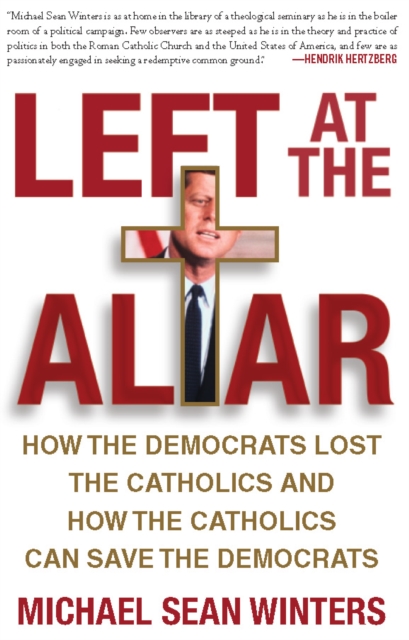
Left at the Altar
In 1960, Democrats and Catholics united to elect John F. Kennedy, America's first Catholic president. As we approach the 2008 presidential election, the Democratic party is struggling to secure Catholic votes. For most of the twentieth-century, however, the Catholic vote was solidly Democratic. In Left at the Altar, Michael Sean Winters chronicles the rise and fall of this vital alliance, and offers compelling arguments for its revival. For the Democrats, the stakes could not be higher: The explosive growth of the Latino population will make the Catholic vote decisive in the twenty-first century. The stakes are high for Catholics, too: In their defection to the Republican party, Catholics have drifted from their traditional advocacy of core values including peace and social justice.
eBook

Liars, leakers, and liberals : the case against the anti-Trump conspiracy
\"Former prosecutor Jeanine Pirro outlines a plot against the People of the United States and argues that the conspirators have the means and motive to destroy our democratic republic. Pirro uncovers the elements of this conspiracy, including \"fake news\" propaganda, law enforcement corruption at the highest levels, and felonious national security leaks by members of the intelligence community. She exposes bureaucratic resistance to lawful and constitutional executive orders issued by the duly-elected president and crooked deals with foreign governments by U.S. officials sworn to defend our Constitution. It's about time the American public knows the truth about the plot to bring down the Trump presidency.\"--Jacket page 2.
Book

Global capitalist crisis and the second great Depression
In this comprehensive work, Armando Navarro delivers a timely analysis of the global capitalist crisis that has arisen in the United States. Navarro offers a wide-ranging political historical analysis of events the led up to the present co-called “Second Great Depression.” Starting with the end of World War II, he tracks the various political and economic decisions that have led to the emergence of the global economic crisis that began in 2006. He provides context for the current economic situation by discussing the major economic and political events, including the Great Depression, the New Deal, the rise of neo-liberal capitalism, and the collapse of the subprime mortgage industry. Navarro incisively reviews and critiques the Obama administration and Democrats’ quasi-welfare capitalist legislation. Driven by social democratic models, he constructs a transformative social movement paradigm that calls for the rise of reform and proposes dramatic systemic change. Navarro concludes by looking at the U.S. political culture—what he contends is the major obstacle to the rise of “socialism” in the United States—and speculates about the potentially bleak economic future to come.
eBook

Vulnerability politics : the uses and abuses of precarity in political debate
\"Katie Oliviero's \"Vulnerability Politics: The Uses and Abuses of Precarity in Political Debate\" explores the concept of politically vulnerable and unprotected groups in the 21st century. The book addresses such important issues as women's reproductive rights, immigration and marriage equality\" -- Provided by publisher.
Book

Conservative thought and American constitutionalism since the New Deal
An intellectual history of American conservativism since the New Deal.The New Deal fundamentally changed the institutions of American constitutional government and, in turn, the relationship of Americans to their government. Johnathan O'Neill's Conservative Thought and American Constitutionalism since the New Deal examines how various types of conservative thinkers responded to this significant turning point in the second half of the twentieth century.O'Neill identifies four fundamental transformations engendered by the New Deal: the rise of the administrative state, the erosion of federalism, the ascendance of the modern presidency, and the development of modern judicial review. He then considers how various schools of conservative thought (traditionalists, neoconservatives, libertarians, Straussians) responded to these major changes in American politics and culture. Conservatives frequently argued among themselves, and their responses to the New Deal ranged from adaptation to condemnation to political mobilization. Ultimately, the New Deal pulled American governance and society permanently leftward. Although some of the New Deal's liberal gains have been eroded, a true conservative counterrevolution was never, O'Neill argues, a realistic possibility. He concludes with a plea for conservative thinkers to seriously reconsider the role of Congress—a body that is relatively ignored by conservative intellectuals in favor of the courts and the presidency—in America's constitutional order. Conservative Thought and American Constitutionalism since the New Deal explores the scope and significance of conservative constitutional analysis amid the broader field of American political thought.
eBook

Radicals in America : the U.S. Left since the Second World War
\"Radicals in America offers the first complete and continuous history of left-wing social movements in the United States from the Second World War to the present. The book traces the full panoply of radical activist causes--socialism, Communism, the labor movement, anarchism, pacifism, anti-racism, women's rights, LGBT liberation, ecology, indigenous rights, and world social justice--in ways that show how successive generations join currents of dissent, face setbacks and political repression, and generate new challenges to the status quo, even in periods when conservatism appears to push protest to the margins of American society\"-- Provided by publisher.
Book
War on the American Republic
Kevin Slack sounds the alarm on how America's failed neoliberal regime has given way to a woke oligarchy that has deployed a radical toolkit to rapidly strip away the rights of citizens.Americans often use the words progressive , liberal , and radical more or less interchangeably, without reference to their place in our nation's history.
eBook