
Catalogue Search | MBRL


Are you sure you want to remove the book from the shelf?

{{itemTitle}}
13
result(s) for
"Libertarians Biography."
Sort by:


Libertarianism: A Fifty-Year Personal Retrospective
This retrospective, covering half a century, is a personal history of modern libertarianism. It provides some historical perspective on the growth of libertarianism and its impact on society, especially for those who were born into an existing libertarian movement, including political and academic paths. As outsiders, Austrians and libertarians can expect more than their share of difficult times and roadblocks, although that situation has improved over time. It also shows the limitations of the political path to liberty and the importance of the Austrian view that society changes via emphasis on sound economic science, its practicality, and its subsequent impact on ideology. Finally, it conveys the importance of solving practical problems and puzzles via the thin, radical version of libertarianism.
Journal Article
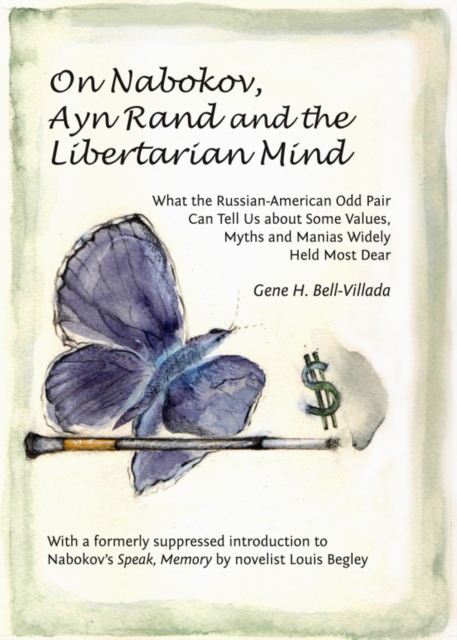
On Nabokov, Ayn Rand and the Libertarian Mind
On Nabokov, Ayn Rand and the Libertarian Mind not only conjoins two seemingly divergent authors but also takes on the larger picture of libertarian trends and ideologies. These timely topics further intermingle with Bell-Villada's own conflicted relationship - personal, cultural, satirical, literary - to the \"odd pair\" and their ways of thinking. The inclusion of Louis Begley's essay adds yet another dimension to this unique, wide-ranging meditation on art and politics, history and memory.
eBook
Thomas Hobbes
In this volume, Dr Bunce (University of Cambridge) introduces Hobbes' ambitious philosophical project to discover the principles that govern the social world. If Hobbes' immodest assessment that he successfully attained this goal may be disputed, Bunce nevertheless captures the extraordinary enduring value of Hobbes' work for the contemporary reader. Thomas Hobbes's name and the title of his most famous work, Leviathan, have come to be synonymous with the idea that the natural state of humankind is 'nasty, brutish, and short' and only the intervention of a munificent overlord may spare men and women from this unenviable fate by imposing order where there would otherwise be chaos. The problem that Hobbes formulated resonates through the centuries as the enduring dilemma of political organisation and social cooperation. Indeed it can be seen today in fields as diverse as theoretical game theory and international relations.
eBook

Conservative humility, liberal irony
[...] each devotes itself to Grafting its own variation on a well-worn theme: that in both domestic and foreign policy, American conservatism is a camp divided against itself. [...] unlike Enlightenment liberals, who demanded that their authoritarian opponents - aristocrats, clerics, and their defenders - admit their own fallibility, for contemporary conservatives it is not so much the hubris of America's opponents, but the hazards of America's own overreaching in a dangerous world, that calls for constant monitoring and reflection. [...] realists worry about the capacity of government to properly manage even small deviations from the pursuit of American self-interest abroad, while libertarians worry about the capacity of government to manage even small deviations from the unfettered pursuit of individual interest in the marketplace at home.
Journal Article

William F. Marina as Teacher and Historian: Some Early Impressions
Unimpressed by the behaviorist political scientists with whom the author had spoken, he settled on history as a major. Once in classes, he found Dr. William F. Marina by far the most interesting teacher. He had taught at the University of Texas at Arlington from 1962 to 1964 before coming to Florida Atlantic University, where he remained until his retirement in 2003. While teaching in Texas, he had witnessed the assassination of Pres John F. Kennedy. For many years, Bill gave an occasional seminar on historical method that centered on the Kennedy assassination as an historical problem. As of the late 1960s, Bill was generally committed to the interpretive framework provided by the New Left (Wisconsin school) of American diplomatic history and opposed the Cold War as a front for American empire. Just as he had opposed the war in Vietnam, Bill became an active critic of George W. Bush's foreign policy. Much of this work was published by the Independent Institute.
Journal Article

C. L. R. James, direct democracy, and national liberation struggles
C.L.R. James (1901-1989), native of Trinidad, is perhaps the most libertarian revolutionary thinker of both the Pan-African and international labor movements in the twentieth century. Best known as the author of The Black Jacobins (1938), the classic account of Toussaint L'Ouverture and the Haitian Revolution, and Beyond A Boundary (1963), a semi-autobiographical meditation on the game of cricket, his intellectual legacies in the fields of history and literature are well established. In contrast, aspects of his political thought have yet to be examined with equal care. This study through original research in primary sources will introduce two unique propositions about the life and work of C.L.R. James. First, the foundation of his political philosophy is direct democracy and workers self-management. Second, inquiring variously about the presence, function, contours, and absence of direct democracy and workers self-management in C.L.R. James' political thought on national liberation struggles challenges the horizons of radical democratic theory and radical Africana political thought in the twentieth century. This study will make an original intervention in scholarly fields by placing C.L.R. James' political thought on direct democracy and workers self-management, as embodied by his adage “every cook can govern,” in conversation with Black freedom struggles of Africa, the African Diaspora, and the Third World. Examining C.L.R. James' ideas inspired by the Age of the CIO, Hegel, Marx, Lenin, Rousseau, Jules Michelet, the French and Russian Revolutions, Eastern Europe, and Ancient Athens; unique vantages will be offered on James' relationship to the Black Power Movement in the USA, The Sixth Pan-African Congress, and Federation and Party Politics in the Caribbean. C.L.R. James' outlook on Kwame Nkrumah's Ghana and Julius Nyerere's Tanzania will be explored along with unexpected and illuminating vistas on Cuba, China, Kenya, Ethiopia, India and the Indo-Caribbean. In examining these national liberation struggles we will inquire if C.L.R. James' political thought is a means to enchant popular self-management at the expense of nation-states and ruling elites or assist the nationalist middle classes in retaining state power at ordinary people's expense.
Dissertation


Szasz and Rand
This review essay on Thomas Szasz's book Faith in Freedom: Libertarian Principles and Psychiatrie Practices elaborates Szasz's position that mental illness is a myth, psychiatry is pseudo-medicine, and imposed psychiatric treatments are assault and incarceration. It then describes Szasz's critical chapters on Ayn Rand's and Nathaniel Branden's views on psychiatry, mental health, and psychiatric coercion.
Book Review