
Catalogue Search | MBRL


Are you sure you want to remove the book from the shelf?

{{itemTitle}}
10,664
result(s) for
"Libya"
Sort by:

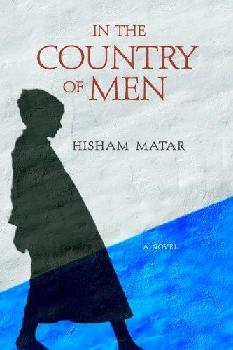
In the country of men
In Tripoli, Libya, in the summer of 1979, nine-year-old Suleiman is shopping with his mother. His father is away on business, but Suleiman is sure he has just seen him, standing across the street. This novel is told from the point of view of a young boy growing up in a terrifying and bewildering world. (Publisher).
Book

The NATO Intervention in Libya: Lessons learned from the campaign
This book explores \"lessons learned\" from the military intervention in Libya by examining key aspects of the 2011 NATO campaign. NATO's intervention in Libya had unique features, rendering it unlikely to serve as a model for action in other situations. There was an explicit UN Security Council mandate to use military force, a strong European commitment to protect Libyan civilians, Arab League political endorsement and American engagement in the critical, initial phase of the air campaign. Although the seven-month intervention stretched NATO's ammunition stockpiles and political will almost to their respective breaking points, the definitive overthrow of the Gaddafi regime is universally regarded as a major accomplishment. With contributions from a range of key thinkers and analysts in the field, the book first explains the law and politics of the intervention, starting out with deliberations in NATO and at the UN Security Council, both noticeably influenced by the concept of a Responsibility to Protect (R2P). It then goes on to examine a wide set of military and auxiliary measures that governments and defence forces undertook in order to increasingly tilt the balance against the Gaddafi regime and to bring about an end to the conflict, as well as to the intervention proper, while striving to keep the number of NATO and civilian casualties to a minimum. This book will be of interest to students of strategic studies, history and war studies, and IR in general.
eBook

A history of modern Libya
In the wake of civil war and Qadhafi's demise, Dirk Vandewalle updates his classic study of Libya to trace events since 2005. These were the years that Qadhafi came in from the cold and was courted by the west. At home, though, his people were disillusioned, and economic liberalization came too late to forestall revolution. In an epilogue, the author reflects upon Qadhafi's premiership and the legacy that he leaves behind.
eBook

Libya
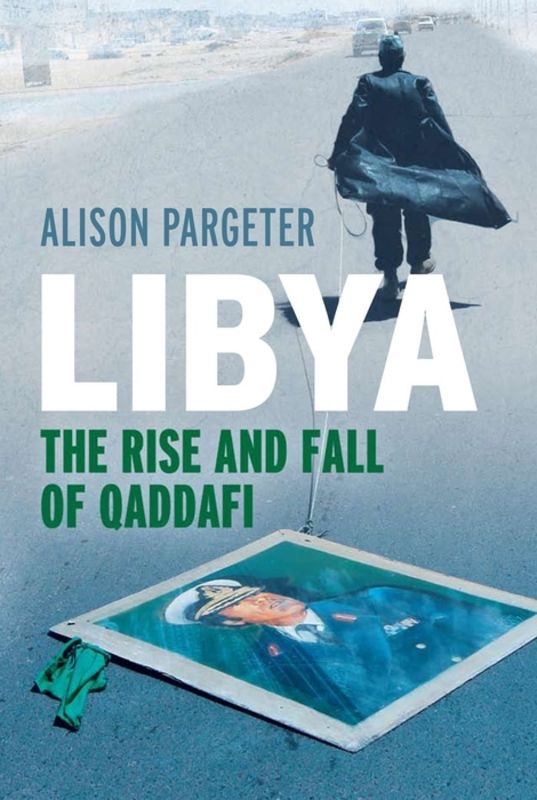
For a reader unfamiliar with the history of Libya, Muammar Qaddafi might be mistaken for a character in fiction. His eccentric leadership as the nation's \"Brother Leader,\" his repressive regime, sponsorship of terrorist violence, unique vision of the state, and relentless hold on power all seem implausibly extreme. This riveting book documents the extraordinary reality of Qaddafi's rise and 42-year reign. It also explores the tenacious popular uprising that finally defeated him and the possibilities for Libya as the future unfolds.
Alison Pargeter, an author with deep understanding of Libya's history and people, explains what led up to Qaddafi's bloodless coup in 1969 and how he proceeded to translate his highly personalized vision into political, economic, and social policy. She discusses his tight-knit networks, the crises he overcame-including sanctions after the Lockerbie bombing in 1988-as well as his astounding maneuverings in the early 2000s to restore tattered relations with the West. Pargeter provides a thoroughly fascinating analysis of the 2011 revolt and uncovers the full details of Qaddafi's downfall. She concludes by introducing the new power brokers in post-Qaddafi Libya as well as the variety of knotty challenges that now confront them.
eBook


Genocide in Libya
This original research on the forgotten Libyan genocide specifically recovers the hidden history of the fascist Italian concentration camps (1929–1934) through the oral testimonies of Libyan survivors. This book links the Libyan genocide through cross-cultural and comparative readings to the colonial roots of the Holocaust and genocide studies.
Between 1929 and 1934, thousands of Libyans lost their lives, directly murdered and victim to Italian deportations and internments. They were forcibly removed from their homes, marched across vast tracks of deserts and mountains, and confined behind barbed wire in 16 concentration camps. It is a story that Libyans have recorded in their Arabic oral history and narratives while remaining hidden and unexplored in a systematic fashion, and never in the manner that has allowed us to comprehend and begin to understand the extent of their existence.
Based on the survivors’ testimonies, which took over ten years of fieldwork and research to document, this new and original history of the genocide is a key resource for readers interested in genocide and Holocaust studies, colonial and postcolonial studies, and African and Middle Eastern studies.
eBook


Impact of the COVID-19 pandemic on medical education: Medical students’ knowledge, attitudes, and practices regarding electronic learning
The Coronavirus Disease 2019 (COVID-19) pandemic has caused an unprecedented disruption in medical education and healthcare systems worldwide. The disease can cause life-threatening conditions and it presents challenges for medical education, as instructors must deliver lectures safely, while ensuring the integrity and continuity of the medical education process. It is therefore important to assess the usability of online learning methods, and to determine their feasibility and adequacy for medical students. We aimed to provide an overview of the situation experienced by medical students during the COVID-19 pandemic, and to determine the knowledge, attitudes, and practices of medical students regarding electronic medical education. A cross-sectional survey was conducted with medical students from more than 13 medical schools in Libya. A paper-based and online survey was conducted using email and social media. The survey requested demographic and socioeconomic information, as well as information related to medical online learning and electronic devices; medical education status during the COVID-19 pandemic; mental health assessments; and e-learning knowledge, attitudes, and practices. A total of 3,348 valid questionnaires were retrieved. Most respondents (64.7%) disagreed that e-learning could be implemented easily in Libya. While 54.1% of the respondents agreed that interactive discussion is achievable by means of e-learning. However, only 21.1% agreed that e-learning could be used for clinical aspects, as compared with 54.8% who disagreed with this statement and 24% who were neutral. Only 27.7% of the respondents had participated in online medical educational programs during the COVID-19 pandemic, while 65% reported using the internet for participating in study groups and discussions. There is no vaccine for COVID-19 yet. As such, the pandemic will undeniably continue to disrupt medical education and training. As we face the prospect of a second wave of virus transmission, we must take certain measures and make changes to minimize the effects of the COVID-19 outbreak on medical education and on the progression of training. The time for change is now, and there should be support and enthusiasm for providing valid solutions to reduce this disruption, such as online training and virtual clinical experience. These measures could then be followed by hands-on experience that is provided in a safe environment.
Journal Article