
Catalogue Search | MBRL


Are you sure you want to remove the book from the shelf?

{{itemTitle}}
213
result(s) for
"Licensure - history"
Sort by:

Medical licensing for international medical graduates in Aotearoa New Zealand since 1849: overview and timeline
This paper aims to contextualise the current state of medical registration for international medical graduates (IMGs) in Aotearoa New Zealand by providing a historical overview of medical licensing policies for IMGs since 1849.
This paper and accompanying timeline were prepared from a document analysis of 306 historical and current medical licensing policy documents and other grey literature, including parliamentary Acts and Bills, annual reports, workforce surveys and media reports.
Medical licensing policies originated in the colonial era and have historically privileged doctors from the United Kingdom, Ireland and other Commonwealth countries. The New Zealand Registration Examination pathway for IMGs who did not qualify or work in accepted countries was established in the 1990s, although its origins can be seen in policies from as early as 1905.
Although medical licensing policies have been adapted over the past 175 years, these changes tend to follow a pattern of oscillation between stringency and leniency, rather than linear progression. As a result, there are striking similarities between contemporary and colonial medical licensing policies in the way IMGs are categorised and distinguished that could benefit from further clarification and consideration by policymakers.
Journal Article

Designing Tomorrow's Vaccines
Vaccines are some of the most cost-effective treatments in medicine. This article reviews new strategies being applied to develop vaccines for diseases that have not been susceptible to this therapeutic approach.
Vaccines are among the most effective interventions in modern medicine. Ever since Edward Jenner's first use of a vaccine against smallpox in 1796 (see text box), the use of vaccines has become indispensable to the eradication of disease. In the 20th century alone, smallpox claimed an estimated 375 million lives, but since 1978, after the completion of a successful eradication campaign, not a single person has died from smallpox. Today, more than 70 vaccines have been licensed for use against approximately 30 microbes, sparing countless lives (Figure 1A and 1B).
1
,
2
Diseases including poliomyelitis, measles, mumps, rubella, and others caused an estimated . . .
Journal Article

The Delay in the Licensing of Protozoal Vaccines: A Comparative History
Although viruses and bacteria have been known as agents of diseases since 1546, 250 years went by until the first vaccines against these pathogens were developed (1796 and 1800s). In contrast, Malaria, which is a protozoan-neglected disease, has been known since the 5th century BCE and, despite 2,500 years having passed since then, no human vaccine has yet been licensed for Malaria. Additionally, no modern human vaccine is currently licensed against Visceral or Cutaneous leishmaniasis. Vaccination against Malaria evolved from the inoculation of irradiated sporozoites through the bite of Anopheles mosquitoes in 1930's, which failed to give protection, to the use of controlled human Malaria infection (CHMI) provoked by live sporozoites of
and curtailed with specific chemotherapy since 1940's. Although the use of CHMI for vaccination was relatively efficacious, it has some ethical limitations and was substituted by the use of injected recombinant vaccines expressing the main antigens of the parasite cycle, starting in 1980. Pre-erythrocytic (PEV), Blood stage (BSV), transmission-blocking (TBV), antitoxic (AT), and pregnancy-associated Malaria vaccines are under development. Currently, the RTS,S-PEV vaccine, based on the circumsporozoite protein, is the only one that has arrived at the Phase III trial stage. The \"R\" stands for the central repeat region of
circumsporozoite protein (CSP); the \"T\" for the T-cell epitopes of the CSP; and the \"
\" for hepatitis B surface antigen (HBsAg). In Africa, this latter vaccine achieved only 36.7% vaccine efficacy (VE) in 5-7 years old children and was associated with an increase in clinical cases in one assay. Therefore, in spite of 35 years of research, there is no currently licensed vaccine against Malaria. In contrast, more progress has been achieved regarding prevention of leishmaniasis by vaccine, which also started with the use of live vaccines. For ethical reasons, these were substituted by second-generation subunit or recombinant DNA and protein vaccines. Currently, there is one live vaccine for humans licensed in Uzbekistan, and four licensed veterinary vaccines against visceral leishmaniasis: Leishmune® (76-80% VE) and CaniLeish® (68.4% VE), which give protection against strong endpoints (severe disease and deaths under natural conditions), and, under less severe endpoints (parasitologically and PCR-positive cases), Leishtec® developed 71.4% VE in a low infective pressure area but only 35.7% VE and transient protection in a high infective pressure area, while Letifend® promoted 72% VE. A human recombinant vaccine based on the Nucleoside hydrolase NH36 of
, the main antigen of the Leishmune® vaccine, and the sterol 24-c-methyltransferase (SMT) from
has reached the Phase I clinical trial phase but has not yet been licensed against the disease. This review describes the history of vaccine development and is focused on licensed formulations that have been used in preventive medicine. Special attention has been given to the delay in the development and licensing of human vaccines against Protozoan infections, which show high incidence worldwide and still remain severe threats to Public Health.
Journal Article

History of the medical licensure system in Korea from the late 1800s to 1992
The introduction of modern Western medicine in the late 19th century, notably through vaccination initiatives, marked the beginning of governmental involvement in medical licensure, with the licensing of doctors who performed vaccinations. The establishment of the national medical school \"Euihakkyo\" in 1899 further formalized medical education and licensure, granting graduates the privilege to practice medicine without additional examinations. The enactment of the Regulations on Doctors in 1900 by the Joseon government aimed to define doctor qualifications, including modern and traditional practitioners, comprehensively. However, resistance from the traditional medical community hindered its full implementation. During the Japanese colonial occupation of the Korean Peninsula from 1910 to 1945, the medical licensure system was controlled by colonial authorities, leading to the marginalization of traditional Korean medicine and the imposition of imperial hierarchical structures. Following liberation in 1945 from Japanese colonial rule, the Korean government undertook significant reforms, culminating in the National Medical Law, which was enacted in 1951. This law redefined doctor qualifications and reinstated the status of traditional Korean medicine. The introduction of national examinations for physicians increased state involvement in ensuring medical competence. The privatization of the Korean Medical Licensing Examination led to the establishment of the Korea Health Personnel Licensing Examination Institute in 1992, which assumed responsibility for administering licensing examinations for all healthcare workers. This shift reflected a move towards specialized management of professional standards. The evolution of the medical licensure system in Korea illustrates a dynamic process shaped by the historical context, balancing the protection of public health with the rights of medical practitioners.
Journal Article

John Buchanan's Philadelphia Diploma Mill and the Rise of State Medical Boards
The absence of medical licensing laws in most states during the years following the American Civil War made it possible for unscrupulous individuals to capitalize upon the weak governmental role in medical practice and educational charters. The practices of John Buchanan during much of his tenure at the Eclectic Medical College of Pennsylvania, in issuing thousands of dubiously earned diplomas, caused a national and international scandal. The traffic in diplomas became so flagrant that regulatory oversight of physicians and their practice, such as that conducted by the Illinois Board of Health led by Dr. John Rauch, developed rapidly across the United States. Though multiple factors prompted the rebirth of medical licensing laws, professional, educational, journalistic, and public concerns for bogus diplomas played an important role
Journal Article
Combat and the Medical Mindset — The Enduring Effect of Civil War Medical Innovation
The American Civil War's most important and enduring effects on medicine may have been epistemological: ways of teaching, learning, and thinking about medicine changed drastically during the war and in the years that followed.
A century and a half ago, the American Civil War (1861–1865) triggered technological and practical advances in medicine, including improvements in surgical tools and techniques, the development of artificial limbs, and new systems of evacuation and hospital care. Yet the war's most important and enduring effects on medicine may have been epistemological: ways of teaching, learning, and thinking about medicine changed drastically during the war and in the years that followed.
1
More than 12,000 physicians served as medical officers during the Civil War. All told, they treated nearly half a million wounds (see photos) and more than 7 million cases . . .
Journal Article
Doctors, Patients, and Lawyers — Two Centuries of Health Law
Legal procedures and courtrooms have changed little, but there have been almost as many changes in the application of law to medicine over the past 200 years as there have been changes in the practice of medicine. This article discusses the evolution of health law since 1812.
Medical care in 2012 is unrecognizable as compared with what it was in 1812, and no 19th-century physician would be at home in a modern hospital. A 19th-century lawyer, however, would be completely at home in a contemporary courtroom, as would a present-day lawyer transported back to the early 19th century. Although slavery was still legal and women did not yet have the right to vote, the U.S. Supreme Court was the highest court in the land and the U.S. Constitution and its Bill of Rights would be familiar, as would the jury and the common law system adopted from . . .
Journal Article
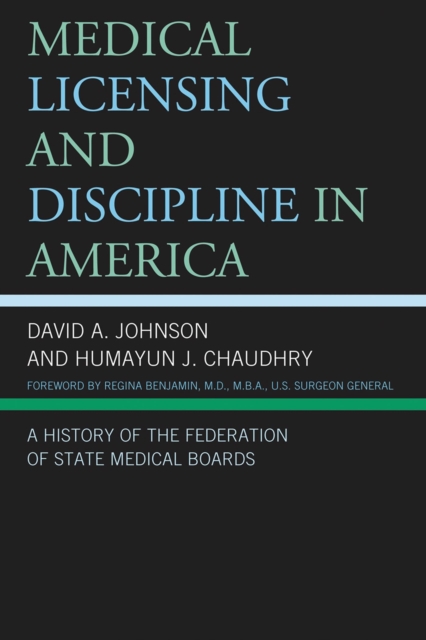
Medical Licensing and Discipline in America
Medical Licensing and Discipline in America traces the evolution of the U.S. medical licensing system from its historical antecedents in the 18th and 19th century to its modern structure. David A. Johnson and Humayun J. Chaudhry provide an organizational history of the Federation of State Medical Boards within the broader context of the development of America's state-based system. As the national organization representing the interests of the individual state medical boards, the Federation has been at the forefront of developments in licensing, discipline, and regulation impacting the medical profession, medical education, and health policy within the United States. The narrative shifts between micro- and macro-level developments in the evolution of America's medical licensing system, blending national context with state-specific and Federation initiatives. For example, the book documents such milestones as the national shift toward greater public accountability by state medical boards as evidenced by California's inclusion of public members on its medical board, New Mexico's requirement for continuing medical education by physicians as a condition for license renewal and the Federation's policy development work advocating for both initiatives among all state medical boards.
The book begins by examining the 18th and 19th century origins of the modern state-based medical regulatory system, including the reinstitution of licensing boards in the latter part of the 19th century and the early challenges facing boards, e.g., license portability, examinations, physician impostors, inter-professional tensions among physicians, etc. Medical Licensing and Discipline in America picks up the story of the Federation and its role in the major issue of licensing and discipline in the 20th century: uniformity in medical statute, evaluation of international medical graduates, nationally administered examinations for licensure, etc.
eBook

The first 10 years of the American Board of Vascular Medicine
The American Board of Vascular Medicine (ABVM) was conceived through the Society for Vascular Medicine and this year will complete 10 years of certifying physicians who practice vascular medicine and endovascular medicine. The value of certification to our physicians, patients, and field cannot be understated. This paper reviews the highlights of the test development process, quality assurance measures, and management of these high stakes examinations.
Journal Article

Popular Medicine and Empirics in Greece, 1900–1950: An Oral History Approach
Western literature has focused on medical plurality but also on the pervasive existence of quacks who managed to survive from at least the eighteenth to the twentieth century. Focal points of their practices have been their efforts at enrichment and their extensive advertising. In Greece, empirical, untrained healers in the first half of the twentieth century do not fit in with this picture. They did not ask for payment, although they did accept ‘gifts’; they did not advertise their practice; and they had fixed places of residence. Licensed physicians did not undertake a concerted attack against them, as happened in the West against the quacks, and neither did the state. In this paper, it is argued that both the protection offered by their localities to resident popular healers and the healers’ lack of demand for monetary payment were jointly responsible for the lack of prosecutions of popular healers. Moreover, the linking of popular medicine with ancient traditions, as put forward by influential folklore studies, also reduced the likelihood of an aggressive discourse against the popular healers. Although the Greek situation in the early twentieth century contrasts with the historiography on quacks, it is much more in line with that on wise women and cunning-folk. It is thus the identification of these groups of healers in Greece and elsewhere, mostly through the use of oral histories but also through folklore studies, that reveals a different story from that of the aggressive discourse of medical men against quacks.
Journal Article