
Catalogue Search | MBRL


Are you sure you want to remove the book from the shelf?

{{itemTitle}}
638
result(s) for
"Lie detectors"
Sort by:


The truth machine : a social history of the lie detector
How do you trap someone in a lie? For centuries, all manner of truth-seekers have used the lie detector. In this eye-opening book, Geoffrey C. Bunn unpacks the history of this device and explores the interesting and often surprising connection between technology and popular culture.
Lie detectors and other truth-telling machines are deeply embedded in everyday American life. Well-known brands such as Isuzu, Pepsi Cola, and Snapple have advertised their products with the help of the \"truth machine, \" and the device has also appeared in countless movies and television shows. The Charles Lindbergh \"crime of the century\" in 1935 first brought lie detectors to the public's attention. Since then, they have factored into the Anita Hill–Clarence Thomas sexual harassment controversy, the Oklahoma City and Atlanta Olympics bombings, and one of the most infamous criminal cases in modern memory: the O. J. Simpson murder trial. The use of the lie detector in these instances brings up many intriguing questions that Bunn addresses: How did the lie detector become so important? Who uses it? How reliable are its results? Bunn reveals just how difficult it is to answer this last question. A lie detector expert concluded that O. J. Simpson was \"one hundred percent lying\" in a video recording in which he proclaimed his innocence; a tabloid newspaper subjected the same recording to a second round of evaluation, which determined Simpson to be \"absolutely truthful.\"
Bunn finds fascinating the lie detector's ability to straddle the realms of serious science and sheer fantasy. He examines how the machine emerged as a technology of truth, transporting readers back to the obscure origins of criminology itself, ultimately concluding that the lie detector owes as much to popular culture as it does to factual science.
eBook


Intelligent Eye-Tracker-Based Methods for Detection of Deception: A Survey
Over the last few years, a large number of studies have been conducted on the monitoring of human behavior remaining beyond conscious control. One area of application for such monitoring systems is lie detection. The most popular method currently used for this purpose is polygraph examination, which has proven its usefulness in the field and in laboratories, but it is not without its drawbacks. Technological advances in data acquisition and automated analysis have ensured that contactless tools are in high demand in security fields like airport screening or pre-employment procedures. As a result, there has been a shift in interest away from traditional polygraph examinations toward the analysis of facial expressions, voice, and speech patterns, as well as eye-tracking signals to detect deceptive behavior. In this paper, we focus on the last aspect, offer a comprehensive overview of two distinct lie detection methodologies based on eye tracking, and examine the commonly used oculomotor feature analysis. Furthermore, we explore current research directions and their results within the context of their potential applications in the field of forensics. We also highlight future research prospects, suggesting the utilization of eye tracking and scan path interpretation methodologies as a potential fully functional alternative for the conventional polygraph in the future. These considerations refer to legal and ethical issues related to the use of new technology to detect lies.
Journal Article


Neuroscience-Based Lie Detection: The Urgent Need for Regulation
While the earliest reliable noninvasive method, electroencephalography (EEG), used electrical signals to localize and quantify brain activity, measures of metabolic activity using positron emission tomography (PET) and single photon emission computed tomography (SPECT) followed a few decades later in the 1960s.7 EEG studies had exceptional benefits for revealing cognitive processing on the subsecond level, localizing epileptogenic foci, and monitoring patients with epilepsy. Penfield's corticography work enabled even more accurate measurements from recordings made directly from the cortex during neurosurgery.8 PET and SPECT have been used widely in basic research studies of neurotransmission and protein synthesis, further advancing our knowledge of neurodegenerative disorders, affective disorders, and ischemic states.9 In the early 1970s, improved detection of weak magnetic fields produced by ion currents within the body enabled the recording of brain signals in the form of extracranial electromagnetic activity for the first time using a technique termed magnetoencephalography (MEG).10 While not as popular or available as EEG, PET, or SPECT, MEG has still yielded fundamental knowledge about human language and cognition, in addition to important information about epilepsy and various psychiatric diseases.11 In the early 1990s, academic medicine witnessed the discovery of a much more powerful technique for measuring brain activity using magnetic resonance imaging (MRI) principles.
Journal Article
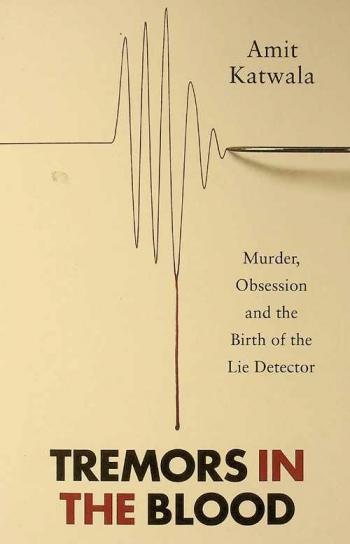
Tremors in the blood : murder, obsession and the birth of the lie detector
\"Truth, murder and the birth of the lie detector. Henry Wilkens burst through the doors of the emergency room covered in his wife's blood. But was he a grieving husband, or a ruthless killer who'd conspired with bandits to have her murdered? To find out, the San Francisco police turned to technology, and a new machine that had just been invented in Berkeley by a rookie detective, a visionary police chief, and a teenage magician with a showman's touch. John Larson, Gus Vollmer and Leonarde Keeler hoped the lie detector would make the justice system fairer - but the flawed device soon grew too powerful for them to control. It poisoned their lives, turned fast friends into bitter enemies, and as it conquered America and the world, it transformed our relationship with the truth in ways that are still being felt. As new forms of lie detection gain momentum in the present day, Tremors in the Blood reveals the incredible truth behind the creation of the polygraph, through gripping true crime cases featuring explosive gunfights, shocking twists and high-stakes courtroom drama. Touching on psychology, technology and the science of the truth, Tremors in the Blood is a vibrant, atmospheric thriller, and a warning from history: be careful what you believe\"--Publisher's description.

Fundamentals of Polygraph Practice
Though polygraph has been the mainstay for government and police departments since World War II, it has undergone substantial transformation in recent years.Fundamentals of Polygraph Practice bridges the gap between the outmoded practices and today's validated testing and analysis protocols.
eBook


Evaluation of the Results of Polygraphy and Polysomnography Performed at Consecutive Times in the Detection of Obstructive Sleep Apnea: a Retrospective Analysis/Obstruktif Uyku Apne Tespitinde Ardisik Zamanlarda Gerceklestirilen Poligraf ile Polisomnograf Sonuclarinin Retrospektif Olarak Karsilastirilmasi
Objective: Polysomnography (PSG) performed at a sleep center is the gold standard for diagnosing sleep apnea syndrome. When PSG cannot be performed due to late appointments or in pandemic conditions, the use of home devices such as polygraphs may be preferred. We aimed to investigate the adequacy and deficiencies of polygraphy (PG) in diagnosing obstructive sleep apnea syndrome in adults who underwent PSG and PG recording at our center. Materials and Methods: Patients who underwent cardiorespiratory PG and then PSG at the sleep center with suspicion of sleep apnea syndrome were retrospectively analyzed. Apnea Hypopnea Index (AHI) values were compared. There was a total of 34 patients in the study, 10 females and 24 males. Results: The mean AHI was 38.3[+ or -]22.1 in PG and 43.5[+ or -]27.5 in PSG. No statistically significant difference was found in AHI values between the two tests (p=0.065). In both groups, one (2.9%) patient had a normal AHI value. The AHI ratings of the patients on PLG were 4 (11.8%) mild, 8 (23.5%) moderate, and 21 (61.8%) severe, and on PSG, they were 5 (14.7%) mild, 6 (17.6%) moderate, and 22 (64.7%) severe. Conclusion: In our study, we found similar AHI values in PG used at home and PSG in the sleep center. When sleep apnea syndrome is suspected, if the PSG appointment in the sleep center is long, or the patient cannot sleep in the sleep center due to the occurrence of a pandemic or other reasons, a PG devices used at home may be preferred. Keywords: Poligraphy (PG), polisomnography (PSG), obstructive sleep apnea syndrome (OSAS) Amac: Uyku apne sendromu tanisinda altin standart uyku merkezinde cekilen polisomnografidir (PSG). Uyku merkezi yatis sirasinin uzun olmasi veya pandemi gibi nedenlerle islemin yapilamadigu i zamanlarda kardiyorespiratuvar poligraf (PG) gibi ev cihazlarinin kullanimi ndeme gelmektedir. Merkezimizde farkli gunlerde PSG ve PG kaydi yapilan eriskin hasta grubunda, obstruktif uyku apne sendromu tanisini koymada PG'nin yeterlilik ve eksiklerini arastirmayi hedefledik. Gerec ve Yontem: Uyku apne sendromu on tanisiyla once kardiyorespiratuVar PG sonrasinda Uyku Merkezi'nde yatirilarak PSG cekilen hastalar retrospektif olarak tarandi. Apne Hipopne Indeksi (AHI) degerleri karsilastirildi. Bulgular: Calismada 10 kadin, 24 erkek toplam 34 hasta incelendi. PG'de ortalama AHI 38,3[+ or -]22,1 iken PSG'de 43,5[+ or -]27,5 saptandi. Iki test arasinda elde edilen AHI degerleri acisindan istatistiksel anlamli fark yoktu (p=0,065). Her iki grupta da 1 (%2,9) hasta normal AHI degerine sahipti. PG'de hastalarin AHI derecelendirmesi, 4 (%11,8) hafif, 8 (%23,5) orta, 21 (%61,8) agirken PSG'de, 5 (%14,7) hafif, 6 (%17,6) orta, 22 (%64,7) agirdi. Sonuc: Calismamizda evde cekilen kardiyorespiratuvar PG ile uyku merkezi ortaminda cekilen PSG'de saptanan AHI degerlerinin benzer oldugunu bulduk. Uyku apne sendromundan suphelenildiginde, uyku merkezinde PSG randevusunun uzun olmasi, pandemi veya baska nedenlerle hastanin uyku merkezinde yatamadigi durumlarda evde kullanilan kardiyorespiratuvar PG cihazi tercih edilebilir. Anahtar Kelimeler: Poligrafi (PG), polisomnografi (PSG), obstruktif uyku apne sendromu (OUAS)
Journal Article