
Catalogue Search | MBRL


Are you sure you want to remove the book from the shelf?

{{itemTitle}}
11,526
result(s) for
"Ligand binding (Biochemistry)"
Sort by:

Computational approaches to biochemical reactivity
This work summarises recent results in the rapidly developing discipline of the computational aspects of biochemical reactivity. It presents a comprehensive and critical treatise on the subject, with numerous references covering all relevant and recent work. The chapters, written by experts in the field, deal with quantum mechanical models for reactions in solution, ab initio molecular orbital studies on enzymatic reactions, combined quantum-classical models for proteins, force field approaches for modelling enzymes, electrostatic effects in proteins, electrostatic basis of enzyme catalysis, the mechanism of proteases, modelling of proton transfer reactions in enzymes and protein-ligand interactions.
eBook
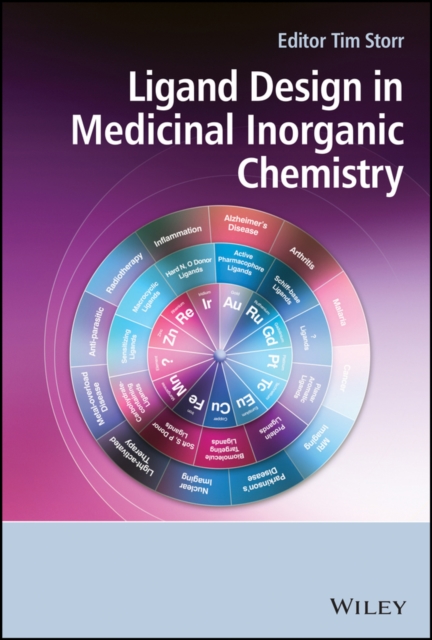
Ligand design in medicinal inorganic chemistry
Increasing the potency of therapeutic compounds, while limiting side-effects, is a common goal in medicinal chemistry. Ligands that effectively bind metal ions and also include specific features to enhance targeting, reporting, and overall efficacy are driving innovation in areas of disease diagnosis and therapy.
Ligand Design in Medicinal Inorganic Chemistry presents the state-of-the-art in ligand design for medicinal inorganic chemistry applications. Each individual chapter describes and explores the application of compounds that either target a disease site, or are activated by a disease-specific biological process.
Ligand design is discussed in the following areas:
* Platinum, Ruthenium, and Gold-containing anticancer agents
* Emissive metal-based optical probes
* Metal-based antimalarial agents
* Metal overload disorders
* Modulation of metal-protein interactions in neurodegenerative diseases
* Photoactivatable metal complexes and their use in biology and medicine
* Radiodiagnostic agents and Magnetic Resonance Imaging (MRI) agents
* Carbohydrate-containing ligands and Schiff-base ligands in Medicinal Inorganic Chemistry
* Metalloprotein inhibitors
Ligand Design in Medicinal Inorganic Chemistry provides graduate students, industrial chemists and academic researchers with a launching pad for new research in medicinal chemistry.
eBook

Crystal structures of agonist-bound human cannabinoid receptor CB1
The cannabinoid receptor 1 (CB1) is the principal target of the psychoactive constituent of marijuana, the partial agonist Δ9-tetrahydrocannabinol (Δ9-THC). Here we report two agonist-bound crystal structures of human CB1 in complex with a tetrahydrocannabinol (AM11542) and a hexahydrocannabinol (AM841) at 2.80 Å and 2.95 Å resolution, respectively. The two CB1-agonist complexes reveal important conformational changes in the overall structure, relative to the antagonist-bound state, including a 53% reduction in the volume of the ligand-binding pocket and an increase in the surface area of the G-protein-binding region. In addition, a 'twin toggle switch' of Phe2003.36 and Trp3566.48 (superscripts denote Ballesteros-Weinstein numbering) is experimentally observed and appears to be essential for receptor activation. The structures reveal important insights into the activation mechanism of CB1 and provide a molecular basis for predicting the binding modes of Δ9-THC, and endogenous and synthetic cannabinoids. The plasticity of the binding pocket of CB1 seems to be a common feature among certain class A G-protein-coupled receptors. These findings should inspire the design of chemically diverse ligands with distinct pharmacological properties.The cannabinoid receptor 1 (CB1) is the principal target of the psychoactive constituent of marijuana, the partial agonist Δ9-tetrahydrocannabinol (Δ9-THC). Here we report two agonist-bound crystal structures of human CB1 in complex with a tetrahydrocannabinol (AM11542) and a hexahydrocannabinol (AM841) at 2.80 Å and 2.95 Å resolution, respectively. The two CB1-agonist complexes reveal important conformational changes in the overall structure, relative to the antagonist-bound state, including a 53% reduction in the volume of the ligand-binding pocket and an increase in the surface area of the G-protein-binding region. In addition, a 'twin toggle switch' of Phe2003.36 and Trp3566.48 (superscripts denote Ballesteros-Weinstein numbering) is experimentally observed and appears to be essential for receptor activation. The structures reveal important insights into the activation mechanism of CB1 and provide a molecular basis for predicting the binding modes of Δ9-THC, and endogenous and synthetic cannabinoids. The plasticity of the binding pocket of CB1 seems to be a common feature among certain class A G-protein-coupled receptors. These findings should inspire the design of chemically diverse ligands with distinct pharmacological properties.
Journal Article

Design of amidobenzimidazole STING receptor agonists with systemic activity
Stimulator of interferon genes (STING) is a receptor in the endoplasmic reticulum that propagates innate immune sensing of cytosolic pathogen-derived and self DNA
1
. The development of compounds that modulate STING has recently been the focus of intense research for the treatment of cancer and infectious diseases and as vaccine adjuvants
2
. To our knowledge, current efforts are focused on the development of modified cyclic dinucleotides that mimic the endogenous STING ligand cGAMP; these have progressed into clinical trials in patients with solid accessible tumours amenable to intratumoral delivery
3
. Here we report the discovery of a small molecule STING agonist that is not a cyclic dinucleotide and is systemically efficacious for treating tumours in mice. We developed a linking strategy to synergize the effect of two symmetry-related amidobenzimidazole (ABZI)-based compounds to create linked ABZIs (diABZIs) with enhanced binding to STING and cellular function. Intravenous administration of a diABZI STING agonist to immunocompetent mice with established syngeneic colon tumours elicited strong anti-tumour activity, with complete and lasting regression of tumours. Our findings represent a milestone in the rapidly growing field of immune-modifying cancer therapies.
A small-molecule agonist for the cGAS–STING pathway has systemic activity in a mouse model of colon cancer.
Journal Article

Ligand binding free-energy calculations with funnel metadynamics
The accurate resolution of the binding mechanism of a ligand to its molecular target is fundamental to develop a successful drug design campaign. Free-energy calculations, which provide the energy value of the ligand–protein binding complex, are essential for resolving the binding mode of the ligand. The accuracy of free-energy calculation methods is counteracted by their poor user-friendliness, which hampers their broad application. Here we present the Funnel-Metadynamics Advanced Protocol (FMAP), which is a flexible and user-friendly graphical user interface (GUI)-based protocol to perform funnel metadynamics, a binding free-energy method that employs a funnel-shape restraint potential to reveal the ligand binding mode and accurately calculate the absolute ligand–protein binding free energy. FMAP guides the user through all phases of the free-energy calculation process, from preparation of the input files, to production simulation, to analysis of the results. FMAP delivers the ligand binding mode and the absolute protein–ligand binding free energy as outputs. Alternative binding modes and the role of waters are also elucidated, providing a detailed description of the ligand binding mechanism. The entire protocol on the paradigmatic system benzamidine–trypsin, composed of ~105 k atoms, took ~2.8 d using the Cray XC50 piz Daint cluster at the Swiss National Supercomputing Centre.
Here the authors describe a GUI-based protocol called FMAP for using funnel metadynamics to calculate the absolute binding free energy of a ligand to its molecular target and predict the ligand binding mode and mechanism.
Journal Article

P2Rank: machine learning based tool for rapid and accurate prediction of ligand binding sites from protein structure
Background
Ligand binding site prediction from protein structure has many applications related to elucidation of protein function and structure based drug discovery. It often represents only one step of many in complex computational drug design efforts. Although many methods have been published to date, only few of them are suitable for use in automated pipelines or for processing large datasets. These use cases require stability and speed, which disqualifies many of the recently introduced tools that are either template based or available only as web servers.
Results
We present P2Rank, a stand-alone template-free tool for prediction of ligand binding sites based on machine learning. It is based on prediction of ligandability of local chemical neighbourhoods that are centered on points placed on the solvent accessible surface of a protein. We show that P2Rank outperforms several existing tools, which include two widely used stand-alone tools (Fpocket, SiteHound), a comprehensive consensus based tool (MetaPocket 2.0), and a recent deep learning based method (DeepSite). P2Rank belongs to the fastest available tools (requires under 1 s for prediction on one protein), with additional advantage of multi-threaded implementation.
Conclusions
P2Rank is a new open source software package for ligand binding site prediction from protein structure. It is available as a user-friendly stand-alone command line program and a Java library. P2Rank has a lightweight installation and does not depend on other bioinformatics tools or large structural or sequence databases. Thanks to its speed and ability to make fully automated predictions, it is particularly well suited for processing large datasets or as a component of scalable structural bioinformatics pipelines.
Journal Article

A vaccine targeting the RBD of the S protein of SARS-CoV-2 induces protective immunity
Severe acute respiratory syndrome coronavirus 2 (SARS-CoV-2) causes a respiratory disease called coronavirus disease 2019 (COVID-19), the spread of which has led to a pandemic. An effective preventive vaccine against this virus is urgently needed. As an essential step during infection, SARS-CoV-2 uses the receptor-binding domain (RBD) of the spike protein to engage with the receptor angiotensin-converting enzyme 2 (ACE2) on host cells
1
,
2
. Here we show that a recombinant vaccine that comprises residues 319–545 of the RBD of the spike protein induces a potent functional antibody response in immunized mice, rabbits and non-human primates (
Macaca mulatta
) as early as 7 or 14 days after the injection of a single vaccine dose. The sera from the immunized animals blocked the binding of the RBD to ACE2, which is expressed on the cell surface, and neutralized infection with a SARS-CoV-2 pseudovirus and live SARS-CoV-2 in vitro. Notably, vaccination also provided protection in non-human primates to an in vivo challenge with SARS-CoV-2. We found increased levels of RBD-specific antibodies in the sera of patients with COVID-19. We show that several immune pathways and CD4 T lymphocytes are involved in the induction of the vaccine antibody response. Our findings highlight the importance of the RBD domain in the design of SARS-CoV-2 vaccines and provide a rationale for the development of a protective vaccine through the induction of antibodies against the RBD domain.
A recombinant vaccine that targets the receptor-binding domain of the spike protein of SARS-CoV-2 induces a potent antibody response in immunized mice, rabbits and non-human primates, and protects primates from infection with the virus.
Journal Article