
Catalogue Search | MBRL


Are you sure you want to remove the book from the shelf?

{{itemTitle}}
304
result(s) for
"Linguistic change -- Congresses"
Sort by:

Contact talk : the discursive organization of contact and boundaries
\"This book critiques and operationalizes contemporary thinking in the rapidly expanding field of linguistic anthropology. It does so using cases studies of actual everyday language practices from an extremely understudied, yet incredibly important area of the global South, Indonesia. In doing so, it provides a rich set of studies that model and explain complex linguistic anthropological analysis in engaging and easily understood ways. As a book that is both accessible for undergraduate students and enlightening for graduate students through to senior professors, this book problematizes a wide range of assumptions. The diversity of settings and methodologies used in this book surpass many recent collections that attempt to address issues surrounding contemporary processes of diversification given rapid ongoing social change. In focusing on the trees, so to speak, the collection as a whole also enables readers to see the forest. This approach provides a rare insight into relationships between everyday language practices, social change, and the ever present and ongoing processes of nation building\"-- Provided by publisher.
Book
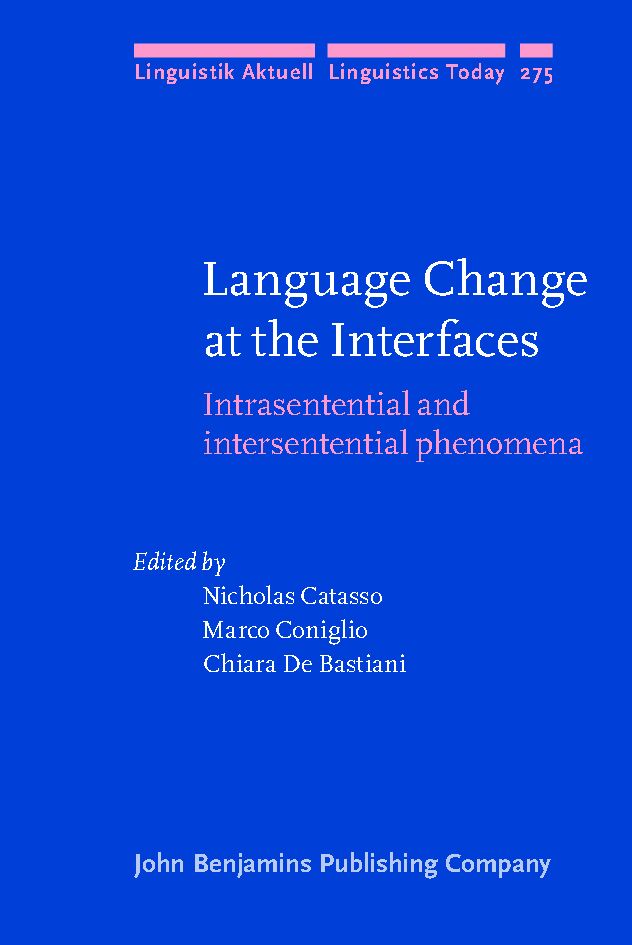
Language change at the interfaces : intrasentential and intersentential phenomena
This volume offers an up-to-date survey of linguistic phenomena at the interfaces between syntax and prosody, information structure and discourse - with a special focus on Germanic and Romance - and their role in language change.
eBook

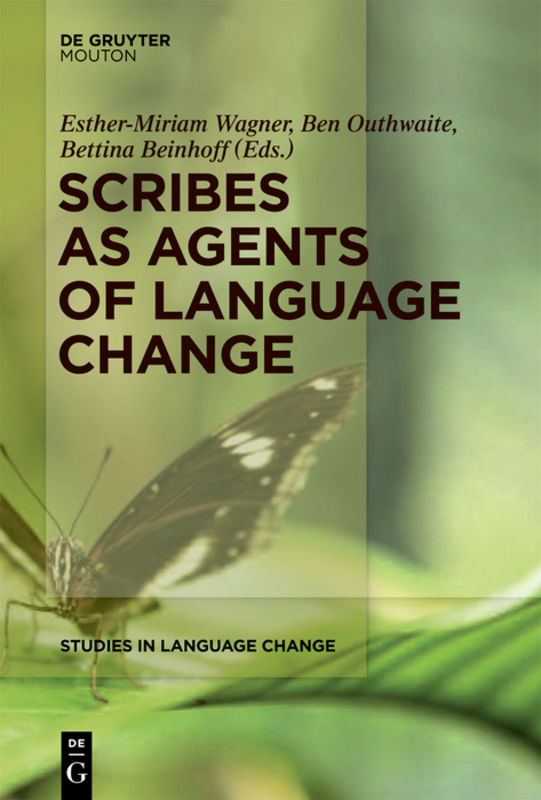
Scribes as Agents of Language Change
The majority of our evidence for language change in pre-modern times comes from the written output of scribes. The present volume deals with a variety of aspects of language change and focuses on the role of scribes. The individual articles, which treat different theoretical and empirical issues, reflect a broad cross-linguistic and cross-cultural diversity. The languages that are represented cover a broad spectrum, and the empirical data come from a wide range of sources. This book provides a wealth of new data and new perspectives on old problems, and it raises new questions about the actual mechanisms of language change.
eBook
Grammatical Replication and Borrowability in Language Contact
The volume presents new insights into two basic theoretical issues hotly debated in recent work on grammaticalization and language contact: grammatical replication and grammatical borrowability. The key issues are: How can grammatical replication be distinguished from other, superficially similar processes of contact-induced linguistic change, and under what conditions does it take place? Are there grammatical morphemes or constructions that are more easily borrowed than others, and how can language contact account for areal biases in the borrowing (vs. calquing) of grammatical formatives? The book is a major contribution to the ongoing theoretical discussion concerning the relationship between grammaticalization and language contact on a broad empirical basis.
eBook
Creolization and language change
No detailed description available for \"Creolization and Language Change\".
eBook

Endangered Languages and Languages in Danger
This peer-reviewed collection brings together the latest research on language endangerment and language rights. It creates a vibrant, interdisciplinary platform for the discussion of the most pertinent and urgent topics central to vitality and equality of languages in today’s globalised world. The novelty of the volume lies in the multifaceted view on the variety of dangers that languages face today, such as extinction through dwindling speaker populations and lack of adequate preservation policies or inequality in different social contexts (e.g. access to justice, education and research resources). There are examples of both loss and survival, and discussion of multiple factors that condition these two different outcomes. We pose and answer difficult questions such as whether forced interventions in preventing loss are always warranted or indeed viable. The emerging shared perspective is that of hope to inspire action towards improving the position of different languages and their speakers through research of this kind.
eBook
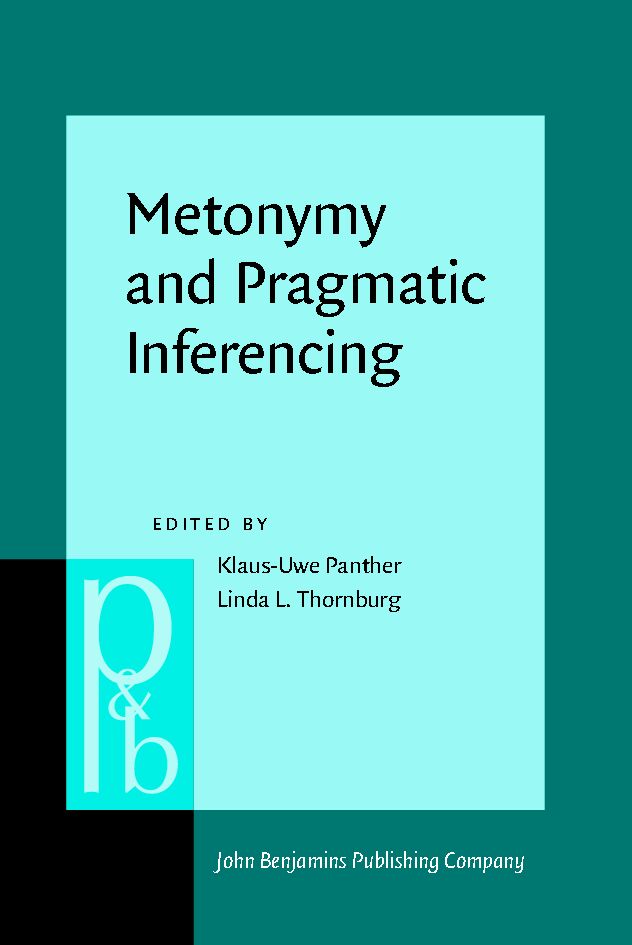
Metonymy and Pragmatic Inferencing
In recent years, conceptual metonymy has been recognized as a cognitive phenomenon that is as fundamental as metaphor for reasoning and the construction of meaning. The thoroughly revised chapters in the present volume originated as presentations in a workshop organized by the editors for the 7th International Pragmatics Conference held in Budapest in 2000. They constitute, according to an anonymous reviewer, \"an interesting contribution to both cognitive linguistics and pragmatics.\" The contributions aim to bridge the gap, and encourage discussion, between cognitive linguists and scholars working in a pragmatic framework. Topics include the metonymic basis of explicature and implicature, the role of metonymically-based inferences in speech act and discourse interpretation, the pragmatic meaning of grammatical constructions, the impact of metonymic mappings on and their interaction with grammatical structure, the role of metonymic inferencing and implicature in linguistic change, and the comparison of metonymic principles across languages and different cultural settings.
eBook
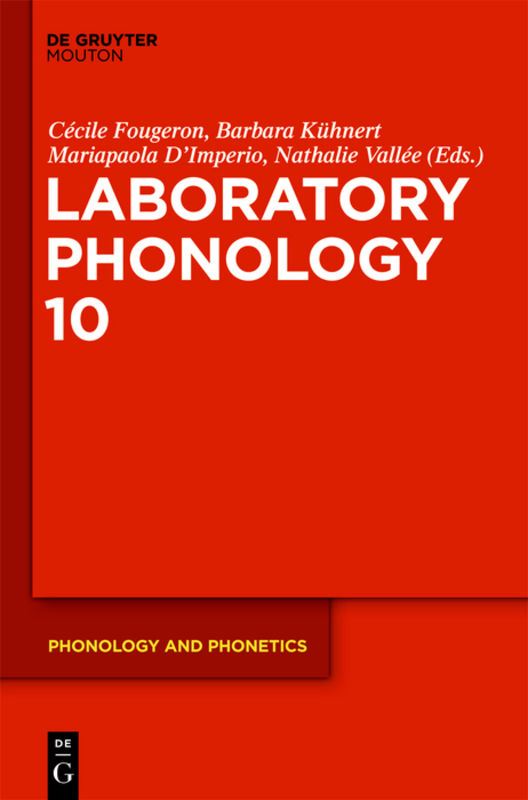
Laboratory Phonology 10
The present volume contains a selection of the papers and commentaries which were originally presented at the Tenth Conference of Laboratory Phonology (LabPhon10) held in Paris from June 29 to July 1, 2006. The theme of the volume is Variation, Phonetic Detail and Phonological Representation. It brings together specialists of different fields of speech research with the goal to discuss the relevance of patterns of variation and phonetic details on phonological representations and theories. The topic is addressed from the angles of speech production, perception, acquisition, speech disorders, and language universals.
The contributions are grouped thematically in five sections, each of which is commented by invited discussants.
Section I contains the contributions to the special '10th anniversary session' of the conference which represent in a prototypical way some of the different research questions that have been at the core of important debates over the last 20 years in the laboratory phonology community. Issues of phonological universals and language typology are addressed in section II. In section III, the notions of variation and phonetic detail are examined with regard to how they are acquired and dealt with in the formation of phonological representation in emerging systems. Section IV focuses on recent work at the crossroad between normal and disordered speech.
eBook
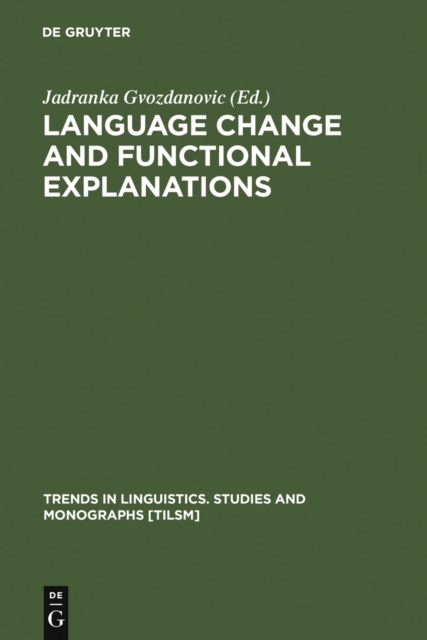
Language change and functional explanations
This collection of articles offers insights into language change as a function of communicative use. The multiple factors underlying change are described and possible explanations are adduced. It is shown that change is a function of communicative choices and their mapping onto the rule system, a mapping that is cognitively monitored.
eBook