
Catalogue Search | MBRL


Are you sure you want to remove the book from the shelf?

{{itemTitle}}
99
result(s) for
"Lion Fiction"
Sort by:

Lion lessons
\"Learning to be a lion takes some serious lessons, but luckily, this kid has a teacher who is a real pro\"-- Provided by publisher.
Book

Feuchtwanger's \Jud Süß\ and the Ambiguities of Jewish Political Power
This reading reassesses Feuchtwanger's novel Jud Süß (1925) as historical fiction, focusing on the temporality of the events portrayed, rather than the era in which the author wrote. An examination of the motif of betrayal, intrinsic to the historical setting's characterization, lends insight into the novel's portrayal of Jewish political power as deeply ambivalent. Whereas previous scholarship has uncritically received Feuchtwanger's justification for writing the novel, I argue that the author's interest lay in his subject – the court Jew, Josef Süß Oppenheimer – precisely as a historical Jewish figure. Through his protagonist, Feuchtwanger sought to probe dilemmas that confronted Jews torn between religious community and civil society. Ultimately, the novel espouses a pessimistic view of Jewish political power, and as response to the \"Jewish question,\" it exposes the insincerity of the state's offer of equal rights to Jews in exchange for relinquishing Judaism.
Journal Article

How to hide a lion
Iris understands that grown-ups are afraid of lions, but when she finds one in her playhouse she knows he is kind so she keeps him hidden from her parents for as long as possible.
Book
The wolf and the lion
Two cubs, a wolf and a lion, are rescued by a young woman, Alma, who hides them to ensure they are not separated.
Streaming Video

Nala and Simba
Lion cub Nala, who loves to play and go on adventures, sets out on the adventure of a lifetime with her best friend, Simba, the cub who will one day become king.
Book
Feuchtwanger's Jud Süβ and the Ambiguities of Jewish Political Power
The writer aims to foster the appropriation of this reflection on the part of the reader. Because Feuchtwanger's notion of historical fiction-that it comments on the epoch of its composition-coincides with contemporary views of the genre, this approach to Jud Süß seems promising. According to J. Friedrich Battenberg, Jews were forbidden to bear arms until the mid-seventeenth century. Noblemen reject Süß as inferior and deem counterfeit his attempts to fit in. Because Süß cultivates noble tastes as a Jewish public figure, he threatens nobles' authority; Süß's flamboyant lifestyle posits his belonging to the ruling class, even though he is not acknowledged as one of its members. Since the state cannot be trusted to fulfill its promises, the novel suggests, Jews should follow Süß's example and renounce the political sphere as a realm at odds with their interests and ultimately closed to them.
Journal Article

Everyday brave
When a young girl is told that her lion, who makes her feel brave, is only in her imagination, the world suddenly feels a lot scarier, until she finds a roar of her own.
Book
Mia and the white lion
Mia, a willful young girl, bonds with Charlie, a white lion cub. Worried he's in danger, she travels across the South African savanna in search of a land where Charlie can live in freedom.
Streaming Video

The imaginary okapi
\"Beshte discovers an okapi--a shy animal that looks like a cross between a zebra and a giraffe. He hides whenever the rest of the Guard come by so they assume Beshte made up an imaginary friend. But now the okapi is being chased by a leopard! Can the Lion Guard protect him?\"--Amazon.com
Book
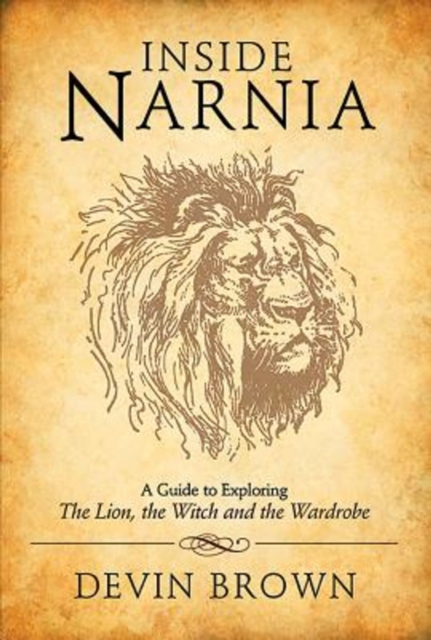
Inside Narnia
Join award-winning author Devin Brown as he takes readers on a fascinating journey to the land of Narnia. Whether you're a longtime fan of The Chronicles of Narnia or are just discovering them for the first time, you will be amazed and inspired as you undertake your very own chapter-by-chapter guided tour of C. S. Lewis's beloved classics.Learn more about the book that started it all-The Lion, the Witch and the Wardrobe-and about its creator, C. S. Lewis. Discover how Professor Lewis first came to write his wonderful story about a magical land where it is always winter and never Christmas. Uncover the story-behind-the-story of how four children and a great lion named Aslan brought springtime back and rescued its inhabitants (beavers, fauns, and even centaurs) from the spell of the evil White Witch.
eBook