
Catalogue Search | MBRL


Are you sure you want to remove the book from the shelf?

{{itemTitle}}
41,195
result(s) for
"Literary characters"
Sort by:

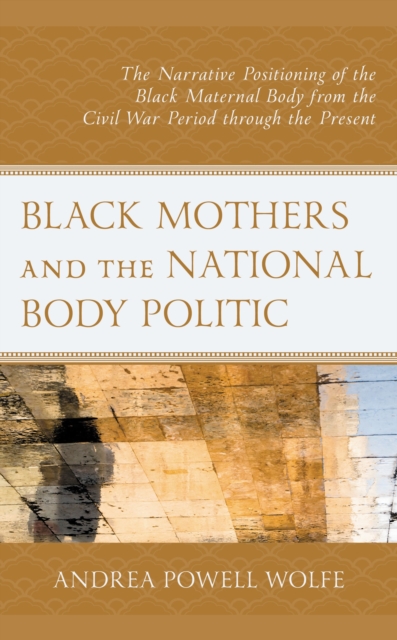
Black Mothers and the National Body Politic
Black Mothers and the National Body Politic: The Narrative Positioning of the Black Maternal Body from the Civil War Period through the Present focuses on the struggles and triumphs of black motherhood in six works of narrative prose composed from the Civil War period through the present.
eBook

Shakespeare and cognition : thinking fast and slow through character
\"Shakespeare and Cognition challenges orthodox approaches to Shakespeare by using recent psychological findings about human decision-making to analyse the unique characters that populate his plays. It aims to find a way to reconnect readers and watchers of Shakespeare's plays to the fundamental questions that first animated them. Why does Othello succumb so easily to Iago's manipulations? Why does Anne allow herself to be wooed by Richard III, the man who killed her husband and father? Why does Macbeth go from being a seemingly reasonable man to a cold-blooded killer? Why does Hamlet take so long to kill Claudius? This book aims to answer these questions from a fresh perspective\"-- Provided by publisher.
Book

The Prince’s Two Bodies: The Machiavellian Hero as a Literary Character Between History and Invention
This article discusses how in De principatibus Machiavelli defines the status of the treatise main character (the Prince) through the intersection of three levels: (a) history (as a character born from the symbolic fusion of traits and characteristics of historical personalities who actually existed); (b) politics (as a character who is the sign of an abstract political function); and (c) literary invention (as a fictional character constructed according to the rhetorical and logical strategies of literary invention). This case study shows how rhetoric, historiography, oratory, and political analysis are mixed together in a coherent organism, thanks to the creation of a character (the Prince) who constantly oscillates between historical–political reality and literary fiction. The analysis, both theoretical and historical, of the status of the protagonist of De principatibus is accompanied by the study of the critical readings of Francesco De Sanctis, Antonio Gramsci, and Luigi Russo, whose reception is strongly conditioned by the ambiguous nature of the character of the Prince, both in terms of critical categories and argumentative strategies.
Journal Article

Falstaff : give me life
\"From Harold Bloom, one of the greatest Shakespeare scholars of our time as well as a beloved professor who has taught the Bard for over half a century, an intimate, wise, deeply compelling portrait of Falstaff--Shakespeare's greatest enduring and complex comedic character. Falstaff is both a comic and tragic central protagonist in Shakespeare's three Henry plays: Henry IV, Parts One and Two, and Henry V. He is companion to Prince Hal (the future Henry V), who loves him, goads, him, teases him, indulges his vast appetites, and commits all sorts of mischief with him--some innocent, some cruel. Falstaff can be lewd, funny, careless of others, a bad creditor, an unreliable friend, and in the end, devastatingly reckless in his presumption of loyalty from the new King. Award-winning author and beloved professor Harold Bloom writes about Falstaff with the deepest compassion and sympathy and also with unerring wisdom. He uses the relationship between Falstaff and Hal to explore the devastation of severed bonds and the heartbreak of betrayal. Just as we encounter one type of Anna Karenina or Jay Gatsby when we are young adults and another when we are middle-aged, Bloom writes about his own shifting understanding of Falstaff over the course of his lifetime. Ultimately we come away with a deeper appreciation of this profoundly complex character, and the book as a whole becomes an extraordinarily moving argument for literature as a path to and a measure of our humanity. Bloom is mesmerizing in the classroom, wrestling with the often tragic choices Shakespeare's characters make. He delivers that kind of exhilarating intimacy and clarity in Falstaff, inviting us to look at a character as a flawed human who might live in our world. The result is deeply intimate and utterly compelling.\" -- Publisher's description
BOOK

Chaos in the Quotidian: Alice Thomas Ellis's Spirits of the Celtic Fringe
The disruption of a middle class complacency interlaced with subtle cruelties is at the heart of Alice Thomas Ellis’s fiction. To achieve this unseating of prescribed mores she appropriates, in several of her novels, supernatural elements of Celtic mythology. The final outcomes of Thomas Ellis’s tales do not invoke tragedy of a shocking nature. But they do induce fundamental change in individuals, and it is the conviction of this change - wrought by paranormal intervention - on which the success of the narratives depends. Why does the author deploy the supernatural to actuate a major shift in her characters’ view not only of their own lives, but of the ambient universe in which they exist? As a committed Catholic, does Thomas Ellis herself believe in the phenomenon of supernatural visitation? Moreover, manifestation of the supernatural in her work is facilitated by the world of nature. Do natural phenomena serve as a channel for divine expression? Despite her ironic – even facetious – tone at times, Thomas Ellis’s rendering of paranormal intercession is compellingly done. Does she, however, merely exploit the supernatural as a sly means of exposing her characters’ glibness, thereby bringing it to account? Alternatively, does the supernatural serve as a kind of disguise, a metaphor for the epiphany of divine intervention? In this paper I intend to examine Thomas Ellis’s use of the supernatural in all its facets in her work and to probe her possible motives for a seemingly serious engagement with what remain intangible phenomena in a world of increasing materialism and cynicism; and how, for all the apparent artifice and archness of her stories, the author might wish to engage with her readers in serious existential questions for the modern age.
Journal Article

How to be a heroine, or, What I've learned from reading too much
\"A young writer explores what some of the greatest women in literature have meant to her--and how these timeless characters still serve as a guide for the way we lead our lives\"-- Provided by publisher.
Book
FiCT-O: Modelling Fictional Characters in Detective Fiction from the 19th to the 20th Century
This paper proposes a formal descriptive model for understanding the evolution of characters in detective fiction from the 19th to the 20th century, using methodologies and technologies from the Semantic Web. The integration of Digital Humanities within the theory of comparative literature opens new paths of study that allow for a digital approach to the understanding of intertextuality through close reading techniques and ontological modelling. In this research area, the variety of possible textual relationships, the levels of analysis required to classify these connections, and the inherently referential nature of certain literary genres demand a structured taxonomy. This taxonomy should account for stylistic elements, narrative structures, and cultural recursiveness that are unique to literary texts. The detective figure, central to modern literature, provides an ideal lens for examining narrative intertextuality across the 19th and 20th centuries. The analysis concentrates on character traits and narrative functions, addressing various methods of rewriting within the evolving cultural and creative context of authorship. Through a comparative examination of a representative sample of detective fiction from the period under scrutiny, the research identifies mechanisms of (meta)narrative recurrence, transformation, and reworking within the canon. The outcome is a formal model for describing narrative structures and techniques, with a specific focus on character development, aimed at uncovering patterns of continuity and variation in diegetic content over time and across different works, adaptable to analogous cases of traditional reworking and narrative fluidity.
Journal Article

The Cambridge companion to Frankenstein
\"The Cambridge Companion to Frankenstein consists of sixteen original essays on Mary Shelley's novel by leading scholars, providing an invaluable introduction to Frankenstein and its various critical contexts. Theoretically informed but accessibly written, this volume relates Frankenstein to various social, literary, scientific and historical contexts, and outlines how critical theories such as ecocriticism, posthumanism, and queer theory generate new and important discussion in illuminating ways. The volume also explores the cultural afterlife of the novel including its adaptations in various media such as drama, film, television, graphic novels, and literature aimed at children and young adults. Written by an international team of leading experts, the essays provide new insights into the novel and the various critical approaches which can be applied to it. The volume is an essential guide to students and academics who are interested in Frankenstein and who wish to know more about its complex literary history\"-- Provided by publisher.
BOOK

Sympathy for Oswald Mosley: Politics of Reading and Historical Resemblance in the Moral Imagination of an English Literary Society
The mid-twentieth-century English novelist, Henry Williamson, wrote nature stories but also romantic and historical fiction, including a fifteen-volume saga that contains a largely favorable characterization of Oswald Mosley, the leader of the British Union of Fascists. This essay considers the challenge of such a fascist character through the prism of the literary imagination of Williamson readers, and more specifically through my longstanding ethnographic work with an English literary society constituted in the author’s name. I am centrally concerned with how literary society members deal with the positive depiction of the Mosley-based character through the stages of the reading process that they identify and describe. Do the immersive values commonly attached to their solitary reading culture, for instance, assist or further problematize that engagement? What role does their subsequent, shared practice of character evaluation play? As well as considering the treatment of characters as objects of sympathy, I explore the vital sympathies that for literary society members tie characters together with historical persons. Across the essay I dialogue with anthropological literature on exemplars, historical commentaries on the fascist cult of leadership, and finally with the philosophical claims that Nussbaum makes for the moral and political consequences of fiction reading.
Journal Article