
Catalogue Search | MBRL


Are you sure you want to remove the book from the shelf?

{{itemTitle}}
333,288
result(s) for
"Literary criticism"
Sort by:

On voice in poetry : the work of animation
\"What do we mean by 'voice' in poetry? In this work, David Nowell Smith teases out the diverse meanings of 'voice' - from a poem's soundworld to the rhetorical gestures through which poems speak to us - to embark on a philosophical exploration of the concept of voice itself. His study encompasses renaissance lyrics and concrete poetry, analyses of metre and discussions of technological treatments of voice, and radical and far-reaching readings of Augustine, Baudelaire, Derrida, Hopkins and Kristeva alongside contemporary poets such as Sean Bonney, Lisa Robertson, and John Wilkinson. It places voice at the crux of debates including political representation through rhythm and melody, the 'origin' of languages and the psychology of language acquisition. Throughout, this informs a reflection on how sounds come to have meaning, and on the ways in which we articulate ourselves as subjects\"-- Provided by publisher.
Book
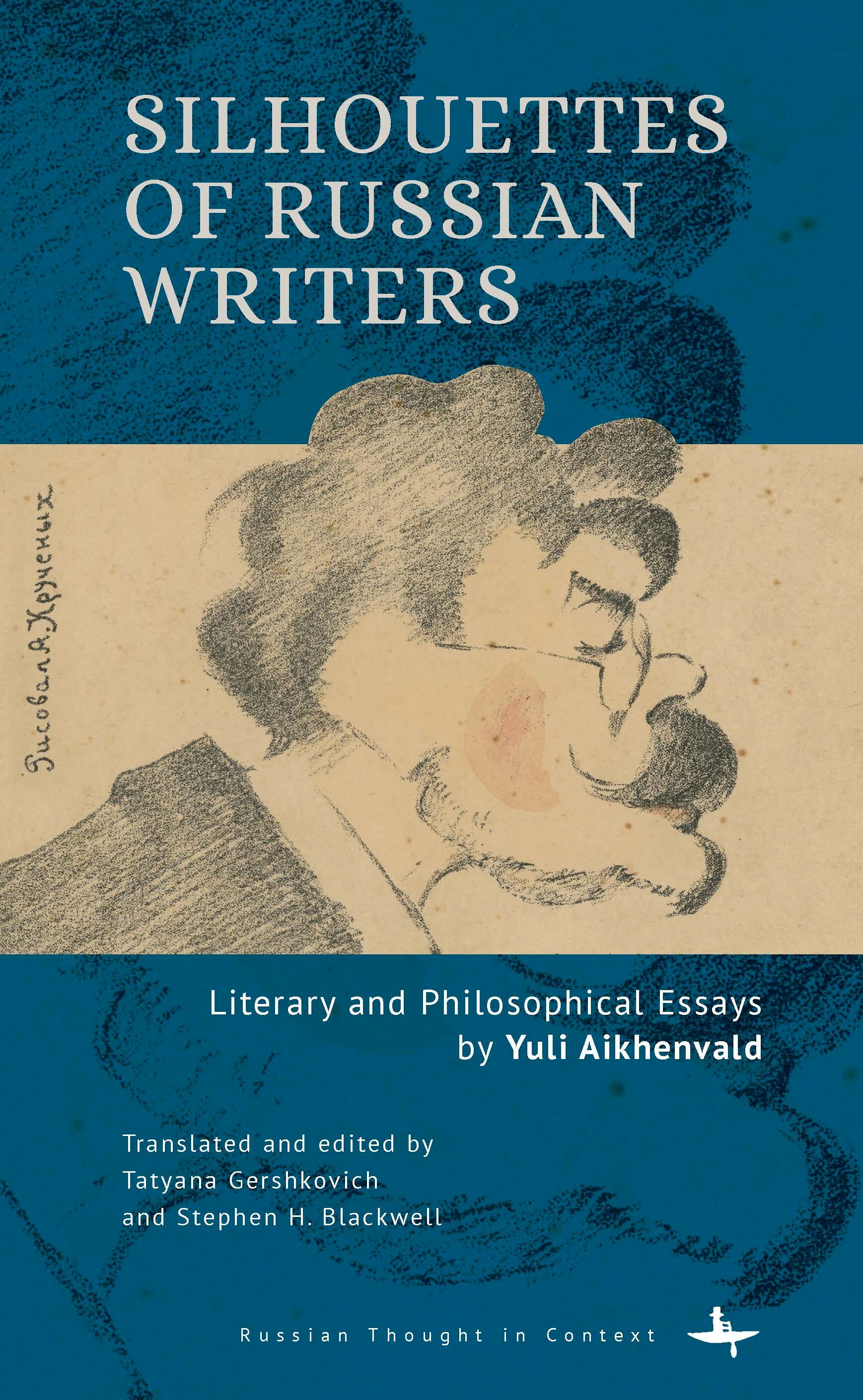
Silhouettes of Russian Writers
Yuli Aikhenvald was one of the most popular and influential Russian literary critics of the early 1900s. His major book, Silhouettes of Russian Writers , went through six ever-expanding editions. A major presence in Vladimir Nabokov’s early career, Aikhenvald has since been neglected by other writers and critics. This collection translates several of Aikhenvald’s key essays, making him available to English-speaking readers for the first time. Today’s readers will discover in these writings original, impassioned interpretations of major Russian authors and a theoretical vision that grapples with an urgent question in this “crisis-of-the-humanities” moment: What is the function of criticism?
eBook

John Fowles
\"John Fowles (1926-2005) has the distinction of being both a best-selling novelist and one whose work has earned the respect of academic critics. This vibrant collection of original essays sheds new critical light on all of Fowles's writings, with a special focus on The French Lieutenant's Woman as the most widely studied of his works. The stellar cast of contributors offers an outstanding range of expertise on Fowles, providing fresh reassessments and new perspectives on his fiction and non-fiction\"-- Provided by publisher.
Book

The Eco-Self in Early Modern English Literature
The Eco-Self in Early Modern English Literature tracks an important shift in early modern conceptions of selfhood, arguing that the period hosted the birth of a new subset of the human, the eco-self, which melds a deeply introspective turn with an abiding sense of humans' embedment in the world. A confluence of cultural factors produced the relevant changes. Of paramount significance was the rapid spread of literacy in England and across Europe: reading transformed the relationship between self and world, retooled moral reasoning, and even altered human anatomy. This book pursues the salutary possibilities, including the ecological benefits, of this redesigned self by advancing fresh readings of texts by William Shakespeare, Christopher Marlowe, John Webster, and Margaret Cavendish. The eco-self offers certain refinements to ecological theory by renewing appreciation for the rational, deliberative functions that distinguish humans from other species.
eBook

The end of airports
\"If air travel was once the bold future, it has now settled into a mundane, on-going present. We no longer expect romantic experiences or sublime views, but just hope that we get from here to there with minimal hassle. In The End of Airports, Christopher Schaberg suggests that even as the epoch of flight approaches a threshold of banality, there are still mysteries to be unraveled around our aircraft and airfields. Drawing from his own experiences working at an airport, as well as interpreting these spaces from the perspective of a cultural critic, Schaberg explores the secret lives of jet bridges, seating areas, concourses, and tarmac vehicles, showing how the ordinary objects of flight call for wonder and inquiry. The End of Airports is not an obituary-it's more like an ode to terminals in the digital age\"-- Provided by publisher.
Book
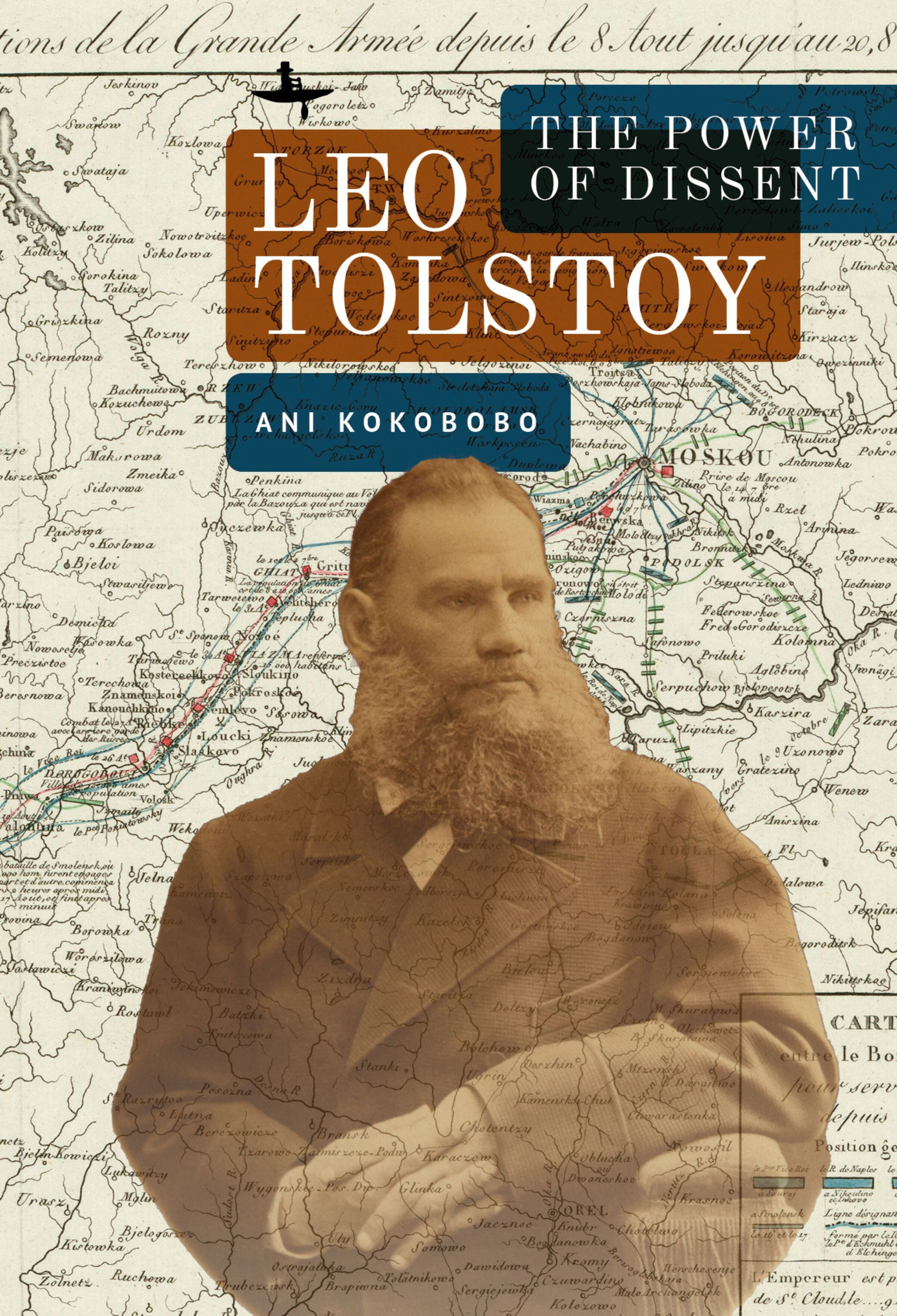
Leo Tolstoy
The Tolstoy that emerges from this volume is a thinker who resists easy answers, explores contradictions, and seeks deeper reconciliation. This collection presents him as an open-ended conversation partner rather than a moral authority, grappling urgently with dilemmas of identity, human relationships, colonial violence, and integrity. The Tolstoy I have always sought—and hope is foregrounded here—is one whose meanings remain open, engaging in dialogue with both our present and an unknown future. From his time, he speaks to today’s most pressing issues. In an era of polarization and simplistic narratives, Tolstoy offers a methodology of dissent and independent thought. This is Tolstoy the dissenter, whose voice is extraordinarily valuable for our time.
eBook

(Re:) working the ground : essays on the late writings of Robert Duncan
\"This collection focuses on the remarkable late writings of Robert Duncan (1919-1988). Written by emerging and established scholars, the essays present diverse readings of Duncan's work, addressing such topics as the evolution of Ground Work, the relation of the later poetry to earlier phases of his writing, its historical and cultural relevance, the theoretical concerns informing Duncan's poetics, and the significance of his later prose. Overall, this volume--which includes uncollected and unpublished writings by Duncan himself--offers a comprehensive introduction to the complex ground of his late writings while demonstrating a wide range of possibilities for their critical reading\"-- Provided by publisher.
BOOK

Dangerous bodies
Through an investigation of the body and its oppression by the church, the medical profession and the state, this book reveals the actual horrors lying beneath fictional horror in settings as diverse as the monastic community, slave plantation, operating theatre, Jewish ghetto and battlefield trench. The book provides original readings of canonical Gothic literary and film texts including The Castle of Otranto, The Monk, Frankenstein, Dracula and Nosferatu. This collection of fictionalised dangerous bodies is traced back to the effects of the English Reformation, Spanish Inquisition, French Revolution, Caribbean slavery, Victorian medical malpractice, European anti-Semitism and finally warfare, ranging from the Crimean up to the Vietnam War. The endangered or dangerous body lies at the centre of the clash between victim and persecutor and has generated tales of terror and narratives of horror, which function to either salve, purge or dangerously perpetuate such oppositions. This ground-breaking book will be of interest to academics and students of Gothic studies, gender and film studies and especially to readers interested in the relationship between history and literature.
eBook

Sallies, romps, portraits, and send-offs : selected prose, 2000-2016
\"Sixteen years' worth of incisive essays by the great poet and memoirist \"Witty, gritty poet and memoirist Kleinzahler\" (Publishers Weekly) has gathered the best of sixteen years' worth of essays, remembrances, and reviews in this scabrous and essential collection, setting down his thoughts about great poets and bad poets, about kvetching fiction writers and homicidal musicians, about eccentric critics and discerning nobodies, always with insight and humor, and never suffering fools gladly. Here, in Sallies, Romps, Portraits, and Send-Offs, August Kleinzahler eulogizes famous friends, warts and all (Thom Gunn, Christopher Middleton, Leonard Michaels); leads the charge in carving up a few bloated reputations (E.E. Cummings, Richard Brautigan); and sings the praises of unjustly neglected masters (Lucia Berlin, Kenneth Cox). He also turns the spotlight on himself in several short, delightful memoirs, covering such subjects as his obsessive CD collecting, the eerie effects of San Francisco fog, and the terrible duty of selling of his childhood home.\"-- Provided by publisher.
Book

Why indigenous literatures matter
Part survey of the field of Indigenous literary studies, part cultural history, and part literary polemic, Why Indigenous Literatures Matter asserts the vital significance of literary expression to the political, creative, and intellectual efforts of Indigenous peoples today. In considering the connections between literature and lived experience, this book contemplates four key questions at the heart of Indigenous kinship traditions: How do we learn to be human? How do we become good relatives? How do we become good ancestors? How do we learn to live together? Blending personal narrative and broader historical and cultural analysis with close readings of key creative and critical texts, Justice argues that Indigenous writers engage with these questions in part to challenge settler-colonial policies and practices that have targeted Indigenous connections to land, history, family, and self. More importantly, Indigenous writers imaginatively engage the many ways that communities and individuals have sought to nurture these relationships and project them into the future. This provocative volume challenges readers to critically consider and rethink their assumptions about Indigenous literature, history, and politics while never forgetting the emotional connections of our shared humanity and the power of story to effect personal and social change. Written with a generalist reader firmly in mind, but addressing issues of interest to specialists in the field, this book welcomes new audiences to Indigenous literary studies while offering more seasoned readers a renewed appreciation for these transformative literary traditions. Awarded the NAISA Award Best Subsequent Book, 2018, PROSE Award, 2019, and shortlisted for ACQL Gabrielle Roy Prize for Literary Criticism, 2018.
eBook