
Catalogue Search | MBRL


Are you sure you want to remove the book from the shelf?

{{itemTitle}}
47
result(s) for
"Literary forgeries and mystifications -- History"
Sort by:

Literary hoaxes : an eye-opening history of famous frauds
The ultimate reader's-guide to the works that fooled publishers, readers, and critics the world over--from Dionysius the Renegade to modern publishing pranks such as the Hitler Diaries.
Book
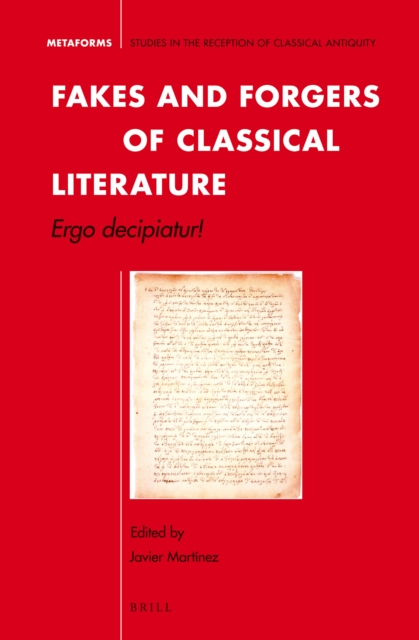
Fakes and forgers of classical Literature : Ergo decipiatur!
Fakes and Forgers of Classical Literature comprises essays which revise the position of the forged text in the literary tradition and, in light of modern approaches of philology and literary criticism, offer exciting new strategies for understanding forgery and the play with authenticity within ancient literature itself.
eBook

Forgers and critics : creativity and duplicity in Western scholarship
\"In Forgers and Critics, Anthony Grafton provides a wide-ranging exploration of the links between forgery and scholarship. Labeling forgery the \"criminal sibling\" of criticism, Grafton describes a panorama of remarkable individuals--forgers from classical Greece through the recent past--who produced a variety of splendid triumphs of learning and style, as well as the scholarly detectives who honed the tools of scholarship in attempts to unmask these skillful fakers. In the process, Grafton discloses the extent, the coherence, and the historical interest of two significant and tightly intertwined strands in the Western intellectual tradition\"-- Provided by publisher.
Book

The Myth of Ephraim Tutt
The Myth of Ephraim Tutt explores the true and
previously untold story behind one of the most elaborate literary
hoaxes in American history. Arthur Train was a Harvard-educated
and well-respected attorney. He was also a best-selling author.
Train’s greatest literary creation was the character
Ephraim Tutt, a public-spirited attorney and champion of
justice.Guided by compassion and a strong moral compass, Ephraim
Tutt commanded a loyal following among general readers and
lawyers alike—in fact, Tutt’s fictitious cases were
so well-known that attorneys, judges, and law faculty cited them
in courtrooms and legal texts. People read Tutt’s legal
adventures for more than twenty years, all the while believing
their beloved protagonist was merely a character and that
Train’s stories were works of fiction. But in 1943 a most
unusual event occurred: Ephraim Tutt published his own
autobiography. The possibility of Tutt’s existence as an
actual human being became a source of confusion, spurring heated
debates. One outraged reader sued for fraud, and the legendary
lawyer John W. Davis rallied to Train’s defense. While the
public questioned whether the autobiography was a hoax or
genuine, many book reviewers and editors presented the book as a
work of nonfiction. In
The Myth of Ephraim Tutt Molly Guptill Manning explores
the controversy and the impact of the Ephraim Tutt autobiography
on American culture. She also considers Tutt’s ruse in
light of other noted incidents of literary hoaxes, such as those
ensuing from the publication of works by Clifford Irving, James
Frey, and David Rorvik, among others. As with other outstanding
fictitious characters in the literary canon, Ephraim Tutt took on
a life of his own. Out of affection for his favorite creation,
Arthur Train spent the final years of his life crafting an
autobiography that would ensure Tutt’s lasting
influence—and he was spectacularly successful in this
endeavor. Tutt, as the many letters written to him attest, gave
comfort to his readers as they faced the challenging years of the
Great Depression and World War II and renewed their faith in
humanity and justice. Although Tutt’s autobiography
bewildered some of his readers, the great majority were glad to
have read the “life” story of this cherished
character.
eBook

Literary forgery in early modern Europe, 1450-1800
\"This book is dedicated to literary forgeries in Europe from the early modern period through the Enlightenment. The organizing principle of the volume is the study of literary and historiographical forgery--in print and manuscripts, not art forgery or counterfeiting--from classical and biblical antiquity to the close of the early modern period. Particular emphasis is paid to the unprecedented proliferation of patriotic mythologies from the Renaissance to the Enlightenment periods, advancing novel claims of ancient authority, genealogical precedence, and historically based religio-political legitimacy in the face of latter-day historical changes within Western culture. Literary Forgery in Early Modern Europe, 1450-1800 is the first in a quarter century to attempt to treat the subject of literary and historiographical forgery comprehensively, as an area of scholarly research in its own right\"-- Provided by publisher.
Book

The international companion to James Macpherson and the poems of Ossian
James Macpherson’s “poems of Ossian”, first published from 1760 as Fragments of Ancient Poetry, were the literary sensation of the age. Attacked by Samuel Johnson and others as “forgeries”, nonetheless the poems enthralled readers around the world, attracting rapturous admiration from figures as diverse as Goethe, Diderot, Jefferson, Bonaparte and Mendelssohn. This International Companion examines the social, political and philosophical context of the poems, their disputed origins, their impact on world literature, and the various critical afterlives of Macpherson and of his literary works.
eBook

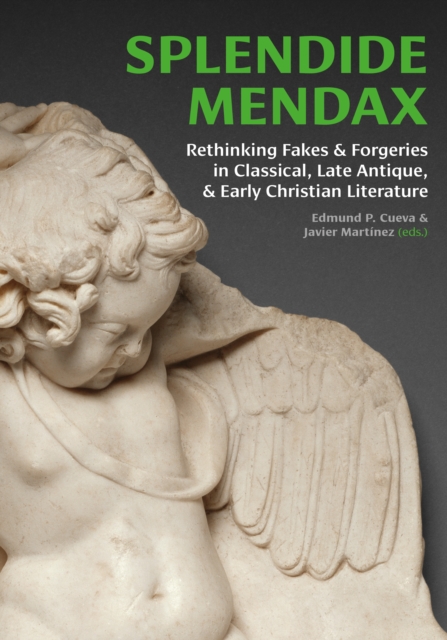
Splendide Mendax
Scholars for centuries have regarded fakes and forgeries chiefly as an opportunity for exposing and denouncing deceit, rather than appreciating the creative activity necessary for such textual imposture. But should we not be more curious about what is spurious? Many of these long-neglected texts merit serious reappraisal, when considered as artifacts with a value beyond mere authenticity. We do not have to be fooled by a forgery to find it fascinating, when even the intention to deceive can remind us how easy it is to form beliefs about texts. The greater difficulty is that once beliefs have been formed by one text, it is impossible to approach the next without preconceptions potentially disastrous for scholarship. The exposure of fraud and the pursuit of truth may still be valid scholarly goals, but they implicitly demand that we confront the status of any text as a focal point for matters of belief and conviction. Many new and fruitful avenues of investigation open up when scholars consider forgery as a creative act rather than a crime. We invited authors to contribute work without imposing any restrictions beyond a willingness to consider new approaches to the subject of ancient fakes and forgeries. The result is this volume, in which our aim is to display some of the many possibilities available to scholarship when the forger is regarded as \"splendide mendax\" - splendidly untruthful.
eBook

The myth of Ephraim Tutt : Arthur Train and his great literary hoax
\"The Myth of Ephraim Tutt explores the true and previously untold story behind one of the most elaborate literary hoaxes in American history. Arthur Train was a Harvard-educated and well-respected attorney. He was also a best-selling author. Train's greatest literary creation was the character Ephraim Tutt, a public-spirited attorney and champion of justice. Guided by compassion and a strong moral compass, Ephraim Tutt commanded a loyal following among general readers and lawyers alike--in fact, Tutt's fictitious cases were so well-known that attorneys, judges, and law faculty cited them in courtrooms and legal texts. People read Tutt's legal adventures for more than twenty years, all the while believing their beloved protagonist was merely a character and that Train's stories were works of fiction. But in 1943 a most unusual event occurred: Ephraim Tutt published his own autobiography. The possibility of Tutt's existence as an actual human being became asource of confusion, spurring heated debates. One outraged reader sued for fraud, and the legendary lawyer John W. Davis rallied to Train's defense. While the public questioned whether the autobiography was a hoax or genuine, many book reviewers and editors presented the book as a work of nonfiction. In The Myth of Ephraim Tutt Molly Guptill Manning explores the controversy and the impact of the Ephraim Tutt autobiography on American culture. She also considers Tutt's ruse in light of other noted incidents of literary hoaxes, such as those ensuing from the publication of works by Clifford Irving, James Frey, and David Rorvik, among others. As with other outstanding fictitious characters in the literary canon, Ephraim Tutt took on a life of his own. Out of affection for his favorite creation, Arthur Train spent the final years of his life crafting an autobiography that would ensure Tutt's lasting influence--and he was spectacularly successful in this endeavor. Tutt, as the many letters written to him attest, gave comfort to his readers as they faced the challenging years of the Great Depression and World War II and renewed their faith in humanity and justice. Although Tutt's autobiography bewildered some of his readers, the great majority were glad to have read the \"life\" story of this cherished character\"-- Provided by publisher.
Book

The reception of Ossian in Europe
James Macpherson's Poems of Ossian, said to be translations from the Gaelic of a third-century bard, caused a sensation on their first appearance in the early 1760s.Contrary to the impression often conveyed in literary histories, enthusiasm for the poetry of the 'Homer of the North' cannot be dismissed as a short-lived fad, for its appeal lasted.
eBook