
Catalogue Search | MBRL


Are you sure you want to remove the book from the shelf?

{{itemTitle}}
50,167
result(s) for
"Literature, Comparative"
Sort by:


Through Other Continents
What we call American literature is quite often a shorthand, a simplified name for an extended tangle of relations.\" This is the argument of Through Other Continents, Wai Chee Dimock’s sustained effort to read American literature as a subset of world literature. Inspired by an unorthodox archive--ranging from epic traditions in Akkadian and Sanskrit to folk art, paintings by Veronese and Tiepolo, and the music of the Grateful Dead--Dimock constructs a long history of the world, a history she calls \"deep time.\" The civilizations of Mesopotamia, India, Egypt, China, and West Africa, as well as Europe, leave their mark on American literature, which looks dramatically different when it is removed from a strictly national or English-language context. Key authors such as Thoreau, Margaret Fuller, Ezra Pound, Robert Lowell, Gary Snyder, Leslie Silko, Gloria Naylor, and Gerald Vizenor are transformed in this light. Emerson emerges as a translator of Islamic culture; Henry James’s novels become long-distance kin to Gilgamesh; and Black English loses its ungrammaticalness when reclassified as a creole tongue, meshing the input from Africa, Europe, and the Americas.
eBook

Comparative literature : a very short introduction
Considering literature comparatively can help readers realize how much can be learned by looking beyond the horizon of their own cultures, discovering not only more about other literatures, but also about their own. Ben Hutchinson offers a history of comparative literature, placing it at the heart of literary criticism.
Book

Disarming words
In a book that radically challenges conventional understandings of the dynamics of cultural imperialism, Shaden M. Tageldin unravels the complex relationship between translation and seduction in the colonial context. She examines the afterlives of two occupations of Egypt--by the French in 1798 and by the British in 1882--in a rich comparative analysis of acts, fictions, and theories that translated the European into the Egyptian, the Arab, or the Muslim.
eBook

A companion to comparative literature
This title presents a collection of more than 30 original essays from established and emerging scholars, which explore the history, current state, and future of comparative literary studies.
Book
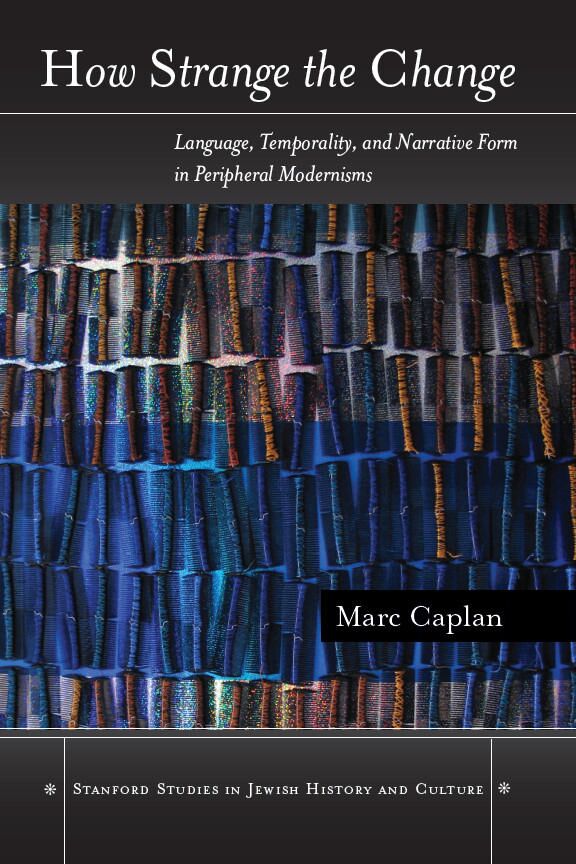
How Strange the Change
In this book, Marc Caplan argues that the literatures of ostensibly marginal modern cultures are key to understanding modernism. Caplan undertakes an unprecedented comparison of nineteenth-century Yiddish literature and twentieth-century Anglophone and Francophone African literature and reveals unexpected similarities between them. These literatures were created under imperial regimes that brought with them processes of modernization that were already well advanced elsewhere. Yiddish and African writers reacted to the liberating potential of modernity and the burdens of imperial authority by choosing similar narrative genres, typically reminiscent of early-modern European literatures: the picaresque, the pseudo-autobiography, satire, and the Bildungsroman. Both display analogous anxieties toward language, caught as they were between imperial, \"global\" languages and stigmatized native vernaculars, and between traditions of writing and orality. Through comparative readings of narratives by Reb Nakhman of Breslov, Amos Tutuola, Yisroel Aksenfeld, Cheikh Hamidou Kane, Isaac Meyer Dik, Camara Laye, Mendele Moykher-Sforim, Wole Soyinka, Y. Y. Linetski, and Ahmadou Karouma, Caplan demonstrates that these literatures' \"belated\" relationship to modernization suggests their potential to anticipate subsequent crises in the modernity and post-modernity of metropolitan cultures. This, in turn, leads him to propose a new theoretical model, peripheral modernism, which incorporates both a new understanding of \"periphery\" and \"center\" in modernity and a new methodology for comparative literary criticism and theory.
eBook


Utopian Generations
Utopian Generationsdevelops a powerful interpretive matrix for understanding world literature--one that renders modernism and postcolonial African literature comprehensible in a single framework, within which neither will ever look the same. African literature has commonly been seen as representationally naïve vis-à-vis modernism, and canonical modernism as reactionary vis-à-vis postcolonial literature. What brings these two bodies of work together, argues Nicholas Brown, is their disposition toward Utopia or \"the horizon of a radical reconfiguration of social relations.\"
Grounded in a profound rethinking of the Hegelian Marxist tradition, this fluently written book takes as its point of departure the partial displacement during the twentieth century of capitalism's \"internal limit\" (classically conceived as the conflict between labor and capital) onto ageographicdivision of labor and wealth. Dispensing with whole genres of commonplace contemporary pieties, Brown examines works from both sides of this division to create a dialectical mapping of different modes of Utopian aesthetic practice. The theory of world literature developed in the introduction grounds the subtle and powerful readings at the heart of the book--focusing on works by James Joyce, Cheikh Hamidou Kane, Ford Madox Ford, Chinua Achebe, Wyndham Lewis, Ngugi wa Thiong'o, and Pepetela. A final chapter, arguing that this literary dialectic has reached a point of exhaustion, suggests that a radically reconceived notion of musical practice may be required to discern the Utopian desire immanent in the products of contemporary culture.
eBook

Political systems
Examines a wide variety of international and historical political systems, inviting readers to compare their own system of government with different systems around the world.
Book

A Sea of Languages
Reframing ongoing debates within literary studies in dynamic new ways,A Sea of Languageswill become a critical resource and reference point for a new generation of scholars and students on the intersection of Arabic and European literature.
eBook