
Catalogue Search | MBRL


Are you sure you want to remove the book from the shelf?

{{itemTitle}}
50
result(s) for
"Literature and society -- England -- History -- To 1500"
Sort by:


The Claims of Poverty
In The Claims of Poverty , Kate Crassons explores a
widespread ideological crisis concerning poverty that emerged in
the aftermath of the plague in late medieval England. She
identifies poverty as a central preoccupation in texts ranging from
Piers Plowman and Wycliffite writings to The Book of
Margery Kempe and the York cycle plays. Crassons shows that
these and other works form a complex body of writing in which
poets, dramatists, and preachers anxiously wrestled with the status
of poverty as a force that is at once a sacred imitation of Christ
and a social stigma; a voluntary form of life and an unwelcome
hardship; an economic reality and a spiritual disposition.
Crassons argues that literary texts significantly influenced the
cultural conversation about poverty, deepening our understanding of
its urgency as a social, economic, and religious issue. These texts
not only record debates about the nature of poverty as a form of
either vice or virtue, but explore epistemological and ethical
aspects of the debates. When faced with a claim of poverty, people
effectively become readers interpreting the signs of need in the
body and speech of their fellow human beings. The literary and
dramatic texts of late medieval England embodied the complexity of
such interaction with particular acuteness, revealing the ethical
stakes of interpretation as an act with direct material
consequences. As The Claims of Poverty demonstrates,
medieval literature shaped perceptions about who is defined as
\"poor,\" and in so doing it emerged as a powerful cultural force
that promoted competing models of community, sanctity, and
justice.
eBook

The civic cycles : artisan drama and identity in premodern England
\"The civic religious drama of late medieval England--financed, produced, and performed by craftspeople--offers one of the earliest forms of written literature by a non-elite group in Europe. In this innovative study, Nicole R. Rice and Margaret Aziza Pappano trace an artisanal perspective on medieval and early modern civic relations, analyzing selected plays from the cities of York and Chester individually and from a comparative perspective, in dialogue with civic records. Positing a complex view of relations among merchants, established artisans, wage laborers, and women, the two authors show how artisans used the cycle plays to not only represent but also perform their interests, suggesting that the plays were the major means by which the artisans participated in civic polity. In addition to examining selected plays in the context of artisanal social and economic practices, Rice and Pappano also address relations between performance and historical transformation, considering how these plays, staged for nearly two centuries, responded to changes in historical conditions. In particular, they pay attention to how the pressures of Reformist governments influenced the meaning and performance of the civic religious drama in both towns. Ultimately, the authors provide a new perspective on how artisans can be viewed as social actors and agents in England in the fifteenth and sixteenth centuries. \"The Civic Cycles is an outstanding take on the urban dramas of medieval York and Chester, complementing previous historicist scholarship on these plays while expanding the political frame of reference. This volume is poised to become a major book in early English drama studies, a text that coordinates and assimilates all of the revisionary historicist work on the cycles from the previous two decades even as it takes that historicism to the next level of complexity.\" --Robert Barrett, Jr., University of Illinois at Urbana-Champaign \"-- Provided by publisher.
Book

Beyond reformation? : an essay on William Langland's Piers Plowman and the end of Constantinian Christianity
In Beyond Reformation? An Essay on William Langland’s Piers Plowman and the End of Constantinian Christianity, David Aers presents a sustained and profound close reading of the final version of William Langland’s Piers Plowman, the most searching Christian poem of the Middle Ages in English. His reading, most unusually, seeks to explore the relations of Langland's poem to both medieval and early modern reformations together with the ending of Constantinian Christianity.
Aers concentrates on Langland’s extraordinarily rich ecclesiastic politics and on his account of Christian virtues and the struggles of Conscience to discern how to go on in his often baffling culture. The poem’s complex allegory engages with most institutions and forms of life. In doing so, it explores moral languages and their relations to current practices and social tendencies. Langland’s vision conveys a strange sense that in his historical moment some moral concepts were being transformed and some traditions the author cherished were becoming unintelligible. Beyond Reformation? seeks to show how Langland grasped subtle shifts that were difficult to discern in the fourteenth century but were to become forces with a powerful future in shaping Western Christianity.
The essay form that Aers has chosen for his book contributes to the effectiveness of the argument he develops in tandem with the structure of Langland’s poem: he sustains and tests his argument in a series of steps or “passus,” a Langlandian mode of proceeding. His essay unfolds an argument about medieval and early modern forms of Constantinian Christianity and reformation, and the way in which Langland's own vision of a secularizing, de-Christianizing late medieval church draws him toward the idea of a church of “fools,” beyond papacy, priesthood, hierarchy, and institutions. For Aers, Langland opens up serious diachronic issues concerning Christianity and culture. His essay includes a brief summary of the poem and modern translations alongside the original medieval English. It will challenge specialists on Langland's poem and supply valuable resources of thought for anyone who continues to struggle with the church of today.
eBook


Acts of Recognition
This volume brings together Lee Patterson's essays published in
various venues over the past twenty-seven years. As he observes in
his preface, \"The one persistent recognition that emerged from
writing these otherwise quite disparate essays is that whatever the
text . . . and whoever the people . . ., the values at issue remain
central to contemporary life.\"
Two dialectics are at work in this book: that between the past
and the present and that between the individual and the social, and
both have moral significance. The first two chapters are
methodological; the first is on the historical understanding of
medieval literature and the second on how to manage the
inseparability of fact and value in the classroom. The next three
chapters take up three \"less-read\" late medieval writers: Sir John
Clanvowe, Thomas Hoccleve, and John Lydgate. Each is used to
illuminate a social phenomenon: the nature of court culture, the
experience of the city, and Henry V's act of self-making. The
following chapter explicitly links past and present by arguing that
the bearing of the English aristocrat comes from a tradition
beginning with Beowulf and later reinvoked in response to
nineteenth-century imperialism. The next three chapters are the
most literary, dealing with Chaucer and with literary conventions
in relation to a number of texts. The final chapter is on the man
Patterson considers one of the most important of our medieval
ancestors, Francis of Assisi.
eBook

Beyond reformation? : an essay on William Langland's Piers Plowman and the end of Constantinian Christianity
\"In Beyond Reformation? An Essay on William Langland's Piers Plowman and the End of Constantinian Christianity, David Aers presents a sustained and profound close reading of the final version of William Langland's Piers Plowman, the most searching Christian poem of the Middle Ages in English. His reading, most unusually, seeks to explore the relations of Langland's poem to both medieval and early modern reformations together with the ending of Constantinian Christianity. Aers concentrates on Langland's extraordinarily rich ecclesiastic politics and on his account of Christian virtues and the struggles of Conscience to discern how to go on in his often baffling culture. The poem's complex allegory engages with most institutions and forms of life. In doing so, it explores moral languages and their relations to current practices and social tendencies. Langland's vision conveys a strange sense that in his historical moment some moral concepts were being transformed and some traditions the author cherished were becoming unintelligible. Beyond Reformation? seeks to show how Langland grasped subtle shifts that were difficult to discern in the fourteenth century but were to become forces with a powerful future in shaping Western Christianity\" -- Provided by publisher.
Book
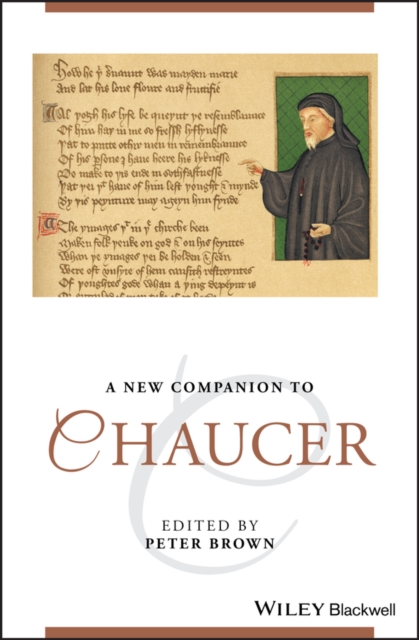
A new companion to Chaucer
The extensively revised and expanded version of the acclaimed Companion to Chaucer An essential text for both established scholars and those seeking to expand their knowledge of Chaucer studies , A New Companion to Chaucer is an authoritative and up-to-date survey of Chaucer scholarship.
eBook


Imagining Robin Hood
A.J. Pollard takes us back to the earliest surviving stories, tales and ballads of Robin Hood, and re-examines the story of this fascinating figure. Setting out the economic, social and political context of the time, Pollard illuminates the legend of this yeoman hero and champion of justice as never before.
Imagining Robin Hood questions:
what a 'yeoman' was, and what it meant to be a fifteenth-century Englishman
Was Robin Hood hunted as an outlaw, or respected as an officially appointed forest ranger?
Why do we ignore the fact that this celebrated hero led a life of crime?
Did he actually steal from the rich and give to the poor?
Answering these questions, the book looks at how Robin Hood was 'all things to all men' since he first appeared; speaking to the gentry, the peasants and all those in between. The story of the freedom-loving outlaw tells us much about the English nation, but tracing back to the first stories reveals even more about the society in which the legend arose.
An enthralling read for all historians and general readers of this fascinating subject.
eBook