
Catalogue Search | MBRL


Are you sure you want to remove the book from the shelf?

{{itemTitle}}
19,219
result(s) for
"Literature by Period"
Sort by:

‘Mahometanism’: a case of father Bombo’s pilgrimage to Mecca
Scrutinizing the diverse history of the Atlantic world reveals intriguing insights into the complex interactions between the Orient and the Occident. While Islamophobia and Orientalism are commonly discussed in relation to Muslims and Arabs, the somewhat archaic term Mahometanism shares semantic similarities but is less familiar in contemporary literature. This study adopts a methodology rooted in literary theory to examine the trajectory of the term Mahometanism in Orientalized discourse from the 11th to the 18th centuries. Comparing European Mahometanism with its American counterpart, this study claims that the former primarily symbolizes the perpetual religious conflict between Christianity and Islam, whereas the latter represents the clash of civilizations, transitioning from religious perspectives to secular attitudes during America’s separation from Britain. Given the scant body of relevant literature, the current study makes a unique contribution by offering a deeper understanding of the evolvement of Mahometanism over time and its enduring significance in the literary canon alongside its profound implications on past and modern-day anchors between the East and the West.
Journal Article
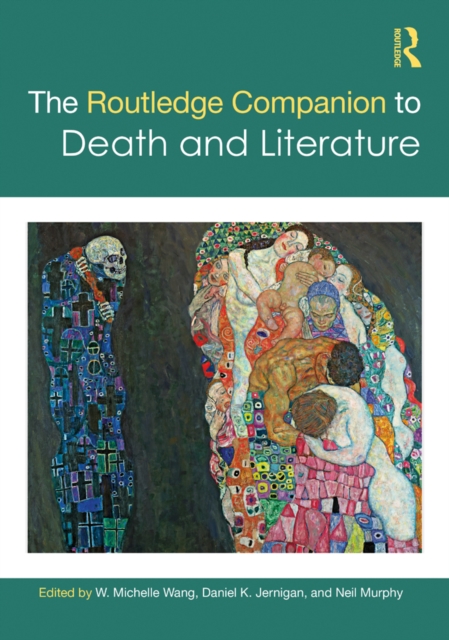
The Routledge Companion to Death and Literature
The Routledge Companion to Death and Literature seeks to understand the ways in which literature has engaged deeply with the ever-evolving relationship humanity has with its ultimate demise. It is the most comprehensive collection in this growing field of study and includes essays by Brian McHale, Catherine Belling, Ronald Schleifer, Helen Swift, and Ira Nadel, as well as the work of a generation of younger scholars from around the globe, who bring valuable transnational insights.
Encompassing a diverse range of mediums and genres - including biography and autobiography, documentary, drama, elegy, film, the novel and graphic novel, opera, picturebooks, poetry, television, and more - the contributors offer a dynamic mix of approaches that range from expansive perspectives on particular periods and genres to extended analyses of select case studies. Essays are included from every major Western period, including Classical, Middle Ages, Renaissance, and so on, right up to the contemporary.
This collection provides a telling demonstration of the myriad ways that humanity has learned to live with the inevitability of death, where \"live with\" itself might mean any number of things: from consoling, to memorializing, to rationalizing, to fending off, to evading, and, perhaps most compellingly of all, to escaping. Engagingly written and drawing on examples from around the world, this volume is indispensable to both students and scholars working in the fields of medical humanities, thanatography (death studies), life writing, Victorian studies, modernist studies, narrative, contemporary fiction, popular culture, and more.
eBook
The spiritual journey of Robinson Crusoe through the lens of the Qur’an
All religions stem from one source, which is God. Religious teachings have stressed the importance of abhorring sins to avoid punishment and pursuing virtues to achieve happiness and success. As a dissenter, Daniel Defoe, the author of Robinson Crusoe (1719), intended to guide humans to these teachings through the title character. This paper investigates how the lessons experienced by Crusoe in certain incidents and documented in his diary are similar in context to some stories narrated in the Qur’an about people who share with Crusoe the experience of navigating a spiritual journey that passes through the cycle of punishment and reward when deviating from or following divine guidance.
Journal Article

American Lazarus : religion and the rise of African-American and native American literatures
The 1780s and 1790s were a critical era for communities of color in the new United States of America.Even Thomas Jefferson observed that in the aftermath of the American Revolution, \"the spirit of the master is abating, that of the slave rising from the dust.\" This book explores the means by which the very first Black and Indian authors rose up.
eBook

Postmodern, Feminist and Postcolonial Currents in Contemporary Japanese Culture
Using the Euro-American theoretical framework of postmodernism, feminism and post-colonialism, this book analyses the fictional and critical work of four contemporary Japanese writers; Murakami Haruki, Yoshimoto Banana, Yoshimoto Takaaki and Karatani Kojin. In addition the author reconsiders this Euro-American theory by looking back on it from the perspective of Japanese literary work.
Presenting outstanding analysis of Japanese intellectuals and writers who have received little attention in the West, the book also includes an extensive and comprehensive bibliography making it essential reading for those studying Japanese literature, Japanese studies and Japanese thinkers.
eBook

Medievalisms
From King Arthur and Robin Hood, through to video games and jousting-themed restaurants, medieval culture continues to surround us and has retained a strong influence on literature and culture throughout the ages. This fascinating and illuminating guide is written by two of the leading contemporary scholars of medieval literature, and explores:
The influence of medieval cultural concepts on literature and film, including key authors such as Shakespeare, Tennyson, and Mark Twain
The continued appeal of medieval cultural figures such as Dante, King Arthur, and Robin Hood
The influence of the medieval on such varied disciplines such as politics, music, children's literature, and art.
Contemporary efforts to relive the Middle Ages.
Medievalisms: Making the Past in the Present surveys the critical field and sets the boundaries for future study, providing an essential background for literary study from the medieval period through to the twenty-first century.
eBook

The Rise and Fall of Early American Magazine Culture
Between the newly canonized novels of the 1790s and the long-familiar novels of the 1820s, early American literary magazines figured themselves as museums, bringing together a multitude of notable content and enabling readers to choose what to consume. A transatlantic literary form that refused to break with British cultural models and genealogy, the early American magazine had at its center the anonymous authority of the editor and a porous distinction between reader and author. Esteemed subscribers were treated as magnets to attract other subscribers, and subscribers were prompted to become contributors, giving these early American publications the appearance of public forums. The Rise and Fall of Early American Magazine Culture reexamines these publications and their reach to show how magazine culture was multivocal, as opposed to novel culture, which imposed a one-sided authorial voice and restricted the agency of the reader._x000B__x000B_In this first book-length study of the history of American magazine culture in the colonial and early national period, Jared Gardner describes how those who invested considerable energies in this form--including some of the period's most important political and literary figures such as Charles Brockden Brown and Washington Irving--sought to establish a very different model of literary culture than what came to define American literary history and its scholarship. He cautions against privileging novels or authors as the essential touchstones of American literary history and instead encourages an understanding of how the \"editorial function\" favored by magazine culture shaped reading and writing practices._x000B__x000B_Countering assumptions about early American print culture and challenging our scholarly fixation on the novel, Gardner reimagines the early American magazine as a rich literary culture that operated as a model for nation-building by celebrating editorship over authorship and serving as a virtual salon in which citizens were invited to share their different perspectives. This important work revisits largely lost interventions in the forms and politics of literature and sounds a vibrant call to radically revise early American literary history.
eBook

Exorcism and Its Texts
Exorcism and demonic possession appear as recurrent motifs in early modern Spanish and English literatures. InExorcism and Its Texts, Hilaire Kallendorf demonstrates how this 'infection' was represented in some thirty works of literature by fifteen different authors, ranging from canonical classics like Shakespeare, Cervantes, Ben Jonson, and Lope de Vega, to obscure works by anonymous writers.
From comic and tragic drama to picaresque narrative and eight other genres, possession worked as a paradigm through which authors could convey extraordinary experience, including not only demonic possession but also madness or even murder. The devil was thought to be able to enter the bodily organs and infect memory, imagination, and reason. Some came to believe that possession was tied to enthusiasm, poetic frenzy, prophecy, and genius. Authors often drew upon sensational details of actual exorcisms. In some cases, such as in Shakespeare, curing the body (and the body politic) meant affirming cultural authority; in others, as with Zamora, it clearly meant subverting it. Drawing on the disciplines of literary theory and history,Exorcism and its Textsis the first comprehensive study of this compelling topic.
eBook

Red Ink
The Native peoples of colonial New England were quick to grasp the practical functions of Western literacy. Their written literary output was composed to suit their own needs and expressed views often in resistance to the agendas of the European colonists they were confronted with. Red Ink is an engaging retelling of American colonial history, one that draws on documents that have received scant critical and scholarly attention to offer an important new interpretation grounded in indigenous contexts and perspectives. Author Drew Lopenzina reexamines a literature that has been compulsively \"corrected\" and overinscribed with the norms and expectations of the dominant culture, while simultaneously invoking the often violent tensions of \"contact\" and the processes of unwitnessing by which Native histories and accomplishments were effectively erased from the colonial record. In a compelling narrative arc, Lopenzina enables the reader to travel through a history that, however familiar, has never been fully appreciated or understood from a Native-centered perspective.
eBook

The importance of feeling english
American literature is typically seen as something that inspired its own conception and that sprang into being as a cultural offshoot of America's desire for national identity. But what of the vast precedent established by English literature, which was a major American import between 1750 and 1850?
InThe Importance of Feeling English, Leonard Tennenhouse revisits the landscape of early American literature and radically revises its features. Using the concept of transatlantic circulation, he shows how some of the first American authors--from poets such as Timothy Dwight and Philip Freneau to novelists like William Hill Brown and Charles Brockden Brown--applied their newfound perspective to pre-existing British literary models. These American \"re-writings\" would in turn inspire native British authors such as Jane Austen and Horace Walpole to reconsider their own ideas of subject, household, and nation.
The enduring nature of these literary exchanges dramatically recasts early American literature as a literature of diaspora, Tennenhouse argues--and what made the settlers' writings distinctly and indelibly American was precisely their insistence on reproducing Englishness, on making English identity portable and adaptable. Written in an incisive and illuminating style,The Importance of Feeling Englishreveals the complex roots of American literature, and shows how its transatlantic movement aided and abetted the modernization of Anglophone culture at large.
eBook