
Catalogue Search | MBRL


Are you sure you want to remove the book from the shelf?

{{itemTitle}}
362
result(s) for
"Liturgics"
Sort by:

Liturgy
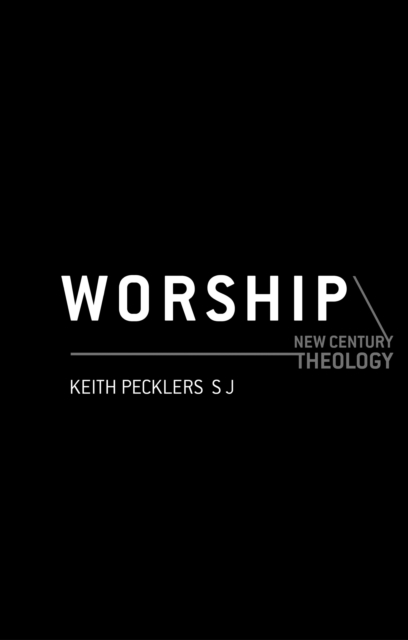
In Worship, Keith Pecklers aims to gives theologians, liturgists, clergy and laity of all denominations a new sense of the theology of liturgy.From a historical/theological treatment of the evolution of Christian worship in the West, Pecklers addresses 20th century liturgical reforms and emphasizes the liturgy's role in the social and moral transformation of human society. The social dimension of worship is further highlighted in chapters on popular religion and inculturation.He considers the future of Christian worship in light of a new sociological reality: the break up of the stable parish community, credible preaching within an increasingly secularized society, hospitality to those who are often made to feel like pariahs in our assemblies, and the growing rift between conservatives and progressives who share membership in the same church.
eBook

The Discipline of Historical Liturgics in Russia: From «Unhappy Step-daughter» to Full-fledged Scholarly Discipline
The birth of liturgical research in Russia is a phenomenon that deserves careful study. The development of liturgical studies took place mainly in the Theological (Spiritual) Academies of St. Petersburg, Moscow, Kyiv and Kazan. The publication of liturgical source materials was the first step towards the establishment of an independent scientific school of liturgical studies in Russia. Thanks to Nikolai Krasnoseltsev, Ivan Mansvetov, Alexei Dmitrievskij, Ivan Karabinov and other prominent liturgists, we have a number of outstanding treatises on the liturgy of the East and West, the Typicon, both of Greek and Russian liturgical traditions, the Sacramental rites and other orders grown out of use. At present, the considerable range of matters addressed in these studies is poorly recognized, although the hypotheses of Russian scholars and their gains in methodology anticipated some of the achievements of the liturgists in the second half of the 20th century.
Journal Article

Interview with Prof. Sunggu A Yang
Sunggu A. Yang, PhD, is an Associate Professor of Theology and Christian Ministries at George Fox University, renowned for integrating homiletics, liturgics, and the arts within theological discourse. His academic credentials include a PhD in Religion from Vanderbilt University, where his work received guidance from influential mentors such as Dale P. Andrews and John S. McClure. Dr Yang has also held prestigious international fellowships and has been invited to speak at numerous global conferences, underscoring his role as a significant voice in contemporary theological education.
Journal Article

“In Communion with God”: The Inculturation of the Christian Liturgical Theology of Giulio Aleni in His IExplication of the Mass/I
Liturgical practice and its theological interpretation are not only very important to the Chinese inculturation of Catholicism in particular and Christianity in general but also of great significance in the establishment of an indigenized Christian faith and system of life. This paper will analyze the methodological approaches and historical inspirations for the inculturation of Christian liturgical theology through Giulio Aleni’s (1582–1649) Explication of the Mass (Misa Jiyi, 弥撒祭义), the first book to utilize Chinese cultural resources to systematically interpret the Mass (Eucharist). Continuing the general Jesuit accommodation initiated by Matteo Ricci, Aleni established an indigenized liturgical system of theology through intercultural learning, borrowing, and creative construction. Three of his contributions especially stand out. First, Aleni explained the significance of the Mass in terms of the Chinese philosophical–ethical concepts of “repaying the roots” (baoben, 报本) and “giving thanks” (gan’en, 感恩). Second, he elaborated on communion with the Trinitarian God in the Mass through Jesus Christ by drawing on the ancient Chinese teachings of repaying (chou, 酬), commemoration (shi, 示), and hope (wang, 望), which Aleni related to “giving thanks to the Father,” “commemorating Jesus,” and “invoking the Holy Spirit.” Finally, he provided a deep spiritual explanation of the Mass, using the traditional Confucian concepts of “self-restraint” (keji, 克己), “self-reflection” (fanji, 反己), and “spiritual meditation” (chouyi, 抽绎) to help believers understand the activities of repentance, commemoration, and prayer in the Mass. Overall, Aleni emphasized that the essence of the Mass was to achieve “communion with the heart of heavenly Lord” (xihe tianzhuzhixin, 翕合天主之心), which, as a pivot of faith, could be extended into daily life through its spiritual practice. Aleni, therefore, established a comprehensive system of “liturgy-spirituality-life” for Chinese Christians by indigenizing Christian liturgical theology through intercultural learning. His creative synthesis yielded a dynamic balance between Christian and Chinese traditions, absorbing Confucian resources to imaginatively enrich and expand the Christian tradition, while encouraging the creative transformation of the Christian tradition into the Chinese cultural community.
Journal Article

Reflections on the readings of sundays and feasts December 2025-February 2026
Each liturgical year, on the second and third Sundays in Advent, the gospel reading focuses on John the Baptist, WHO prepares the scene for an awaited royal and anointed one, known as 'the Messiah'. From a Christian perspective and by tradition, prophecies in the book of Isaiah are interpreted as envisioning the advent of a messiah and hence are read in Advent. The first reading from Isaiah today exemplifies this envisioning and proffers a wealth of Judeo-Christian images that are associated with a messiah: Jesse as the originating human father of a royal genealogy, David as an ideal king, and reference to a new Eden or ideal paradisal realm. Jesse was the father of David, WHO unified the tribes of Israel. He became known as a great king and leader. Isaiah's visionary poetry expands the former Davidic royal reality to imagine an ideal kingship: a king highly favoured by God and endowed with manifold gifts of the spirit. As time passes, an irenic or peaceable kingdom is associated with this ideal ruler. The sign of a truly righteous king is of one WHO maintains commitment to the willingness to protect the poor and the nation's other marginalised groups. Once the ideal king inaugurates a righteous society, peace and harmony will spread beyond human beings and throughout nature.
Journal Article
Organic development and noble simplicity: German neoclassicism and the reform of the liturgy: I
There is a continuing debate around the implementation of the liturgical reforms instigated by the bishops at the Second Vatican Council and established in Sacrosanctum Concilium, the Constitution on the Sacred Liturgy (4 December 1963). Clare Johnson has reviewed the discussions around the concept of 'organic development', a construct that has been pushed to the fore as a norm for grounding authentic change to the liturgy as opposed to inappropriate or precipitous developments. Johnson's invitation to view organic development in terms of neuroplasticity opened new horizons for implementing change in line with an organic metaphor. Mindful of Johnson's research, this article seeks to look into the past rather than toward the future. Through the seminal writings of Joachim Winckelmann (1717-1768), the construct of 'organic development', particularly in relationship to the aesthetic principle of 'noble simplicity', was established as a cornerstone of the late eighteenth-century movement of German neoclassicism. There are lines of influence from Winckelmann through to both the German liturgical scholar Anton Baumstark (1872-1948), who championed the dynamic of 'organic development' in the study of liturgy, and the English expert on liturgical texts, Edmund Bishop (1846-1917), who proposed that the genius of the Roman Rite lay in the Roman virtues of 'noble simplicity'. A close examination of the classicist roots of organic development and noble simplicity provides a range of insights into the contours, presuppositions and limitations of current liturgical disputes.
Journal Article
Reconsidering the Word–Sacrament and Scripture–Liturgy Debate: A Patristic Perspective
The relationship between Scripture and the Liturgy remains one of the most extensively debated subjects in theological discourse. In the wake of the Protestant Reformation and the Catholic Counter-Reformation, a divided Christendom witnessed the rise of a dichotomy between Scripture and Liturgy, as well as between the Word and the Sacrament. This dichotomy, however, is absent from the patristic thought, which perceives the unity and complementarity between Scripture and Liturgy, owing to their shared belonging to the one life of the Church—broadly defined as Tradition—and to the way they are understood and experienced as interconnected modes through which the singular Mystery of Jesus Christ is communicated to the faithful. The present study aims to demonstrate this unity by drawing on a substantial body of patristic writings, highlighting the fact that the life of the Church is one and is lived both as the rule of faith and the rule of prayer, and that through it, one and the same Christ communicates Himself to the faithful both through the Word and through the Holy Sacraments. For the Church Fathers, the Christian faith is not an abstract doctrine about Christ, but a real and personal encounter and communion with Him in the life of the Church. This patristic approach may offer a starting point for contemporary Christianity in addressing the current liturgical crisis and in rethinking and renewing future ecumenical dialogue. Such renewal presupposes a movement beyond secular formalism and nominalism, which have fostered excessive conceptualization and an antithetical view of Scripture and Liturgy, Word and Sacrament.
Journal Article
Praying with Animals, Plants, Soil, Land, and Water: The Theology of Creation in Cláudio Carvalhaes’ Liturgical-Political Theology
This paper delineates the theology of creation in Brazilian theologian Cláudio Carvalhaes’ eco-liturgical theology of liberation. Reorienting lex orandi-lex credendi-lex vivendi by his liturgical methodological innovation lex naturae, he envisions every dimension of worship as deeply connected to a planet in crisis. Lex naturae transforms liturgical spaces into creational–political spaces which invoke and evoke people to deeply attend to, to cry with, to wonder with, and to pray and sing with the forests, animals, soil, water, and all earthly beings. Celebrating a creational solidarity and wisdom, lex naturae ritualizes that people are the earth, the earth is in people, and human and more-than-human beings belong to each other. Using the seven petitions of his “The Ecological Lord’s Prayer”, Carvalhaes’ theology of creation, which reimagines the Divine, the earth, and the human in a multispecies context via the (re)orienting ground of lex naturae, is “unearthed.” His theology of creation centers the creaturely commonality with more-than-human neighbors and challenges human beings to live, love, and flourish within all the entanglements of created life. Lex naturae is also a form of asceticism which aims to recalibrate the human focus towards environmental justice for the planet. It aims at changing human desire to turn away from the brutalism of colonialism’s ecocide and toward wholesome relations with animals, plants, soil, land, and water. In the end, this paper claims that Carvalhaes’ theology of creation affirms a “godly animism”.
Journal Article
Flourishing through Prayer by Singing in a Liturgical Choir
Prayer in human life enables directing attention to God and a transcendent goal beyond Earthly life. Singing has been present in the life of Israel since the oldest times, which is proved on the pages of the Holy Scriptures, in the Books of Exodus and Psalms. In the New Testament, there is a lot of encouragement to sing the glory of God in psalms and songs, as well as praising God Most High in Revelation. The Catholic Church is concerned with the quality of liturgical music through a number of recommendations and requirements defining the pieces that may become a part of the liturgy. Liturgical choir singing is a special form of common prayer. The aim of the present paper is to examine the effect of prayer by choral singing on human flourishing. The aim was achieved by analyzing recommendations of the Church on liturgical music, presenting the assumptions of the theoretical model investigating the effect of art on human flourishing, and then conducting empirical studies. Sixteen in-depth interviews were carried out with members of fourteen choirs. There were four groups of respondents according to their gender and family status. All obtained codes were organized into five main themes with four subcategories. They confirmed the assumptions of the model presented in the theoretical part and made it possible to identify the effect of choral singing on the performers’ health and the improvement of their skills. In addition, they showed a direct relation between prayer and spiritual well-being when singing in a choir, a coherence of activities with values as well as the striving for happiness.
Journal Article