
Catalogue Search | MBRL


Are you sure you want to remove the book from the shelf?

{{itemTitle}}
96
result(s) for
"Liverpool (England) History."
Sort by:


The Earles of Liverpool
This book uses the experience of three generations of the Earle family to throw light on the social and economic history of Liverpool during its rise to prominence as a great port, from 1688 to 1840. The focus is on six members of this successful family, John who came to Liverpool as apprentice to a merchant in 1688, his three sons, Ralph, Thomas and William, who all became merchants specializing in different branches of the trade of the port, and William’s two sons, another Thomas and another William, who consolidated the fortunes of the family and began the process of converting their wealth into gentility. The approach is descriptive rather than theoretical, and the aim throughout has been to make the book entertaining as well as informative. Where sources permit, the book describes the businesses run by these men, often in considerable detail. Trading in slaves was an important part of the business of three of them, but they and other members of the family also engaged in a variety of other trades, such as the import-export business with Leghorn (Livorno) in Italy, fishing in Newfoundland and the Shetland Islands, the wine and fruit trades of Spain, Portugal and the Azores, the import of raw cotton for the industries of the Industrial Revolution and the Russia trade. Other family interests included privateering, art collection and the trade in art, a sugar plantation in Guyana, and the emigrant trade. While the book is mainly a work of economic history, there is also much on the merchants’ wives and families and on the social history of both Liverpool and Livorno.
eBook

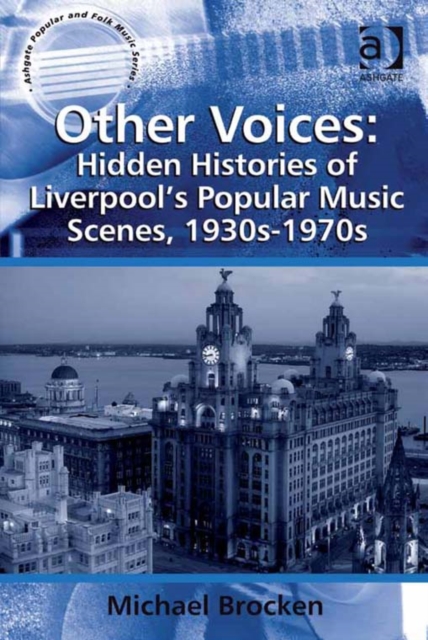
Other Voices: Hidden Histories of Liverpool's Popular Music Scenes, 1930s-1970s
At times it appears that a whole industry exists to perpetuate the myth of origin of the Beatles. There certainly exists a popular music (or perhaps 'rock') origin myth concerning this group and the city of Liverpool and this draws in devotees, as if on a pilgrimage, to Liverpool itself. Once 'within' the city, local businesses exist primarily to escort these pilgrims around several almost iconic spaces and places associated with the group. At times it all almost seems 'spiritual'. One might argue however that, like any function myth, the music history of the Liverpool in which the Beatles grew and then departed is not fully represented. Beatles historians and businessmen-alike have seized upon myriad musical experiences and reworked them into a discourse that homogenizes not only the diverse collective articulations that initially put them into place, but also the receptive practices of those travellers willing to listen to a somewhat linear, exclusive narrative. Other Voices therefore exists as a history of the disparate and now partially hidden musical strands that contributed to Liverpool's musical countenance. It is also a critique of Beatles-related institutionalized popular music mythology. Via a critical historical investigation of several thus far partially hidden popular music activities in pre- and post-Second World War Liverpool, Michael Brocken reveals different yet intrinsic musical and socio-cultural processes from within the city of Liverpool. By addressing such 'scenes' as those involving dance bands, traditional jazz, folk music, country and western, and rhythm and blues, together with a consideration of partially hidden key places and individuals, and Liverpool's first 'real' record label, an assemblage of 'other voices' bears witness to an 'other', seldom discussed, Liverpool. By doing so, Brocken - born and raised in Liverpool - asks questions about not only the historicity of the Beatles-Liverpool narrative, but also about the absence o
eBook

Liverpool and the unmaking of Britain
Few cities in the world are as famous as Liverpool, the home of the modern world's most celebrated rock group and of a legendary football team.The city is equally notorious for its poverty, its ethnic and racial divides and, above all, its decline. For Liverpool was once a great port, growing rich on slavery, on trade with the Americas and the British Empire's outposts in Africa and Asia. In the 1980s, it was described as 'obsolete', yet the city stubbornly refuses to die. This is an elegantly written history of Liverpool since the Second World War. It is a story of vast docklands shrinking and eventually vanishing when corporations discovered they should shift goods in containers and dispense with human workers, of industries like car manufacturing mushrooming and disappearing, of huge new suburbs being built and neglected.
BOOK

Slave Captain
As few accounts written by slave ship captains are known to have survived, the personal papers of James Irving are of tremendous interest and academic significance. Irving built a successful career in the slave trade of eighteenth-century Liverpool, first as a ship’s surgeon and then as a captain. Remarkably he was himself enslaved when his ship was wrecked off the coast of Morocco and he was captured by people described as ‘wild Arabs’ and ‘savages’. This edition of forty letters and his journal reveals the reaction of the slaver to the experience of slavery, as well as throwing light on the complex and, to modern eyes, repugnant features of the transatlantic slave trade. The result is both a compelling narrative and a valuable reference text. This thoroughly revised edition of Suzanne Schwarz’s best-selling book includes recently discovered archive material.
eBook

Liverpool and the slave trade
\"Liverpool and the Slave Trade is the first comprehensive account of the city's role in the slave trade. Drawing on recent research, contemporary documents and illustrations, it provides a detailed account of how the trade operated and was eventually brought to an end\"-- Provided by publisher..
Book
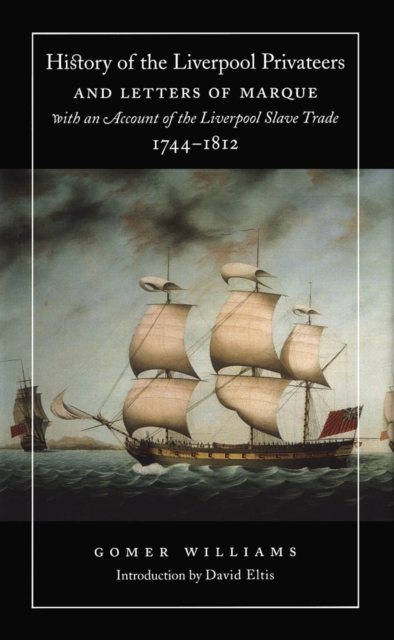
History of the Liverpool Privateers and Letters of Marque with an Account of the Liverpool Slave Trade, 1744-1812
Readers should not forget what is as hard to appreciate today in the case of slave trading as it was over a hundred years ago when Gomer Williams wrote his book - that both were legitimate endeavours in the eyes of domestic and emerging international law, and, more important, neither was viewed as in any way immoral: before the late eighteenth century, slave trading and privateering were seen as indistinguishable from trading in Baltic timber or Canadian furs. David Eltis, from the new introduction, 2004.
eBook


Irish, catholic and scouse
Liverpool in the nineteenth and early twentieth centuries was a great cultural melting pot and processing point of migration from Europe to the USA. The Irish in particular crossed to Liverpool in their tens of thousands before setting out across the Atlantic. Here for the first time acclaimed historian John Belchem offers a ground-breaking and extensive social history of the elements of the Irish diaspora that stayed in Liverpool, enriching the city’s cultural mix rather than continuing on their journey. Covering the tumultuous period from the Act of Union to the supposed 'final settlement' between Britain and Ireland, this richly illustrated volume will be required reading for anyone interested in the Irish diaspora.
eBook