
Catalogue Search | MBRL


Are you sure you want to remove the book from the shelf?

{{itemTitle}}
10,209
result(s) for
"Lloyd, David"
Sort by:


What is a fish? The life and legend of David L.G. Noakes
David Lloyd George Noakes (1942–2020) is best known for his insatiable curiosity, his quick wit and dry sense of humor, his scientific contributions to the field of animal behaviour, and his ability to form and maintain long-lasting connections. His research interests were vast but remained grounded in early life history, behaviour, social behaviour, the evolution of behaviour, behavioural genetics, and evolutionary ecology. David had a remarkable ability to establish and maintain strong connections within the international academic community. David was also internationally recognized for his numerous contributions as a scientific editor, promoting accessibility to the international community that he served. We memorialize David’s legacy in this tribute article, ensuring that his accomplishments and the momentous impact he had on the scientific community are not soon forgotten.
Journal Article

The unknown Lloyd George : a statesman in conflict
David Lloyd George is widely regarded as one of the most effective British prime ministers of the twentieth century. A dynamic speaker and committed social reformer, he led Britain successfully through the devastation of World War I and had a powerful impact on international politics. In the post-war peace treaties, he sought a just, rather than a vengeful, settlement for the defeated powers in an attempt to preserve a peaceful international order. Whilst Lloyd George's achievements were undoubtedly substantial, his political record was not entirely without blemish and, in his personal life, he was a fascinating and complex character. Renowned as a womaniser, after 1913 he retained two separate households - one with his wife and one with his mistress, his former private secretary. Based on extensive research, Travis L. Crosby provides a fresh appraisal of the life of one of Britain's most conflicted politicians.
Book
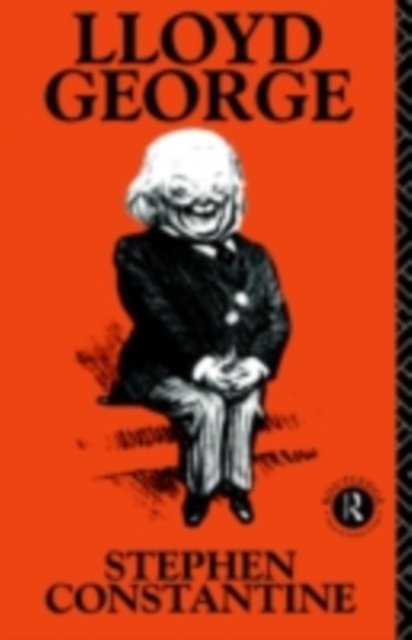
Lloyd George
An understanding of Lloyd George's long and prominent political career elucidates many of the key issues in modern British history. Seen by some as `the man who won the war', he was central to the political activity which appeared to secure the pre-eminence of the Liberal party before the First World War, but which later contributed to its reduction in status. His initiatives in government, particularly in the area of social reform, helped to redefine the relationship between the state and society and laid the basis for the Welfare State.This pamphlet examines these developments with reference to Lloyd George's Welsh background, his personal ambitions and his response to the challenges posed to Liberal society by radical conservatism and socialism. It draws on the wealth of material that is now available and provides a concise, interpretive study.
eBook

Biological time is fractal: Early events reverberate over a life time
Before 1958, the year the author began his University career, it was not widely-realised that organisms do not perform in a steady state. Ideas about homeostasis, the self-balancing of living processes, dominated physiology and biochemistry. The discovery of instabilities in photosynthetic reactions and of oscillations of NADH by Duysens and Amesz in 1957 were regarded as somewhat unusual curiosities - people now realise that steady states hardly exist in biological systems and that oscillations, rhythms and clocks are absolutely necessary for the regulated functioning of organisms.
Journal Article
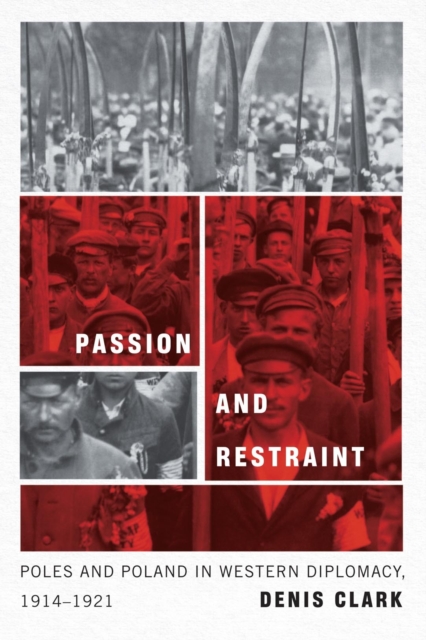
Passion and Restraint
Much of today's international order can be traced to the
experimentations with governance that occurred in central Europe
immediately after World War I. And though Western governments did
not bring about the creation of Poland on their own or determine
all of its eventual borders, their attempts to do so left many
lingering grudges and made the years immediately following the war
a crucial period in Polish and international history. Passion
and Restraint examines how British, French, and American
foreign policymakers interacted with Poles and the idea of an
independent Poland during this period. Western policymakers knew
little about Poland in 1914, but by war's end they were drawing the
new country's borders, sending humanitarian aid, and imposing
minority protections. Attitudes regarding national character and
emotional restraint were central, intertwined themes in British,
French, and American diplomacy during this period of Polish
rebirth, and policymakers' opinions of national character evolved
based on personal experiences, political conditions, and dominant
understandings of the Polish people in the early twentieth century.
Amid these changing attitudes, policymakers emphasized the
necessity of Polish emotional restraint. Demonstrating how emotions
and stereotypes were integral to diplomatic decision-making,
Passion and Restraint brings attention to these
often-overlooked historical factors, advancing a new lens for the
study of Polish, European, and international history.
eBook

DAVID LLOYD GEORGE, GEORGES CLEMENCEAU, AND THE 1918 MANPOWER CRISIS
This analysis of the Anglo-French dispute over manpower resources in 1918, in the context of Germany's five Spring offensives on the Western Front, reveals the lack of effective and agreed policies. It examines from an alliance perspective a problem that has not before been so treated in print. After a brief account of the background to the crisis, the article discusses, first, the arguments presented in a French war ministry report on British manpower, and, second, the effects of the problems of transporting and deploying American troops. It goes on to examine some of the questions that were raised in consequence: industrial versus military mobilization; troop densities for a given length of line; and categories of fitness. Both British and French prime ministers spent much time and emotional energy in arguing about these matters. This was a dispute that was as bitter as it was pointless, because ultimately insoluble. Yet the efficient deployment of manpower resources was crucial to victory, and the dispute was dangerous for the maintenance of the coalition.
Journal Article

Timewatch. Lloyd George's War
80 years ago the end of WWI was celebrated as a triumph for democracy, yet some would later dismiss it as futile. The most suprising change of heart was that of the victorious wartime PM who condemned the sacrifice in his memoirs.
Streaming Video