
Catalogue Search | MBRL


Are you sure you want to remove the book from the shelf?

{{itemTitle}}
12,497
result(s) for
"Local Government - history"
Sort by:


Local Governments and Their Intergovernmental Networks in Federalizing Spain
Federal development in post-Franco Spain reaches far beyond familiar Basque/Catalan nationalistic struggles and includes the creation of an increasing number of intergovernmental networks by local governments, particularly municipalities, as they engage regional, central, and other local entities to operate programs and services in basic and emergent policy areas. By examining the intergovernmental networks in an increasingly federalized Spain, Robert Agranoff shows that local governments, although they occupy a strong position in legal and constitutional terms, are in practice subordinate to both central and regional governments and therefore lack adequate power and resources to deal with both the responsibilities assigned to them and those they'd like to assume. As a result, local governments are forced into a series of intergovernmental arrangements and transactions with governmental and nongovernmental organizations.
eBook


The House of Prisoners
This book deals with the house of prisoners (bit asiri ) at the city of Uruk during the revolt against king Samsu-iluna of Babylon, Hammurabi's son. The political history of this brief period (ca. 1741–1739 BC) is not widely known and until now there has been no comprehensive treatment of the bit asiri. This book includes autograph copies, transliterations, and translations of 42 unpublished cuneiform tablets from various collections, collations, and detailed tables and catalogues. The analysis comprises some 410 documents dated or attributable to king Rim-Anum, one of the insurgents who attained relative independence as the ruler of Uruk. The study of this corpus reveals details about diplomatic dealings between the central power and rebel rulers, about the functioning of the house of prisoners of war, and about the individuals who participated in different echelons of the local administration. This monograph investigates what kind of organization \"the house of prisoners\" was, how it worked, how it interacted with other institutions, the composition of its labor force, and state management of captive and enslaved individuals.
eBook

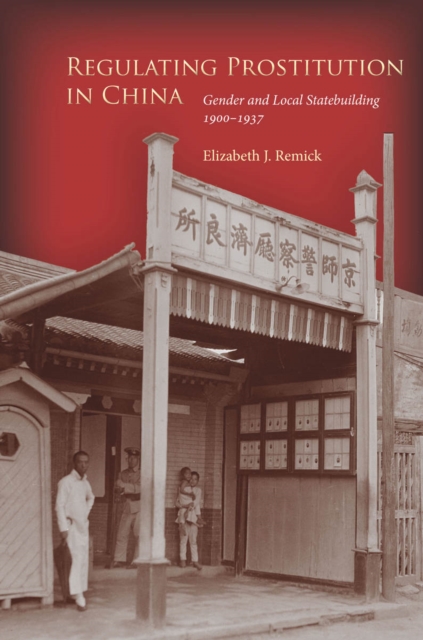
Regulating Prostitution in China
In the early decades of the twentieth century, prostitution was one of only a few fates available to women and girls besides wife, servant, or factory worker. At the turn of the century, cities across China began to register, tax, and monitor prostitutes, taking different forms in different cities. Intervention by way of prostitution regulation connected the local state, politics, and gender relations in important new ways. The decisions that local governments made about how to deal with gender, and specifically the thorny issue of prostitution, had concrete and measurable effects on the structures and capacities of the state.
This book examines how the ways in which local government chose to shape the institution of prostitution ended up transforming local states themselves. It begins by looking at the origins of prostitution regulation in Europe and how it spread from there to China via Tokyo. Elizabeth Remick then drills down into the different regulatory approaches of Guangzhou (revenue-intensive), Kunming (coercion-intensive), and Hangzhou (light regulation). In all three cases, there were distinct consequences and implications for statebuilding, some of which made governments bigger and wealthier, some of which weakened and undermined development. This study makes a strong case for why gender needs to be written into the story of statebuilding in China, even though women, generally barred from political life at that time in China, were not visible political actors.
eBook

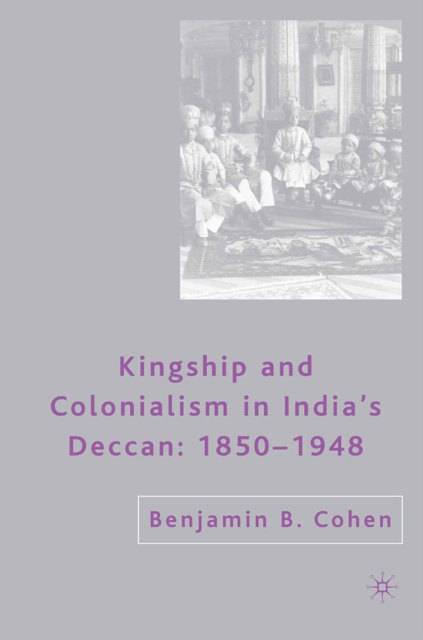
Kingship and colonialism in India's Deccan : 1850-1948
An examination of resilient Hindu elites who lived, fought, and adapted to political and social change during the turbulent late nineteenth and early twentieth centuries in the princely state of Hyderabad.
eBook

Fields of authority : special purpose governance in Ontario, 1815-2015
\"Everywhere we turn in Canadian local politics--from policing to transit, education to public health, planning to utilities--we encounter a peculiar institutional animal: the special purpose body. These \"ABCs\" of local government--library boards, school boards, transit authorities, and many others--provide vital public services, spend large sums of public money, and raise important questions about local democratic accountability. In Fields of Authority, Jack Lucas provides the first systematic exploration of local special purpose bodies in Ontario. Drawing on extensive research in local and provincial archives, Lucas uses a \"policy fields\" approach to explain how these local bodies in Ontario have developed from the nineteenth century to the present. A lively and accessible study, Fields of Authority, will appeal to readers interested in Canadian political history, urban politics, and urban public policy.\"-- Provided by publisher.
Book

Explaining local government
Explaining local government uniquely presents a history of local government in Britain from 1800 to the present day. The study explains how the institution evolved from a structure that appeared to be relatively free from central government interference to, as John Prescott observes, 'one of the most centralised systems of government in the Western world'. The book is accessible to A level and undergraduate students as an introduction to the development of local government in Britain but also balances values and political practice to provide a unique explanation, using primary research, of the evolution of the system. The volume begins with an analysis of the structure of local government prior to 1832. Subsequent chapters chart its development to the more uniform system of the late nineteenth century. It is then argued that the emergence of a 'New Liberal' national welfare state and the growth of the Labour Party created pressures within Whitehall and Westminster for substantive controls over local governments. This has led post-1945 to the creation of larger less local units and further restraints on local autonomy. In addition, electoral competition among national parties to offer better public services ensured that national leaders could not leave local authorities to administer to local needs as they saw fit. The conclusion compares the development of British centralism with the pattern of central local development and the relative conservatism in re-structuring the systems in the United States and France and argues that the Blair Government may now realise the need for greater local autonomy and neighbourhood politics but as yet is struggling to reconcile this value with its concern to steer improvements in service delivery.
eBook