
Catalogue Search | MBRL


Are you sure you want to remove the book from the shelf?

{{itemTitle}}
2,954
result(s) for
"Local history -- Philosophy"
Sort by:

Place and locality in modern France
\"Place and Locality in Modern France is an edited collection that successfully analyses the significance and changing constructions of local place in modern France. Drawing on the expertise of a range of scholars from around the world, this book is a timely overview of the cross-disciplinary thinking that is currently taking place over a central issue in French history. The book investigates the politics of administrative reform, regionalism and projects of decentralization. It looks at the role of commerce in engendering narratives and experience of local place, explores the importance of ethnic, class and gender distinctions, and considers the generation and transmission of knowledge about local place and culture through academia, civic heritage and popular memory. In short, this text provides a sweeping account of the concept of the 'local' in French history in a way that will effectively bridge the divide between micro- and macro-history for those interested in ideas of locality and culture in modern French and European history\"-- Provided by publisher.
Book

Rethinking Home
Joseph A. Amato proposes a bold and innovative approach to writing local history in this imaginative, wide-ranging, and deeply engaging exploration of the meaning of place and home. Arguing that people of every place and time deserve a history, Amato draws on his background as a European cultural historian and a prolific writer of local history to explore such topics as the history of cleanliness, sound, anger, madness, the clandestine, and the environment in southwestern Minnesota. While dedicated to the unique experiences of a place, his lively work demonstrates that contemporary local history provides a vital link for understanding the relation between immediate experience and the metamorphosis of the world at large. In an era of encompassing forces and global sensibilities, Rethinking Home advocates the power of local history to revivify the individual, the concrete, and the particular. This singular book offers fresh perspectives, themes, and approaches for energizing local history at a time when the very notion of place is in jeopardy. Amato explains how local historians shape their work around objects we can touch and institutions we have directly experienced. For them, theory always gives way to facts. His vivid portraits of individual people, places, situations, and cases (which include murders, crop scams, and taking custody of the law) are joined to local illustrations of the use of environmental and ecological history. This book also puts local history in the service of contemporary history with the examination of recent demographic, social, and cultural transformations. Critical concluding chapters on politics and literature--especially Sinclair Lewis's Main Street and Longfellow's Hiawatha--show how metaphor and myth invent, distort, and hold captive local towns, peoples, and places.
eBook

The \Global\ and the \Local\ in Early Modern and Modern East Asia
\"The 'Global' and the 'Local' in Early Modern and Modern East Asia presents a unique set of historical perspectives by scholars from three important universities in the East Asian region--The University of Tokyo (Tهodai), Fudan University, and Princeton University. Two of the essays address the international leanings in the histories of their respective departments in Todai and Fudan. The rest of the essays showcase how such thinking about the global and local histories have borne fruit, as the scholars of the three institutions contributed essays, arguing about the philosophies, methodologies, and/or perspectives of global history and how it relates to local stories. Authors include Benjamin Elman, Haneda Masashi, and Ge Zhaoguang\"--Provided by publisher.
Book
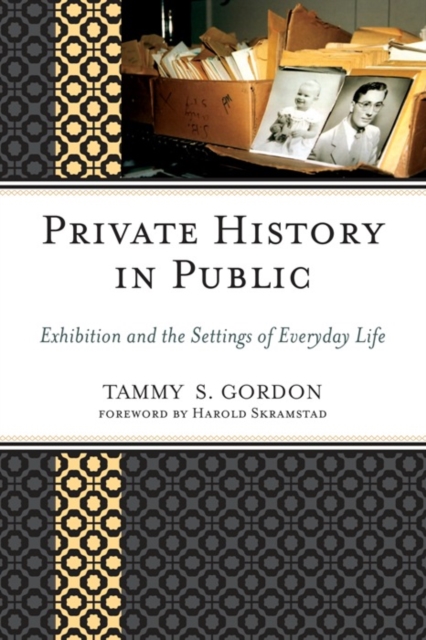
Private history in public
In small community museums, truck stops, restaurants, bars, barbershops, schools, and churches, people create displays to tell the histories that matter to them. Much of this history is personal: family history, community history, history of a trade, or the history of something considered less than genteel. It is often history based on the historical record, but also based on feelings, beliefs, and memory. It is neglected history. Private History in Public is about those history exhibits that complicate the public/private dichotomy, exhibits that serve to explain communities, families, and individuals to outsiders and tie insiders together through a shared narrative of historical experience. Tammy S. Gordon looks beyond the large professionalized museum exhibits that have dominated scholarship in museum studies and public history and offers a new way of understanding the broad spectrum of exhibition types in the United States.
eBook

Historical archaeology through a Western lens
\"An exploration of Western historical archaeologists' role in American regionalism and a call for creating archaeologies of the West as an alternative to the isolated archaeologists working in the West\"--Provided by publisher.
Book

A free will
Where does the notion of free will come from? How and when did it develop, and what did that development involve? In Michael Frede's radically new account of the history of this idea, the notion of a free will emerged from powerful assumptions about the relation between divine providence, correctness of individual choice, and self-enslavement due to incorrect choice. Anchoring his discussion in Stoicism, Frede begins with Aristotle--who, he argues, had no notion of a free will--and ends with Augustine. Frede shows that Augustine, far from originating the idea (as is often claimed), derived most of his thinking about it from the Stoicism developed by Epictetus.
eBook

The dialogue of civilizations in the birth of modern science
Arun Bala challenges Eurocentric conceptions of history by showing how Chinese, Indian, Arabic, and ancient Egyptian ideas in philosophy, mathematics, cosmology and physics played an indispensable role in making possible the birth of modern science.
eBook

Staten Island's Elliottville
The story of a 19th century Staten Island town that
nurtured the careers of nationally significant reformers,
abolitionists, and transcendentalists.
This book traces five decades of community life in a
nineteenth-century Staten Island neighborhood informally called
Elliottville, where extraordinary people lived. Its history
illuminates the impact of transformative cultural, social,
economic, and political change stemming from abolitionism,
transcendentalism, the women's suffrage movement, and the rapid
growth of the nation. Begun in 1839 as a therapeutic retreat,
New Englanders with ties to Emerson settled there, forming a
distinctive community. Their achievements in art, literature,
and social reform attracted even more like-minded people,
including Francis George Shaw, George William Curtis, Theodore
Winthrop, Robert Gould Shaw, Helena de Kay Gilder, Charles de
Kay, Anna Leonowens, and Maria \"Midy\" Morgan. Its vibrant
intellectual life was threatened by an influx of Gilded Age men
in the 1870s and destroyed when a freight rail line separated
Elliottville from the Kill Van Kull. Drawing on a wealth of
archival material and unique maps and illustrations, this book
gives a vivid picture of how one small community could impact
the country's intellectual and social development.
eBook
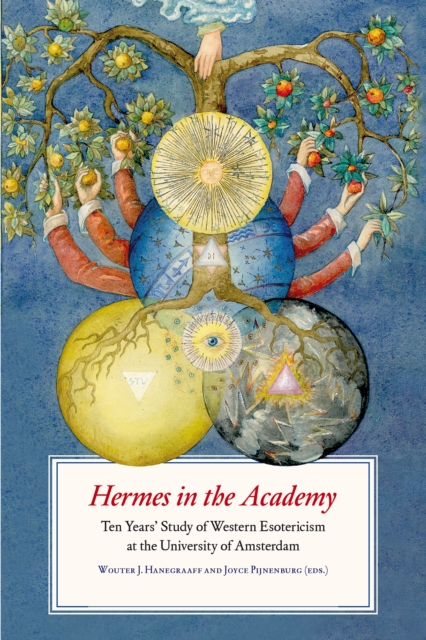
Hermes in the Academy
Hermes in the Academy commemorates the tenth anniversary of the Center for History of Hermetic Philosophy and Related Currents (GHF) at the University of Amsterdam. The center devotes itself to the study of Western esotericism, which includes topics such as Hermetic philosophy, Christian kabbalah and occultism.
eBook

The Language of the Gods in the World of Men
In this work of impressive scholarship, Sheldon Pollock explores the remarkable rise and fall of Sanskrit, India's ancient language, as a vehicle of poetry and polity. He traces the two great moments of its transformation: the first around the beginning of the Common Era, when Sanskrit, long a sacred language, was reinvented as a code for literary and political expression, the start of an amazing career that saw Sanskrit literary culture spread from Afghanistan to Java. The second moment occurred around the beginning of the second millennium, when local speech forms challenged and eventually replaced Sanskrit in both the literary and political arenas. Drawing striking parallels, chronologically as well as structurally, with the rise of Latin literature and the Roman empire, and with the new vernacular literatures and nation-states of late-medieval Europe, The Language of the Gods in the World of Men asks whether these very different histories challenge current theories of culture and power and suggest new possibilities for practice.
eBook