
Catalogue Search | MBRL


Are you sure you want to remove the book from the shelf?

{{itemTitle}}
19
result(s) for
"Loeb Classical Library"
Sort by:

The School of Libanius in Late Antique Antioch
This book is a study of the fourth-century sophist Libanius, a major intellectual figure who ran one of the most prestigious schools of rhetoric in the later Roman Empire. He was a tenacious adherent of pagan religion and a friend of the emperor Julian, but also taught leaders of the early Christian church like St. John Chrysostom and St. Basil the Great. Raffaella Cribiore examines Libanius's training and personality, showing him to be a vibrant educator, though somewhat gloomy and anxious by nature. She traces how he cultivated a wide network of friends and former pupils and courted powerful officials to recruit top students. Cribiore describes his school in Antioch--how students applied, how they were evaluated and trained, and how Libanius reported progress to their families. She details the professional opportunities that a thorough training in rhetoric opened up for young men of the day. Also included here are translations of 200 of Libanius's most important letters on education, almost none of which have appeared in English before.
Cribiore casts into striking relief the importance of rhetoric in late antiquity and its influence not only on pagan intellectuals but also on prominent Christian figures. She gives a balanced view of Libanius and his circle against the far-flung panorama of the Greek East.
eBook

A Written Republic
In the 40s BCE, during his forced retirement from politics under Caesar's dictatorship, Cicero turned to philosophy, producing a massive and important body of work. As he was acutely aware, this was an unusual undertaking for a Roman statesman because Romans were often hostile to philosophy, perceiving it as foreign and incompatible with fulfilling one's duty as a citizen. How, then, are we to understand Cicero's decision to pursue philosophy in the context of the political, intellectual, and cultural life of the late Roman republic? InA Written Republic, Yelena Baraz takes up this question and makes the case that philosophy for Cicero was not a retreat from politics but a continuation of politics by other means, an alternative way of living a political life and serving the state under newly restricted conditions.
Baraz examines the rhetorical battle that Cicero stages in his philosophical prefaces--a battle between the forces that would oppose or support his project. He presents his philosophy as intimately connected to the new political circumstances and his exclusion from politics. His goal--to benefit the state by providing new moral resources for the Roman elite--was traditional, even if his method of translating Greek philosophical knowledge into Latin and combining Greek sources with Roman heritage was unorthodox.
A Written Republicprovides a new perspective on Cicero's conception of his philosophical project while also adding to the broader picture of late-Roman political, intellectual, and cultural life.
eBook

Epigram in the English Renaissance
Favorite Renaissance condiment at \"the great feast of language,\" the epigram is here presented full-flavored and various in a brilliant study by the late Hoyt Hopewell Hudson. He considers its origins, its nature, how skillfully it was shaped to eulogy and satire alike by the lively minds of its great exponents, Sir Thomas More and his contemporaries, and made the source for rigorous mental exercise in the schools.
Originally published in 1947.
The Princeton Legacy Library uses the latest print-on-demand technology to again make available previously out-of-print books from the distinguished backlist of Princeton University Press. These editions preserve the original texts of these important books while presenting them in durable paperback and hardcover editions. The goal of the Princeton Legacy Library is to vastly increase access to the rich scholarly heritage found in the thousands of books published by Princeton University Press since its founding in 1905.
eBook

The Literature of the Anglo-Saxons
This is a one-volume descriptive history of English literature from the beginning to the Norman Conquest. Emphasis is literary rather than linguistic.Originally published in 1966.The Princeton Legacy Library uses the latest print-on-demand technology to again make available previously out-of-print books from the distinguished backlist of Princeton University Press. These editions preserve the original texts of these important books while presenting them in durable paperback and hardcover editions. The goal of the Princeton Legacy Library is to vastly increase access to the rich scholarly heritage found in the thousands of books published by Princeton University Press since its founding in 1905.
eBook

Kierkegaard's journals and notebooks
For over a century, the Danish thinker Søren Kierkegaard (1813-55) has been at the center of a number of important discussions, concerning not only philosophy and theology, but also, more recently, fields such as social thought, psychology, and contemporary aesthetics, especially literary theory.
Despite his relatively short life, Kierkegaard was an extraordinarily prolific writer, as attested to by the 26-volume Princeton University Press edition of all of his published writings. But Kierkegaard left behind nearly as muchunpublishedwriting, most of which consists of what are called his \"journals and notebooks.\" Kierkegaard has long been recognized as one of history's great journal keepers, but only rather small portions of his journals and notebooks are what we usually understand by the term \"diaries.\" By far the greater part of Kierkegaard's journals and notebooks consists of reflections on a myriad of subjects--philosophical, religious, political, personal. Studying his journals and notebooks takes us into his workshop, where we can see his entire universe of thought. We can witness the genesis of his published works, to be sure--but we can also see whole galaxies of concepts, new insights, and fragments, large and small, of partially (or almost entirely) completed but unpublished works.Kierkegaard's Journals and Notebooksenables us to see the thinker in dialogue with his times and with himself.
Volume 4 of this 11-volume series includes the first five of Kierkegaard's well-known \"NB\" journals, which contain, in addition to a great many reflections on his own life, a wealth of thoughts on theological matters, as well as on Kierkegaard's times, including political developments and the daily press.
Kierkegaard wrote his journals in a two-column format, one for his initial entries and the second for the extensive marginal comments that he added later. This edition of the journals reproduces this format, includes several photographs of original manuscript pages, and contains extensive scholarly commentary on the various entries and on the history of the manuscripts being reproduced.
eBook

Rhetoric and Philosophy in Renaissance Humanism
The book description for \"Rhetoric and Philosophy in Renaissance Humanism\" is currently unavailable.
eBook

Kierkegaard's Journals and Notebooks: Volume 7, Journals NB15-NB20
For over a century, the Danish thinker Søren Kierkegaard (1813-55) has been at the center of a number of important discussions, concerning not only philosophy and theology, but also, more recently, fields such as social thought, psychology, and contemporary aesthetics, especially literary theory.
Despite his relatively short life, Kierkegaard was an extraordinarily prolific writer, as attested to by the 26-volume Princeton University Press edition of all of his published writings. But Kierkegaard left behind nearly as much unpublished writing, most of which consists of what are called his \"journals and notebooks.\" Kierkegaard has long been recognized as one of history's great journal keepers, but only rather small portions of his journals and notebooks are what we usually understand by the term \"diaries.\" By far the greater part of Kierkegaard's journals and notebooks consists of reflections on a myriad of subjects--philosophical, religious, political, personal. Studying his journals and notebooks takes us into his workshop, where we can see his entire universe of thought. We can witness the genesis of his published works, to be sure--but we can also see whole galaxies of concepts, new insights, and fragments, large and small, of partially (or almost entirely) completed but unpublished works.Kierkegaard's Journals and Notebooksenables us to see the thinker in dialogue with his times and with himself.
Volume 7 of this 11-volume series includes six of Kierkegaard's important \"NB\" journals (Journals NB15 through NB20), covering the months from early January 1850 to mid-September of that year. By this time it had become clear that popular sovereignty, ushered in by the revolution of 1848 and ratified by the Danish constitution of 1849, had come to stay, and Kierkegaard now intensified his criticism of the notion that everything, even matters involving the human soul, could be decided by \"balloting.\" He also continued to direct his barbs at the established Danish Church and its clergy (particularly Bishop J. P. Mynster and Professor H. L. Martensen), at the press, and at the attempt by modern philosophy to comprehend the incomprehensibility of faith. Kierkegaard's reading notes include entries on Augustine, the Stoics, German mystics, Luther, pietist authors, and Rousseau, while his autobiographical reflections circle around the question of which, if any, of several essays explaining his life and works he ought to publish. Perhaps unsurprisingly, Kierkegaard's more personal reflections return once again to his public feud with M. A. Goldschmidt and his broken engagement to Regine Olsen.
Kierkegaard wrote his journals in a two-column format, one for his initial entries and the second for the extensive marginal comments that he added later. This edition of the journals reproduces this format, includes several photographs of original manuscript pages, and contains extensive scholarly commentary on the various entries and on the history of the manuscripts being reproduced.
eBook

Kierkegaard's journals and notebooks
For over a century, the Danish thinker Søren Kierkegaard (1813-55) has been at the center of a number of important discussions, concerning not only philosophy and theology, but also, more recently, fields such as social thought, psychology, and contemporary aesthetics, especially literary theory.
Despite his relatively short life, Kierkegaard was an extraordinarily prolific writer, as attested to by the 26-volume Princeton University Press edition of all of his published writings. But Kierkegaard left behind nearly as muchunpublishedwriting, most of which consists of what are called his \"journals and notebooks.\" Kierkegaard has long been recognized as one of history's great journal keepers, but only rather small portions of his journals and notebooks are what we usually understand by the term \"diaries.\" By far the greater part of Kierkegaard's journals and notebooks consists of reflections on a myriad of subjects--philosophical, religious, political, personal. Studying his journals and notebooks takes us into his workshop, where we can see his entire universe of thought. We can witness the genesis of his published works, to be sure--but we can also see whole galaxies of concepts, new insights, and fragments, large and small, of partially (or almost entirely) completed but unpublished works.Kierkegaard's Journals and Notebooksenables us to see the thinker in dialogue with his times and with himself.
Volume 5 of this 11-volume series includes five of Kierkegaard's important \"NB\" journals (Journals NB6 through NB10), covering the months from summer 1848 through early May 1849. This was a turbulent period both in the history of Denmark--which was experiencing the immediate aftermath of revolution and the fall of absolutism, a continuing war with the German states, and the replacement of the State Church with the Danish People's Church--and for Kierkegaard personally. The journals in the present volume include Kierkegaard's reactions to the political upheaval, a retrospective account of his audiences with King Christian VIII, deliberations about publishing an autobiographical explanation of his writings, and an increasingly harsh critique of the Danish Church. These journals also reflect Kierkegaard's deep concern over his collision with the satirical journalCorsair, an experience that helped radicalize his view of \"essential Christianity\" and caused him to ponder the meaning of martyrdom.
Kierkegaard wrote his journals in a two-column format, one for his initial entries and the second for the extensive marginal comments that he added later. This edition of the journals reproduces this format, includes several photographs of original manuscript pages, and contains extensive scholarly commentary on the various entries and on the history of the manuscripts being reproduced.
eBook

The Spread of Novels
Fiction has always been in a state of transformation and circulation: how does this history of mobility inform the emergence of the novel? The Spread of Novels explores the active movements of English and French fiction in the eighteenth century and argues that the new literary form of the novel was the result of a shift in translation. Demonstrating that translation was both the cause and means by which the novel attained success, Mary Helen McMurran shows how this period was a watershed in translation history, signaling the end of a premodern system of translation and the advent of modern literary exchange.
eBook
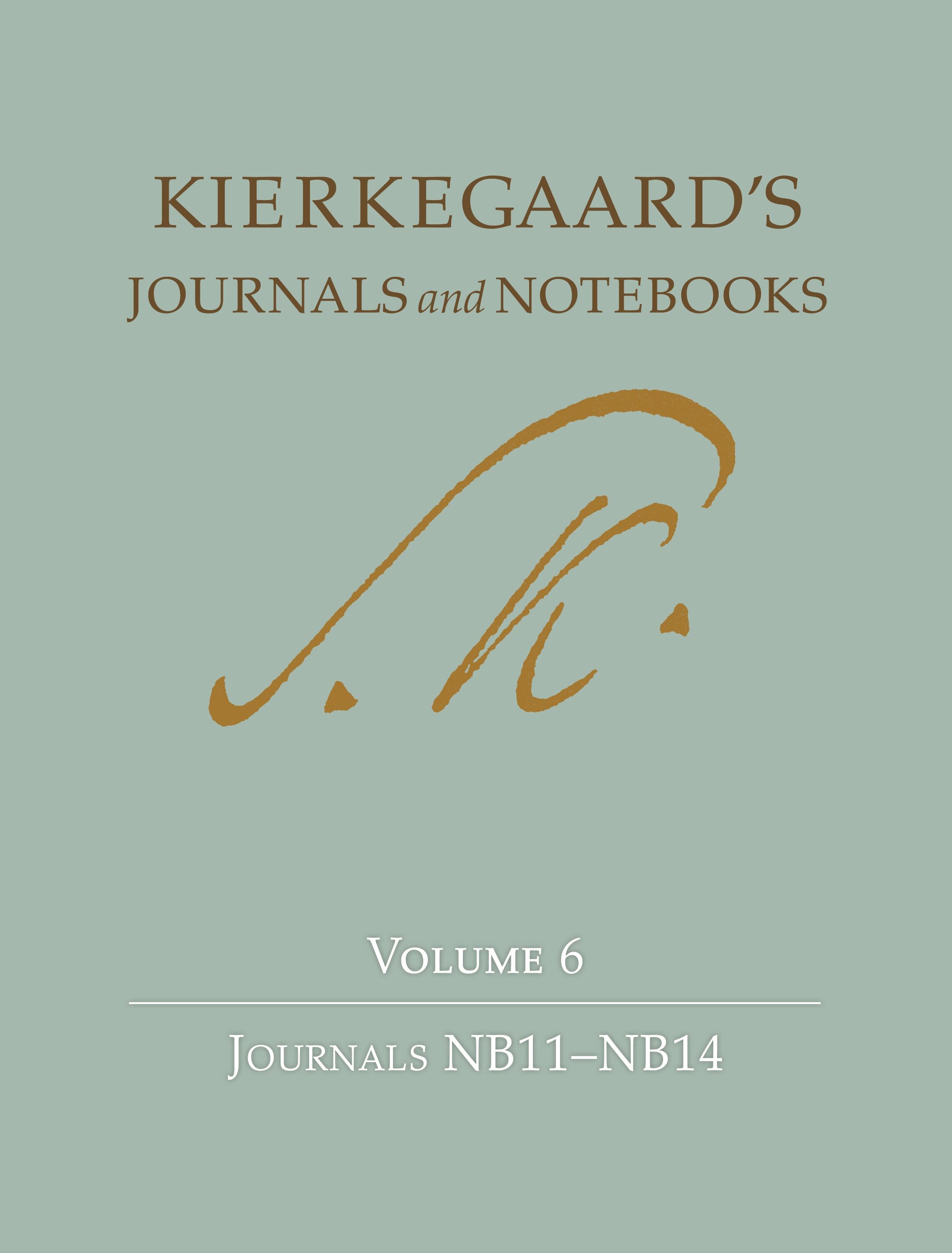
Kierkegaard's journals and notebooks
For over a century, the Danish thinker Søren Kierkegaard (1813-55) has been at the center of a number of important discussions, concerning not only philosophy and theology, but also, more recently, fields such as social thought, psychology, and contemporary aesthetics, especially literary theory.
Despite his relatively short life, Kierkegaard was an extraordinarily prolific writer, as attested to by the 26-volume Princeton University Press edition of all of his published writings. But Kierkegaard left behind nearly as much unpublished writing, most of which consists of what are called his \"journals and notebooks.\" Kierkegaard has long been recognized as one of history's great journal keepers, but only rather small portions of his journals and notebooks are what we usually understand by the term \"diaries.\" By far the greater part of Kierkegaard's journals and notebooks consists of reflections on a myriad of subjects--philosophical, religious, political, personal. Studying his journals and notebooks takes us into his workshop, where we can see his entire universe of thought. We can witness the genesis of his published works, to be sure--but we can also see whole galaxies of concepts, new insights, and fragments, large and small, of partially (or almost entirely) completed but unpublished works.Kierkegaard's Journals and Notebooksenables us to see the thinker in dialogue with his times and with himself.
Volume 6 of this 11-volume series includes four of Kierkegaard's important \"NB\" journals (Journals NB11 through NB14), covering the months from early May 1849 to the beginning of 1850. At this time Denmark was coming to terms with the 1848 revolution that had replaced absolutism with popular sovereignty, while the war with the German states continued, and the country pondered exactly what replacing the old State Church with the Danish People's Church would mean. In these journals Kierkegaard reflects at length on political and, especially, on ecclesiastical developments. His brooding over the ongoing effects of his fight with the satirical journalCorsaircontinues, and he also examines and re-examines the broader personal and religious significance of his broken engagement with Regine Olsen. These journals also contain reflections by Kierkegaard on a number of his most important works, including the two works written under his \"new\" pseudonym Anti-Climacus (The Sickness unto DeathandPractice in Christianity) and his various attempts at autobiographical explanations of his work. And, all the while, the drumbeat of his radical critique of \"Christendom\" continues and escalates.
Kierkegaard wrote his journals in a two-column format, one for his initial entries and the second for the extensive marginal comments that he added later. This edition of the journals reproduces this format, includes several photographs of original manuscript pages, and contains extensive scholarly commentary on the various entries and on the history of the manuscripts being reproduced.
eBook