
Catalogue Search | MBRL


Are you sure you want to remove the book from the shelf?

{{itemTitle}}
15
result(s) for
"Logistikplanung."
Sort by:

Sustainable logistics
This book will bring a state of the art overview of the research done in sustainable logistics. It will be structured along the four Aas of sustainable logistics: awareness, avoidance, acting and shifting goods, and anticipation of new technologies.
Book

Dynamic joint construction and optimal operation strategy of multi-period reverse logistics network: a case study of Shanghai apparel E-commerce enterprises
With the rapid development of our economy, the demand for reverse logistics is becoming increasingly urgent. This paper proposes a multi-period and dynamic joint construction model to build the reverse logistics network and verifies the feasibility of the rendered model by adopting particle swarm optimization (PSO) algorithm and genetic algorithm (GA) with a case study of the apparel E-commerce enterprises of Shanghai. The calculation indicates that, compared with traditional single-period reverse logistics system, dynamic joint construction model is more accordant with the practical situation, the capacity of multi-period model node is easier to optimize and the total operation cost of multi-period model reduces a lot. Furthermore, this research provides reference for reducing the operation costs as well as the building of regional reverse logistics network.
Journal Article


Sustainable Logistics
This book will bring a state of the art overview of the research done in sustainable logistics. It will be structured along the four A's of sustainable logistics: awareness, avoidance, acting and shifting goods, and anticipation of new technologies.
eBook

Modeling of decentralized processes in dynamic logistic networks by means of graph-transformational swarms
In this paper, we propose to employ the framework of graph-transformational swarms for the modeling of dynamic logistic networks with decentralized processing and control. The members of a graph-transformational swarm act and interact in a common environment graph with massive parallelism of rule-based activities according to local control conditions and a global cooperation condition. This corresponds directly to the logistic hubs and their processes in a logistic network where the processes run simultaneously and autonomously with a proper way of coordination. This covers also dynamic changes on the network structures as the members of a swarm can change the environment anyhow. The approach is illustrated by the modeling of automated guided vehicles.
Journal Article
Bausteine des Logistikmanagements
Logistikmanagement im Überblick von SCM über E-Logistics bis Logistikcontrolling.In der globalisierten Wirtschaft wird es immer wichtiger, das enorme Potenzial der Logistik auszuschöpfen.Dieses Buch stellt Ihnen die dazu notwendigen Bausteine und Instrumente vor und verdeutlicht die vielfältigen Möglichkeiten der modernen Logistik.
eBook

Airport Design and Operation
This book is always closely related. A poor design affects the airport operations, resulting in increased costs, and a sound understanding of operation is needed to enable good design. The aim of this third edition is to present an updated and integrated approach to the two. The chapters have been enhanced to reflect changes in technology and the way the air transport industry functions. Key topics that are newly addressed in this book include low cost airline operations, security issues and EASA regulations on airports. A new chapter covering extended details about wildlife control has been added to the volume.
eBook
Übungsbuch Logistik-Entscheidungen
Dieses Übungsbuch behandelt anhand einer Vielzahl von Übungsaufgaben und Fallstudien ausgewählte Transport-, Zuordnungs-, Routen-, Tourenplanungs- sowie Standortprobleme und vertieft die im dazugehörigen Lehrbuch dargestellten theoretischen und praktischen Aspekte logistischer Entscheidungen. Der Großteil der Übungsaufgaben und Fallstudien basiert auf Lehrveranstaltungen, die seit vielen Jahren an verschiedenen Hochschulen gehalten werden. Das Übungsbuch ist in einen Aufgaben- und einen Lösungsteil unterteilt. Für jede der Aufgabenstellungen werden eine thematische Einordnung zu einem Themenkomplex und ein Verweis zum entsprechenden Abschnitt im Lehrbuch gegeben, sodass die theoretischen und praktischen Grundlagen des Lehrbuchs zur Lösung genutzt werden können. Alle Lösungswege sind hinsichtlich der mathematischen Modellierung, der Lösung mit geeigneter Software und der Interpretation der Lösungen detailliert beschrieben. Alle Fallbeispiele können mit der Logistik-Software LogisticsLab und mit der in Excel integrierbaren Optimierungsumgebung SolverStudio/Cmpl nachvollzogen werden.
eBook
Introduction to logistics systems management
Introduction to Logistics Systems Management is the fully revised and enhanced version of the 2004 prize-winning textbook Introduction to Logistics Systems Planning and Control , used in universities around the world.
eBook
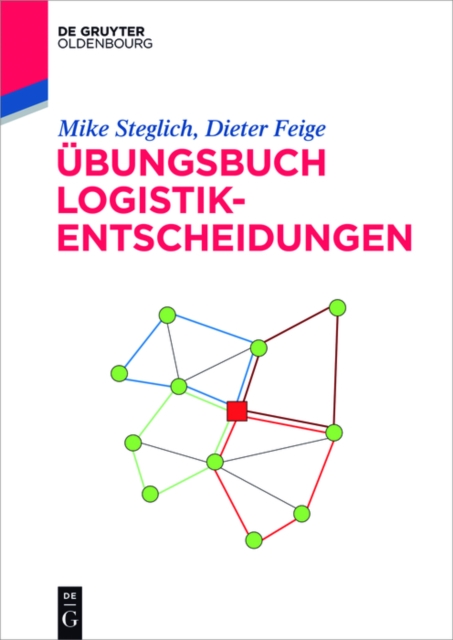
Übungsbuch Logistik-Entscheidungen
Dieses Übungsbuch behandelt anhand einer Vielzahl von Übungsaufgaben und Fallstudien ausgewählte Transport-, Zuordnungs-, Routen-, Tourenplanungs- sowie Standortprobleme und vertieft die im dazugehörigen Lehrbuch dargestellten theoretischen und praktischen Aspekte logistischer Entscheidungen. Der Großteil der Übungsaufgaben und Fallstudien basiert auf Lehrveranstaltungen, die seit vielen Jahren an verschiedenen Hochschulen gehalten werden.
Das Übungsbuch ist in einen Aufgaben- und einen Lösungsteil unterteilt. Für jede der Aufgabenstellungen werden eine thematische Einordnung zu einem Themenkomplex und ein Verweis zum entsprechenden Abschnitt im Lehrbuch gegeben, sodass die theoretischen und praktischen Grundlagen des Lehrbuchs zur Lösung genutzt werden können. Alle Lösungswege sind hinsichtlich der mathematischen Modellierung, der Lösung mit geeigneter Software und der Interpretation der Lösungen detailliert beschrieben. Alle Fallbeispiele können mit der Logistik-Software LogisticsLab und mit der in Excel integrierbaren Optimierungsumgebung SolverStudio/Cmpl nachvollzogen werden.
eBook