
Catalogue Search | MBRL


Are you sure you want to remove the book from the shelf?

{{itemTitle}}
19
result(s) for
"Lok Sabha"
Sort by:


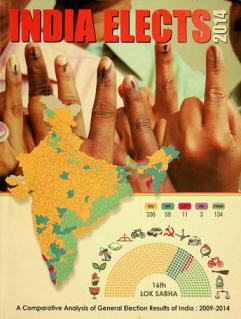
Winning the mandate : the Indian experience
This book captures how electioneering has changed over the years and how media and marketing have assumed more significance than party manifestos. On 16th May 2014, India witnessed the result of an intense political campaign. Those who were vanquished felt that this was due to the success of a marketing blitzkrieg, which actually pollutes a democracy. Again, for those who supported the eventual winner-the Narendra Modi-led BJP-it was a great victory. Viewed either way, India's national election for the 16th Lok Sabha in 2014 will remain a landmark in the annals of political campaigns. The work is thus a study of campaign strategies, how they are framed, the role of local actors and to what extent individuals rule over ideologies and vice versa. An important contribution to the study of India's 2014 General Elections.
eBook

Emerging Trends in Indian Politics: The 15th General Election
This study presents 13 articles interrogating themes likely to impinge on India's 15th general elections in 2009. These were written following intense discussion between the contributors and use available data as well as original data and analysis.
The significance of the analyses goes beyond how much these questions find place in the campaign, or how much they would impact the electoral results. These have and would continue to be essential themes in Indian politics for some time. They would influence the country's politics, its leaders, parties and institutions and would be interrogated in political, policy and social science circles in the foreseeable future. They would in turn be impacted, redefined and perhaps transformed by political dynamics and social pressure.
The first attempt of its kind to analyse the impact of certain emerging trends in politics on upcoming elections anywhere in the world, this book will be a useful addition to election studies and policy making in general.
eBook

The algebra of warfare-welfare : a long view of India's 2014 election
Electoral democracy combines the ideas and practices of warfare and welfare, where both work in tandem as near synonyms. India's robust electoral democracy exemplifies this combination in diverse forms. Critically analyzing the 2014 Parliamentary elections beyond the seduction of immediacy and bare cold statistics, this book puts human subjectivity at the center of election studies and, through an anthropological-sociological approach, makes lives - human and non-human, lived and unlived or unlivable - central to any understanding of elections and democracy. Crafting a new, comprehensive approach, this volume looks at the 2014 elections in relation to the changing nature and forms of elections and democracy globally. Coming from multidisciplinary backgrounds, the contributors to this volume use ethnographic observations to open up a space for new theoretical and methodological reflections on the role of media in Indian elections, the shift to the right in 2014 and its consequences, the significance of traditional Hindu spaces such as the river Ganga in BJP's victory, the role of gurus like Baba Ramdev, and the electoral choices available to and exercised by the minorities, among others.
Book

Emerging Trends in Indian Politics
This study presents 13 articles interrogating themes likely to impinge on India’s 15 th general elections in 2009. These were written following intense discussion between the contributors and use available data as well as original data and analysis.
The significance of the analyses goes beyond how much these questions find place in the campaign, or how much they would impact the electoral results. These have and would continue to be essential themes in Indian politics for some time. They would influence the country’s politics, its leaders, parties and institutions and would be interrogated in political, policy and social science circles in the foreseeable future. They would in turn be impacted, redefined and perhaps transformed by political dynamics and social pressure.
The first attempt of its kind to analyse the impact of certain emerging trends in politics on upcoming elections anywhere in the world, this book will be a useful addition to election studies and policy making in general.
Ajay K. Mehra is Honorary Director, Centre for Public Affairs, Noida, Uttar Pradesh, and Associate Professor in Political Science at the University of Delhi, India.
eBook


On the importance of pre-processing in small-scale analyses of twitter: a case study of the 2019 Indian general election
The main purpose of this paper is to emphasize the role of data pre-processing in the sentiment analysis of Twitter data. The paper provides detailed analysis and methods to understand and handle Twitter data for analyzing public views during elections. We argue that in order to accurately assess public opinion towards a political party or leader, there is a need to focus on users’ personal tweets rather than tweets from news or media sources. We also argue that emojis, punctuations, stopwords, emphasized words, and some specific regions (Unicode, #, @) inside tweets play a very significant role in analyzing sentiments. In view of this, this paper provides a novel set of pre-processing steps that perform filtering and cleaning of tweets without losing any vital information. For experimentation, a small case study is taken that comprises 258,891 instances related to the 2019 Indian General Election from Twitter using #LoksabhaElection2019. A pre-trained sentiment analysis model called twitter-xlm-roberta-base-sentiment is used to analyze the sentiment of public tweets. Results show that tweets from media sources and the specific regions of tweets inject data bias and affect final sentiment analysis results. We found that out of the collected data, only 40% of tweets were useful for determining public sentiments for election analysis, while the rest were irrelevant media tweets. Also, an increase in negative and neutral sentiment outputs is observed due to the presence of media tweets and the specific regions. Further, explorative analysis analyzes public sentiments towards various political terms inferred using top2vec topic modeling.
Journal Article

How welfare wins: Discursive institutionalism, the politics of the poor, and the expansion of social welfare in India during the early 21st century
Abstract
The worldwide explosion of social welfare has been described as the “quiet revolution” of our time. This paper analyses the expansion of social welfare in India during the early part of the 2000s. What explains this expansion of encompassing social welfare in India, following a history of disparate and fragmented social policies? The answer, I argue, lies in recognizing the importance of the “politics of the poor,” the ensemble of negotiations that encompass both electoral participation and contentious politics vis-à-vis the political institutions in India. The paper develops this argument by drawing together insights from discursive institutionalism, Indian politics, and the politics of welfare literature. Doing so enables me to examine the ways in which poor people’s political practices were interpreted by India’s parliamentarians to justify the legislation of India’s flagship social welfare program the National Rural Employment Guarantee Act. I analyze the discourses communicated through 78 parliamentary debates in English and Hindi to enact the law. I blend this analysis with process tracing of electoral behavior of India’s poor and the Maoist insurrection that exploded in the country’s poorest districts at the turn of the century.
Journal Article

Application of Twitter sentiment analysis in election prediction: a case study of 2019 Indian general election
Everyone must have experienced a huge collection of political content on their social media account’s home page during election time. Most of the users are busy in liking, sharing, and commenting political posts on the social media platform at that time, and these user activities show their attitude or behaviour towards the electoral or the political party. This study has mined the collective behaviour of Twitter users towards the Indian General election 2019. This work performed weekly sentiment analysis of massive Twitter content related to electoral and political parties during election time using a lexicon-based sentiment analysis approach. Based on this empirical study, the aim is to find out the feasibility of election prediction through social media analysis in a developing country like India. Further, an explorative analysis has been performed on the collected data, which gives answers to some dominant research hypotheses formulated in this paper. This paper shows how public mood can be gauged from social media content during the election period and how it can be considered as a parameter to predict the election results along with other factors. In addition, results evaluation has been done based on mean absolute error by considering the vote share and seat share of competing parties and leaders in the election. The predicted result of this work has been compared with exit poll results from various news agencies and the actual election result. It was found that our result of election prediction is quite similar to the final election results.
Journal Article