
Catalogue Search | MBRL


Are you sure you want to remove the book from the shelf?

{{itemTitle}}
452
result(s) for
"Lost (Television program)"
Sort by:


Watching the world
Screen documentary has experienced a marked rise in visibility and popularity in recent years. What are the reasons for the so-called 'boom' in documentaries at the cinema? How has television documentary met the challenge of new formats? And how do audiences engage with documentaries on screen? Watching the world extends the reach of documentary studies by investigating recent instances of screen documentary and the uses made of them by audiences. The book focuses on the interfaces between textual mechanisms, promotional tactics, and audiences' viewing strategies. Key topics of inquiry are: film and televisual form, truth claims and issues of trust, the pleasures, politics and the ethics of documentary. Case studies include Capturing the Friedmans, Être et Avoir, Paradise Lost, Touching the Void, and wildlife documentaries on television. This compelling and accessible book will be of interest to both students and fans of documentary.
eBook


Music in Science Fiction Television
The music for science fiction television programs, like music for science fiction films, is often highly distinctive, introducing cutting-edge electronic music and soundscapes. There is a highly particular role for sound and music in science fiction, because it regularly has to expand the vistas and imagination of the shows and plays a crucial role in setting up the time and place. Notable for its adoption of electronic instruments and integration of music and effects, science fiction programs explore sonic capabilities offered through the evolution of sound technology and design, which has allowed for the precise control and creation of unique and otherworldly sounds. This collection of essays analyzes the style and context of music and sound design in Science Fiction television. It provides a wide range of in-depth analyses of seminal live-action series such as Doctor Who, The Twilight Zone, and Lost, as well as animated series, such as The Jetsons.
eBook

Between Realms: The Island as a Liminal Space of Redemption and Fantasy in ‘the Tempest’ and ‘Lost’
This article embarks on a comparative analysis to uncover the role of the island as a liminal space in William Shakespeare’s The Tempest and the television series Lost , exploring its function in facilitating redemption, fantasy, and transformation. The study elucidates how both narratives utilize the island not merely as a setting but as a crucial catalyst for character evolution and thematic depth. Through an examination of geographical, temporal, and psychological dimensions of liminality, the article demonstrates the island’s pivotal role as a space where human complexity, the quest for identity, and aspirations towards redemption unfold. The comparative inquiry highlights narrative and thematic correspondences, underlining the interpretive richness offered by the concept of liminality within literary and media studies. This analysis accentuates the enduring significance of liminal spaces in fostering significant personal and collective transformations, despite disparities in medium and historical context.
Journal Article
Retell, Recall and Reconstruct: From Community Memories to Ecological Education in Vietnamese Cinema Through the Contemporary Adaptations of Nguyen Nhat Anh’s Works
With the personal love stories and the ordinary landscapes of the countryside or schools from the 1990s, Nguyen Nhat Anh’s (NNA) works provide new spiritual sustenance, promptly meeting the needs of the public in post-war Vietnam. As best-selling books for many years, NNA’s works were adapted sporadically from 1990 to 2005 (the economic-cultural opening and intense urbanization) and were selected for filming continuously from 2015 to the present (the period of severe degradation of the natural environment during globalization). The second phase of filming NNA’s stories reveals that the beautiful, nostalgic movies featuring pristine native natural landscapes serve not only as a reconnection for readers of the 1980s and 1990s but also as a reconstruction of community memories, contributing to the process of ecological education for the new generation. In this paper, we aim to explore how and why NNA-adapted films have become a method of creating collective memories, recalling a “lost green paradise” of Vietnam in the post-socialist era. We will also examine the special role of cinema in fostering environmental awareness among the young public in Vietnam.
Journal Article
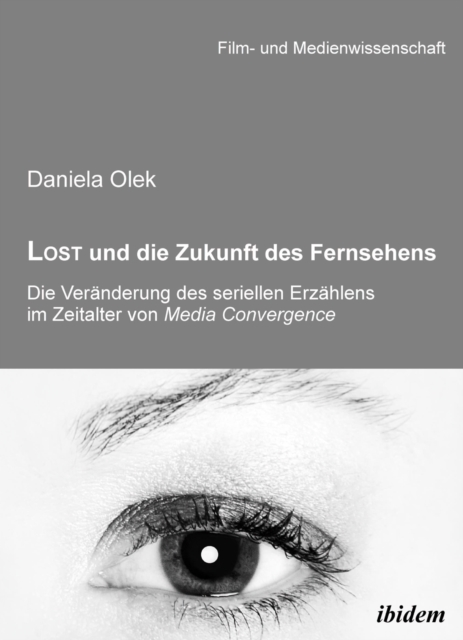
Lost und die Zukunft des Fernsehens
TV for the post-TV generation - so wurde die Serie LOST (USA 2004-10, ABC) 2006 in einem Artikel des Time Magazine tituliert. Doch warum wurde diese Serie als solcherart revolutionar bezeichnet? Welche charakteristischen Besonderheiten evozieren eine derartige Aufmerksamkeit? Was genau ist es, das LOST von herkommlichen Fernsehserien so sehr abhebt, dass LOST als zukunftsweisend und als neuer Meilenstein in der Geschichte von Fernsehserien betrachtet wird?LOST ist eine der ersten Serien, in der vollkommen auf die episodische Struktur verzichtet wird und die zudem derart fragmentarisch-nonlinear organisiert ist, wie es in diesem Ausma in einem werbefinanzierten US-Network noch nicht da gewesen ist. Hinzu kommen eine Fulle an Details sowie unzahlige intertextuelle Verweise, die, in Verbindung mit der Distribution von Erzahlelementen in andere Medien, multiple vernetzte Handlungs- und Bedeutungsebenen generieren. Anhand von LOST als paradigmatischem Beispiel zeigt Daniela Olek in ihrer Studie auf, wie ein eigentlich geschlossenes Textsystem, die Fernsehserie, durch die Einbettung in einen Medienverbund - Internet, DVD und Videospiel - geoffnet wird und den Zuschauer in die narrative Welt integriert. Ausgehend von der Pramisse, dass sich Medien und infolgedessen ihre jeweiligen asthetischen Formen intermedial beeinflussen und neue Medien wie das Internet die Weiterentwicklung bestehender Erzahlformen implizieren, analysiert Olek die aktuellen, hochst komplexen und weitreichenden Transformationen medialen Erzahlens vor dem Hintergrund eingefuhrter Hypertext-Konzepte. Anhand der Hypertext-Charakteristika Nonlinearitat, Verlinkungen und aktive Rezipienten entwirft Olek eine Poetik transmedialen Erzahlens und reflektiert die Implikationen einer derartig gestalteten Fernsehserie auf das Konzept von Zuschauerschaft wie auch auf das Medium Fernsehen selbst.
eBook
PBS newshour. Mudlarkers uncover archaeological treasures along London’s river banks
The phrase \"One person's trash is another's treasure,\" certainly applies to author Lara Maiklem. She is what's known as a \"mudlarker\" and spends her spare time scouring the shores of London’s River Thames for artifacts. Maiklem wrote a best-selling book explaining her passion for this unusual pastime. Special correspondent Malcolm Brabant joined her down in the mud.
Streaming Video

Network Fictions and the Global Unhomely
The paper suggests that the increasing proliferation of network fictions in literature, film, television and the internet may be interpreted through a theoretical framework that reconceptuallises the originally strictly psychoanalytic concept of the Unheimlich (Freud’s idea of the ‘unhomely’ or ‘uncanny’) within the context of political, economic and cultural disources fo globalisation. ‘Network fictions’ are those texts consisting of multiple interlocking narratives set in various times and places that explore the interconnections of characters and events across different storylines: novels such as William Gibson’s Pattern Recognition (2003), Hari Kunzro’s Transmission (2005) and Gods Without Men (2011), David Mitchell’s Cloud Atlas (2004), or Rana Dasgupta’s Tokyo Cancelled (2005) are some examples. My argument is that central to these fictions is a sense of a ‘global unhomely’. The sense of displacement, unhomeliness and global mobility that is conveyed in these fictions is fundamental to the experience of the Unheimlich. In addition, the ability of the concept to convey a combined sense of the familiar and the strange is useful in exploring the ways in which these fictions engage with theoretical debates on globalisation that perceive the interaction between global flows and local cultures either in terms of homogenisation and uniformity or of heterogenisation and hybridity. Moreover, the repetitive temporality of the Unheimlich is another distinctive aspect that allows a reading of the disjunctive, non-linear temporal structure of these fictions from this perspective. The ‘repetition compulsion’, however, that Freud considered to be an example of uncanniness was also theorised by him as a post-traumatic symptom, and this implicit association of uncanniness with post-traumatic experience also allows to interpret the persistent preoccupation of these fictions with suffering and disaster, as well as their explorations of the ways in which collective tragedy and personal trauma reverberate within an increasingly globalised, interconnected world.
Journal Article
Lost und die Zukunft des Fernsehens
\"TV for the post-TV generation\" – so wurde die Serie LOST (USA 2004-10, ABC) 2006 in einem Artikel des Time Magazine tituliert. Doch warum wurde diese Serie als solcherart revolutionär bezeichnet? Welche charakteristischen Besonderheiten evozieren eine derartige Aufmerksamkeit? Was genau ist es, das LOST von herkömmlichen Fernsehserien so sehr abhebt, dass LOST als zukunftsweisend und als neuer Meilenstein in der Geschichte von Fernsehserien betrachtet wird?LOST ist eine der ersten Serien, in der vollkommen auf die episodische Struktur verzichtet wird und die zudem derart fragmentarisch-nonlinear organisiert ist, wie es in diesem Ausmaß in einem werbefinanzierten US-Network noch nicht da gewesen ist. Hinzu kommen eine Fülle an Details sowie unzählige intertextuelle Verweise, die, in Verbindung mit der Distribution von Erzählelementen in andere Medien, multiple vernetzte Handlungs- und Bedeutungsebenen generieren. Anhand von LOST als paradigmatischem Beispiel zeigt Daniela Olek in ihrer Studie auf, wie ein eigentlich geschlossenes Textsystem, die Fernsehserie, durch die Einbettung in einen Medienverbund – Internet, DVD und Videospiel – geöffnet wird und den Zuschauer in die narrative Welt integriert. Ausgehend von der Prämisse, dass sich Medien und infolgedessen ihre jeweiligen ästhetischen Formen intermedial beeinflussen und neue Medien wie das Internet die Weiterentwicklung bestehender Erzählformen implizieren, analysiert Olek die aktuellen, höchst komplexen und weitreichenden Transformationen medialen Erzählens vor dem Hintergrund eingeführter Hypertext-Konzepte. Anhand der Hypertext-Charakteristika Nonlinearität, Verlinkungen und aktive Rezipienten entwirft Olek eine Poetik transmedialen Erzählens und reflektiert die Implikationen einer derartig gestalteten Fernsehserie auf das Konzept von Zuschauerschaft wie auch auf das Medium Fernsehen selbst.
eBook