
Catalogue Search | MBRL


Are you sure you want to remove the book from the shelf?

{{itemTitle}}
32
result(s) for
"Louis XVIII"
Sort by:

Pلere Goriot
'Pere Goriot' is the tragic story of a father whose obsessive love for his two daughters leads to his financial and personal ruin. Interwoven with this theme is that of the impoverished young aristocrat, Rastignac, come to Paris from the provinces to make his fortune, who befriends Goriot and becomes involved with the daughters. The story is set against the background of a whole society driven by social ambition and lust for money.
Book

Stay the Hand of Vengeance
International justice has become a crucial part of the ongoing political debates about the future of shattered societies like Bosnia, Kosovo, Rwanda, Cambodia, and Chile. Why do our governments sometimes display such striking idealism in the face of war crimes and atrocities abroad, and at other times cynically abandon the pursuit of international justice altogether? Why today does justice seem so slow to come for war crimes victims in the Balkans? In this book, Gary Bass offers an unprecedented look at the politics behind international war crimes tribunals, combining analysis with investigative reporting and a broad historical perspective. The Nuremberg trials powerfully demonstrated how effective war crimes tribunals can be. But there have been many other important tribunals that have not been as successful, and which have been largely left out of today's debates about international justice. This timely book brings them in, using primary documents to examine the aftermath of the Napoleonic Wars, World War I, the Armenian genocide, World War II, and the recent wars in the former Yugoslavia.
Bass explains that bringing war criminals to justice can be a military ordeal, a source of endless legal frustration, as well as a diplomatic nightmare. The book takes readers behind the scenes to see vividly how leaders like David Lloyd George, Winston Churchill, Franklin Roosevelt, and Bill Clinton have wrestled with these agonizing moral dilemmas. The book asks how law and international politics interact, and how power can be made to serve the cause of justice.
Bass brings new archival research to bear on such events as the prosecution of the Armenian genocide, presenting surprising episodes that add to the historical record. His sections on the former Yugoslavia tell--with important new discoveries--the secret story of the politicking behind the prosecution of war crimes in Bosnia, drawing on interviews with senior White House officials, key diplomats, and chief prosecutors at the war crimes tribunal for the former Yugoslavia. Bass concludes that despite the obstacles, legalistic justice for war criminals is nonetheless worth pursuing. His arguments will interest anyone concerned about human rights and the pursuit of idealism in international politics.
eBook
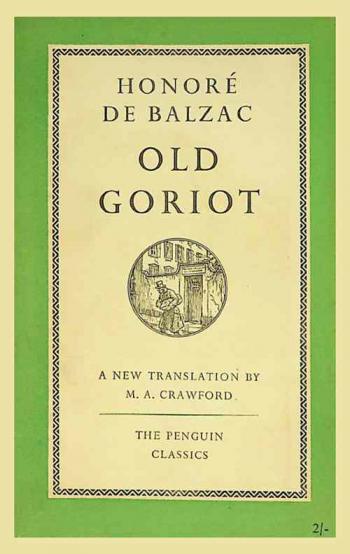
Old Goriot
\"Focuses around the grasping Parisian society of the 1820s.\" *** \"Goriot, a retired manufacturer of vermicelli, is a good man and a weak father. He has given away his money in order to ensure the marriage of his two daughters, Anastasie and Delphine. Because he cares for them, he has to accept all kinds of humiliations from his sons-in-law, one a 'gentilhomme, ' M. de Restaud, and the other a financier, M. de Nucingen. Both young women are ungrateful. They gradually abandon him. He dies without seeing them at his bedside, cared for only by young Rastignac, a law stduent who lives at the same boarding house, the pension Vauquer.\" Haydn. Thesaurus of Book Dig.
BOOK

Assassination, Politics, and Miracles
This remarkable story provides the backdrop for David Skuy's analysis of the Royalist Reaction and its place in the history of the French Restoration. Skuy argues that the Royalist Reaction was the product of two divergent forces: historical echoes of the French Revolution and the Napoleonic Empire and the psychological consequences of the assassination and the miracle child. Skuy discusses Restoration political theory and the development of modern political parties. He follows the strategems of anti-royalist extremists plotting to overthrow the Bourbon regime, and details the complexities and intrigues that characterized the royal court and parliament. Skuy reveals how the assassination and the birth of the miracle child triggered a popular Royalist Reaction that changed millions of French citizens from passive observers into ardent royalists.
eBook

Our friends the enemies : the occupation of France after Napoleon
Contrary to popular understanding, the Napoleonic Wars did not end in 1815 at Waterloo. The battle was only the beginning of a long and complex transition to peace. To end this first \"total\" war, the powers allied against Napoleon developed a new approach to peace-making: a military occupation designed not to conquer territory, but rather to guarantee that the defeated nation reconstruct itself and repay the damages it had caused. Our Friends the Enemies provides the first comprehensive history of the post-Napoleonic \"occupation of guarantee.\" From 1815 to 1818, a multinational occupation force of 150,000 men was stationed in seven departments along the northeastern frontier, at the expense of the French government. Recounting the experience of both occupiers and occupied, the author shows that while the occupation inevitably involved some violence, it also promoted considerable exchange and reconciliation between the French and their former enemies. Although its significance has long been overlooked, the post-Napoleonic occupation of guarantee foreshadowed later efforts at postwar reconstruction, including the Allied occupations of Germany and Japan after World War II.-- Provided by publisher
Book

Monarchiens et monarchie en exil : conjonctures de la monarchie dans l’émigration française, 1792‒1799
Le débat sur la restauration de la monarchie commence au moment de la chute de Louis XVI en 1792. Il s’est intensifié dans l’émigration française. En analysant les relations entre les « monarchiens », monarchistes constitutionnels favorisant un système bicamériste, et les Bourbons en exil, cet article montre comment l’idée d’un rétablissement de l’Ancien Régime, souvent associé aux émigrés, est successivement écartée par les Bourbons. Les confrontations et coopérations politiques avec les monarchiens démontrent dans quelle mesure la pensée politique du futur Louis XVIII, dans les années 1790, s’oriente vers une monarchie constitutionnelle qui, déjà avant Brumaire, anticipe des éléments centraux de la Restauration de 1814. The debate on the restoration of the Monarchy began immediately after the fall of Louis XVI in 1792. It would intensify with French emigration. By analyzing the relationships between the « monarchiens », those constitutional monarchists favoring a bicameral system, and the Bourbons in exile, this article shows how the idea of the reestablishment of the Old Regime often associated with emigres was successively rejected by the Bourbons. The political confrontations and cooperation with the monarchiens demonstrates the extent to which the political thought of the future Louis XVIII in the 1790s turned towards a constitutional monarchy that, already before Brumaire, anticipated the central features of the Restoration of 1814.
Journal Article

Music Drama at the Paris Odéon, 1824–1828
Parisian theatrical, artistic, social, and political life comes alive in Mark Everist's impressive institutional history of the Paris Odéon, an opera house that flourished during the Bourbon Restoration. Everist traces the complete arc of the Odéon's short but highly successful life from ascent to triumph, decline, and closure. He outlines the role it played in expanding operatic repertoire and in changing the face of musical life in Paris. Everist reconstructs the political power structures that controlled the world of Parisian music drama, the internal administration of the theater, and its relationship with composers and librettists, and with the city of Paris itself. His rich depiction of French cultural life and the artistic contexts that allowed the Odéon to flourish highlights the benefit of close and innovative examination of society's institutions.
eBook

The restoration of the monarchy, ot the fabrication of Louis XVIII
ABSTRACT IN FRENCH: La monarchie restaurée était un être hybride aussi bien dans sa pratique gouvernementale que dans son auto-représentation. La cour demeura marquée par l'Ancien Régime, mais se montra capable de réformes; le roi se présenta comme sacré par Dieu, comme père de la nation et serviteur de l'État. Et même la stratégie la plus durable et couronnée de succès de cette auto-représentation, l'identification avec l'Histoire, ne demeura pas sans contradiction interne: le culte autour d'Henri IV suggérait l'union heureuse entre monarchie, dynastie et nation, mais la commémoration du martyr de Louis XVI rappelait à l'esprit l'écart « malheureux ». Durant le règne de Louis XVIII, ces contrastes et ces tensions purent être conciliés, ce roi ayant la volonté et la capacité de faire des compromis: de gouverner de façon constitutionnelle et de défendre la prérogative comme la « majesté » de la couronne. Pourtant, le succès personnel de Louis révéla une faiblesse structurelle de la monarchie: la correspondance entre ce roi-ci et l'ordre politico-social post-révolutionnaire, était certes faisable, mais cela ne valait pas pour l'ensemble de la royauté et de la dynastie - ce qu'on allait voir par la suite. // ABSTRACT IN ENGLISH: The French monarchy of the restoration era was as hybrid in its practical politics as in its self-representation. The court continued to be shaped by Ancien Régime structures and proceedings, but it was also open to modernization. The king tried to appear simultaneously as king by the grace of God, as father of the nation, and as first servant of the state. Even the most successful strategy of monarchical self-representation, the identification with history, had one great internal contradiction: while the cult of Henry IV promoted the idea of an eternal and 'happy' alliance of monarchy, dynasty, and nation, the commemoration of the martyrdom of Louis XVI was bound to remind the French of the 'unhappy' revolutionary breakdown of that alliance. During the reign of Louis XVIII these tensions were to be reconciled, as the monarch had the will and the ability to reach a compromise, to rule (and to govern) on the one hand by constitutional ways, and on the other hand to defend both the prerogative and the 'majesty' of the crown. But Louis' personal success revealed a structural weakness of the monarchy. This particular king and the post-revolutionary order in France were reconciled, but the dynasty, the idea of monarchy and their supporters were not. That was to be shown by the future. Reprinted by permission of Société d'histoire moderne et contemporaine
Journal Article

Escape: Hartwell House, Buckinghamshire
Hmmm. Pretty steep. What's the attraction? An over-the-top seventeenth-century stately home in 90 acres of landscaped gardens, with tennis courts,a luxury health spa and a swimming pool reminiscent of an imperial Roman bath. The biggest draw is Hartwell's illustrious history. Portraits of previously resident royalty and aristos line the walls. Its most famous was Louis XVIII, who spent part of his exile here with his drunken wife, Marie Josephine of Savoy, transplanting Versailles to the English countryside. It has a notable great staircase, flanked by curious carved Jacobean military figures. Mrs Louis XVIII found them so unnerving after a night on the cognac she ordered them to be removed.
Newspaper Article