
Catalogue Search | MBRL


Are you sure you want to remove the book from the shelf?

{{itemTitle}}
11
result(s) for
"Louisiana -- Social conditions -- 19th century"
Sort by:

The accident of color : a story of race in Reconstruction
\"A history of the first civil rights movement and the origins of black and white in America. When we hear \"civil rights,\" we tend to think of the 1950s and 1960s activism that put an end to Jim Crow segregation laws. In The Accident of Color, Daniel Brook takes us to New Orleans and Charleston, where before the Civil War, free, biracial people-- sometimes referred to as \"browns\"-- exercised many rights of citizenship. During Reconstruction, as a black- white binary displaced that nuanced tripartite system, \"browns\" made common cause with the formerly enslaved and allies at the fringes of whiteness. Tragically, the significant legal victories they scored together-- like desegregating streetcars and schools-- were swept away by a fierce backlash, which culminated in the Jim Crow regime. By revisiting a turning point in the evolution of America's racial system, The Accident of CColor brings to life a moment from our distant past that illuminates the origins of the racial lies we live by\"-- Provided by publisher.
Book

Coolies and cane : race, labor, and sugar in the age of emancipation
2007 Winner of the Merle Curti Intellectual History Award of the Organization of American Historians, 2006 Winner of the History/Social Science Book Award of the Association of Asian American Studies How did thousands of Chinese migrants end up working alongside African Americans in Louisiana after the Civil War? With the stories of these workers, Coolies and Cane advances an interpretation of emancipation that moves beyond U.S. borders and the black-white racial dynamic. Tracing American ideas of Asian labor to the sugar plantations of the Caribbean, Moon-Ho Jung argues that the racial formation of \"coolies\" in American culture and law played a pivotal role in reconstructing concepts of race, nation, and citizenship in the United States. Jung examines how coolies appeared in major U.S. political debates on race, labor, and immigration between the 1830s and 1880s. He finds that racial notions of coolies were articulated in many, often contradictory, ways. They could mark the progress of freedom; they could also symbolize the barbarism of slavery. Welcomed and rejected as neither black nor white, coolies emerged recurrently as both the salvation of the fracturing and reuniting nation and the scourge of American civilization. Based on extensive archival research, this study makes sense of these contradictions to reveal how American impulses to recruit and exclude coolies enabled and justified a series of historical transitions: from slave-trade laws to racially coded immigration laws, from a slaveholding nation to a \"nation of immigrants,\" and from a continental empire of manifest destiny to a liberating empire across the seas. Combining political, cultural, and social history, Coolies and Cane is a compelling study of race, Reconstruction, and Asian American history.
eBook

Mutiny at Fort Jackson
New Orleans was the largest city--and one of the richest--in the
Confederacy, protected in part by Fort Jackson, which was just
sixty-five miles down the Mississippi River. On April 27, 1862,
Confederate soldiers at Fort Jackson rose up in mutiny against
their commanding officers. New Orleans fell to Union forces soon
thereafter. Although the Fort Jackson mutiny marked a critical
turning point in the Union's campaign to regain control of this
vital Confederate financial and industrial center, it has received
surprisingly little attention from historians. Michael Pierson
examines newly uncovered archival sources to determine why the
soldiers rebelled at such a decisive moment. The mutineers were
soldiers primarily recruited from New Orleans's large German and
Irish immigrant populations. Pierson shows that the new nation had
done nothing to encourage poor white men to feel they had a place
of honor in the southern republic. He argues that the mutineers
actively sought to help the Union cause. In a major reassessment of
the Union administration of New Orleans that followed, Pierson
demonstrates that Benjamin \"Beast\" Butler enjoyed the support of
many white Unionists in the city. Pierson adds an urban
working-class element to debates over the effects of white
Unionists in Confederate states. With the personal stories of
soldiers appearing throughout, Mutiny at Fort Jackson
presents the Civil War from a new perspective, revealing the
complexities of New Orleans society and the Confederate experience.
eBook
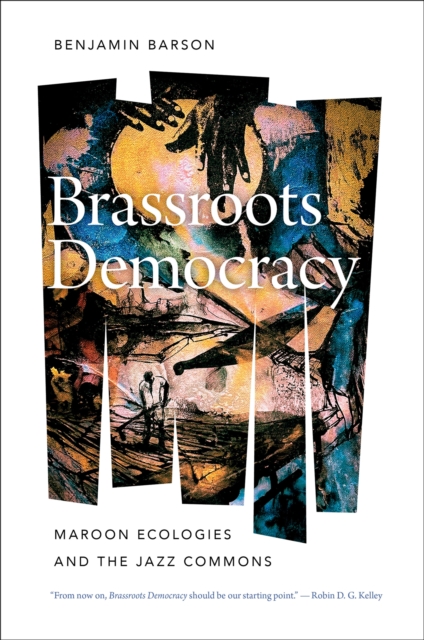
Brassroots Democracy
Brassroots Democracy recasts the birth of jazz, unearthing vibrant narratives of New Orleans musicians to reveal how early jazz was inextricably tied to the mass mobilization of freedpeople during Reconstruction and the decades that followed.
eBook
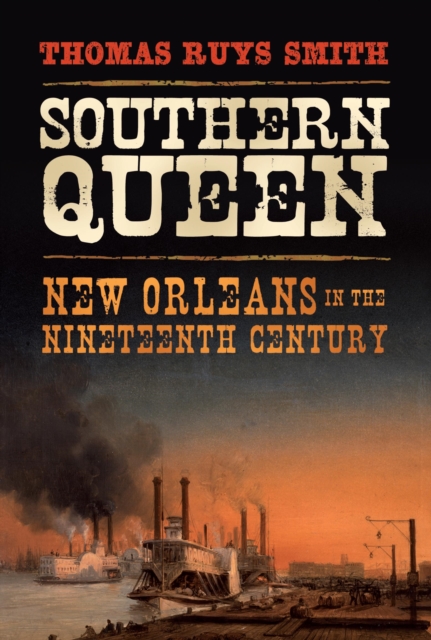
Southern Queen
New Orleans occupies a singular position within American life.Drawing deeply from Old World traditions and New World possibilities, the port city of the Mississippi has proved a lure to an extraordinary variety of travellers from its very earliest days.
eBook
The Mysterious Voodoo Queen, Marie Laveaux
This study investigates the emergence of powerful female leadership in New Orleans' Voodoo tradition. It provides a careful examination of the cultural, historical, economic, demographic and socio-political factors that contributed both to the feminization of this religious culture and its strong female leaders.
eBook


Empires of the Imagination
Empires of the Imaginationtakes the Louisiana Purchase as a point of departure for a compelling new discussion of the interaction between France and the United States. In addition to offering the first substantive synthesis of this transatlantic relationship, the essays collected here offer new interpretations on themes vital to the subject, ranging from political culture to intercultural contact to ethnic identity. They capture the cultural breadth of the territories encompassed by the Louisiana Purchase, exploring not only French and Anglo-American experiences, but also those of Native Americans and African Americans.
Despite differences in concerns and methods, the pieces collected share crucial ground in how they suggest new ways for thinking about empire, identity, and memory. The authors show how France and the United States set about their competing imperial projects even as residents of the North American West effectively resisted those imperial aims, creating instead their own notions of community and connection. At the same time, these essays show how the contact among peoples created new social configurations and distinct cultural identities. Moving beyond the particulars of the late eighteenth and early nineteenth centuries, these essays reveal how the Louisiana Purchase subsequently entered into the public consciousness on both sides of the Atlantic in ways that continue to define imperial projects, racial identities, and ethnic communities.
Delineating a unique moment in transatlantic historical conversation,Empires of the Imaginationalso provides important lessons in cross-disciplinary approaches to North American and Atlantic history. In addition to the multinational perspectives of the authors, individual essays deploy social science history, political culture, and ideological history, as well as social and cultural history, to create a cohesive understanding of diverse experiences.
Contributors:Emily Clark, Tulane University * Laurent Dubois, Duke University * Mark Fernandez, Loyola University, New Orleans * Peter J. Kastor, Washington University in St. Louis * Paul Lachance, University of Ottawa * Jean-Pierre Le Glaunec, Dalhousie University * James E. Lewis Jr., Kalamazoo College * Peter S. Onuf, University of Virginia * Jacques Portes, Université de Paris VIII * Marie-Jeanne Rossignol, Université de Paris VII-Denis Diderot * Cécile Vidal, L' École des Hautes Études en Sciences Sociales * François Weil, L' École des Hautes Études en Sciences Sociales * Richard White, Stanford University
eBook
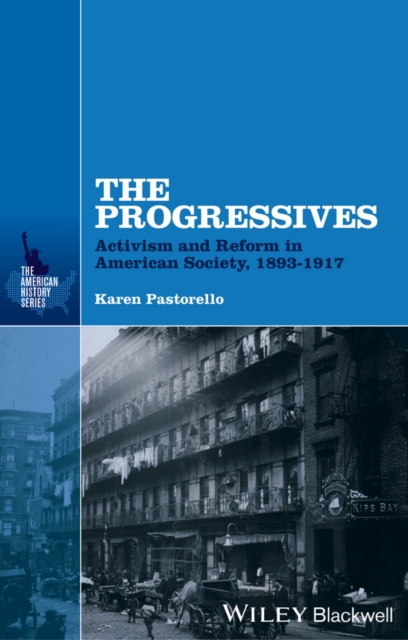
The progressives
The Progressives offers comprehensive coverage of the origins, evolution, and notable events that came to define the pivotal period of American history known as the Progressive Era. - Offers a rich, in-depth analysis of who the progressives were and the process through which they identified and attacked social, economic, and political injustices - Features an up-to-date synthesis of the literature of the field including comprehensive treatment of the role of women in the Progressive Movement - Considers the movement’s enduring impact – and how its vision for a better society became transfixed in the American social consciousness and helped to create the modern welfare state - Part of the well-respected American History series - Integrates themes of class, race, ethnicity, and gender throughout, offering a concise and engaging account of a fascinating era in U.S. history that forever changed the relationship between a democratic government and its citizens
eBook

The Extent and Limits of Indentured Childrenʹs Literacy in New Orleans, 1809–1843
Literacy is a special dimension of the general topic of children bound to labor in early America. The studies in this book reveal that removing poor children from their natal home and placing them in another household or institution where they were expected to work was as variable a practice as it was ubiquitous. In some settings, it was little more than a means to supply employers with cheap labor from a particularly vulnerable element of the population and offered scant protection from exploitation or abuse. In other situations, it represented a genuine attempt to provide children of the poor
Book Chapter