
Catalogue Search | MBRL


Are you sure you want to remove the book from the shelf?

{{itemTitle}}
452
result(s) for
"Loup."
Sort by:

Wolf : legend, enemy, icon
A passionate look at one of the most fascinating animals in the world.
Book

The Pawnee Mission Letters, 1834-1851
Rev. John Dunbar and Samuel Allis set out in 1834 to establish a mission to Indians beyond the Rocky Mountains. Unable to obtain a guide and with only a vague knowledge of the West, they instead encountered the Pawnee Indians in Nebraska. It was the beginning of a twelve-year odyssey to convert the tribe to Protestant Christianity and New England \"civilization.\" Dunbar and Allis traveled with the Pawnees on buffalo hunts and spent time at their villages, recording the customs and habits of the tribe. After a permanent community was established, the American Board of Commissioners for Foreign Missions sent additional missionaries and conflicts over conversion methods ensued, nearly destroying the mission community. The mission was eventually abandoned in 1846, when hostilities between the Sioux and the Pawnees escalated. This collection of letters written by and to the missionaries, as well as their journal entries, illustrates the life of the mission, from the everyday complications of building and maintaining a community far from urban areas, to the navigation of the bureaucratic policies of the federal government and the American Board, to the ideological differences of the Pawnees' multiple missionaries and the ensuing rift within the community. These writings provide a unique and personal portrayal of this small white community in the heart of the Pawnees' domain.
eBook
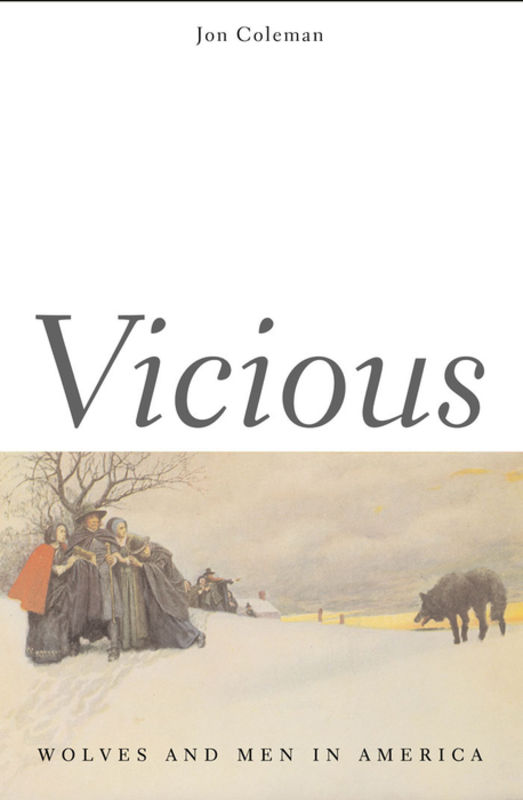
Vicious
Over a continent and three centuries, American livestock owners destroyed wolves to protect the beasts that supplied them with food, clothing, mobility, and wealth. The brutality of the campaign soon exceeded wolves' misdeeds. Wolves menaced property, not people, but storytellers often depicted the animals as ravenous threats to human safety. Subjects of nightmares and legends, wolves fell prey not only to Americans' thirst for land and resources but also to their deeper anxieties about the untamed frontier.
Now Americans study and protect wolves and jail hunters who shoot them without authorization. Wolves have become the poster beasts of the great American wilderness, and the federal government has paid millions of dollars to reintroduce them to scenic habitats like Yellowstone National Park.
Why did Americans hate wolves for centuries? And, given the ferocity of this loathing, why are Americans now so protective of the animals? In this ambitious history of wolves in America-and of the humans who have hated and then loved them-Jon Coleman investigates a fraught relationship between two species and uncovers striking similarities, deadly differences, and, all too frequently, tragic misunderstanding.
eBook

Usages animistes dans le roman contemporain: representation et fonction des echanges avec le monde sauvage dans La Bete faramineuse, La Grande Beune et Dormance/es Practicas animistas en la novela contemporanea: representacion y funcion de los intercambios con el mundo salvaje en La Bete faramineuse, La Grande Beune y Dormance/en Uses of Animism in the Contemporary Novel: Representation and Function of Exchanges With the Animal World in La Bete faramineuse, La Grande Beune, and Dormance
A partir des categories anthropologiques developpees par Philippe Descola, cet article aborde le franchissement de la frontiere entre l'homme et l'animal en interrogeant la traversee d'autres seuils ontologiques par la fiction. La lecture croisee de trois romans de Pierre Bergounioux, Pierre Michon et Jean-Loup Trassard permet de degager chez ces auteurs une meme volonte d'hybridation melant a l'ontologie naturaliste dominante des representations animistes plus minoritaires. Ce decentrement ontologique passe d'abord par la mise en scene de pratiques marginales, portees par des personnages en decalage cherchant a se concilier une faune sauvage dont ils sentent que leur existence depend. Si elle peut avoir pour effet de remettre en cause les dualismes qui decoulent de la separation entre nature et culture, il est egalement possible d'interroger la portee d'une telle hybridation tant du point de vue de la reception que des motivations esthetiques des auteurs.
Journal Article

Wolf Conflicts
Wolf populations have recently made a comeback in Northern Europe and North America. These large carnivores can cause predictable conflicts by preying on livestock, and competing with hunters for game. But their arrivals often become deeply embedded in more general societal tensions, which arise alongside processes of social change that put considerable pressure on rural communities and on the rural working class in particular. Based on research and case studies conducted in Norway, Wolf Conflicts discusses various aspects of this complex picture, including conflicts over land use and conservation, and more general patterns of hegemony and resistance in modern societies.
eBook

La mort de l’artiste en danger
Luis Ospina, cinéaste colombien, vient de mourir : souvenir de l’homme vivant, amical, cultivé, inventif, fêtard, qui laisse un héritage de cinéma, de connaissances, de fermeté et d’amour.
Journal Article

Una danza enigmática en Lo Bar de Lop (Provenza), ¿un sermón pintado?
La pintura de So Barn (Provenza) (fines del siglo XV) yuxtapone un texto occitano de treinta y tres versos monorrimos con una figuración coréutica de impulsión circular o espiraliforme. A pesar de las descripciones al uso, el argumento figurativo, íntimamente unido al contenido poético, tiene poco de danza macabra y mucho de admonición escatológica, con lo que se acerca más a un sermón ilustrado. En él se recuerda el juicio individual del alma al enfrentarse a las cuatro Postrimerías que se muestran Muerte, Juicio, Paraíso e Infierno, sobre las que el cristiano en la época medieval debía reflexionar si no quería condenarse. El motivo iconográfico de la danza sería el emblema de una vida poco acorde con los valores espirituales imperantes. Una muerte arquera asaeta los primeros personajes (todos laicos) que encabezan el baile. El ángel psicopompo pone en la balanza el alma del primer difunto. En lo alto del Paraíso, Cristo señala las balanzas. Y debajo, la boca del infierno traga la primera alma condenada.La tabla presenta paralelos iconográficos con el fresco del convento franciscano de Morella (País Valenciano, finales del XV). Por un lado, la tipología coreográfica del círculo un corro de vivos alrededor de un muerto que se muestran identificados jerárquicamente (Morella), un impulso espiral de vivos pudientes que culminan con uno de ellos yacente (Bar). Fuera del círculo, la Parca tira sus flechas contra los danzantes (Bar) y la imagen recuerda la muerte flechando el árbol de la vida que acompaña la danza de los estamentos en Morella.
Journal Article

Wolf Island
The world's leading wolf expert describes the first
years of a major study that transformed our understanding of one of
nature's most iconic creatures In the late 1940s, a small
pack of wolves crossed the ice of Lake Superior to the island
wilderness of Isle Royale, creating a perfect \"laboratory\" for a
long-term study of predators and prey. As the wolves hunted and
killed the island's moose, a young graduate student named Dave Mech
began research that would unlock the mystery of one of nature's
most revered (and reviled) animals-and eventually became an
internationally renowned and respected wolf expert. This is the
story of those early years.
Wolf Island recounts three extraordinary summers and
winters Mech spent on the isolated outpost of Isle Royale National
Park, tracking and observing wolves and moose on foot and by
airplane-and upending the common misperception of wolves as
destructive killers of insatiable appetite. Mech sets the scene
with one of his most thrilling encounters: witnessing an aerial
view of a spectacular hunt, then venturing by snowshoe (against the
pilot's warning) to photograph the pack of hungry wolves at their
kill. Wolf Island owes as much to the spirit of adventure
as to the impetus of scientific curiosity. Written with science and
outdoor writer Greg Breining, who recorded hours of interviews with
Mech and had access to his journals and field notes from those
years, the book captures the immediacy of scientific fieldwork in
all its triumphs and frustrations. It takes us back to the
beginning of a classic environmental study that continues today,
spanning nearly sixty years-research and experiences that would
transform one of the most despised creatures on Earth into an icon
of wilderness and ecological health.
eBook

lost wolves of Japan
Many Japanese once revered the wolf as Oguchi no Magami, or Large-Mouthed Pure God, but as Japan began its modern transformation wolves lost their otherworldly status and became noxious animals that needed to be killed. By 1905 they had disappeared from the country. In this spirited and absorbing narrative, Brett Walker takes a deep look at the scientific, cultural, and environmental dimensions of wolf extinction in Japan and tracks changing attitudes toward nature through Japan's long history.
Grain farmers once worshiped wolves at shrines and left food offerings near their dens, beseeching the elusive canine to protect their crops from the sharp hooves and voracious appetites of wild boars and deer. Talismans and charms adorned with images of wolves protected against fire, disease, and other calamities and brought fertility to agrarian communities and to couples hoping to have children. The Ainu people believed that they were born from the union of a wolflike creature and a goddess.
In the eighteenth century, wolves were seen as rabid man-killers in many parts of Japan. Highly ritualized wolf hunts were instigated to cleanse the landscape of what many considered as demons. By the nineteenth century, however, the destruction of wolves had become decidedly unceremonious, as seen on the island of Hokkaido. Through poisoning, hired hunters, and a bounty system, one of the archipelago's largest carnivores was systematically erased.
The story of wolf extinction exposes the underside of Japan's modernization. Certain wolf scientists still camp out in Japan to listen for any trace of the elusive canines. The quiet they experience reminds us of the profound silence that awaits all humanity when, as the Japanese priest Kenko taught almost seven centuries ago, we \"look on fellow sentient creatures without feeling compassion.\"
eBook

Restoring the Balance
Wolves on a wilderness island illuminate lessons on the environment, extinction, and life.For more than a quarter century, celebrated biologist John Vucetich has studied the wolves, and the moose that sustain them, of the boreal forest of Isle Royale National Park, an island in the northwest corner of Lake Superior. During this time, he has witnessed both the near extinction of the local wolf population, driven largely by climate change, and the intensely debated relocation of other wolves to the island in an effort to stabilize and maintain Isle Royale's ecosystem health. In Restoring the Balance, Vucetich combines environmental philosophy with field notes chronicling his day-to-day experience as a scientist. Examining the fate of wolves in the wild, he shares lessons from these wolves and explains their impact on humanity's fundamental responsibilities to the natural world. Vucetich's engaging narrative and unique, clear-eyed perspective provide an accessible course in wolf biology and behavioral ecology. He tackles profound unresolved questions that will shape our future understanding of what it means to be good to life on earth: Are humans the only persons to inhabit Earth, or do we share the planet with uncounted nonhuman persons? What does a healthy relationship with the natural world look like? Should we intervene in nature's course in order to care for it? Touching on the triumph and tragedy of how wolves kill moose to the Shakespearian drama of wolves' social lives, Vucetich comments on ravens, mice, winter ticks, and even a life-changing encounter he shared with a toad. Vucetich produces exquisite insight by masterfully connecting his observations to a far-reaching history of ideas about the environment. Combining natural history and memoir with fascinating commentary on humanity's relationship with nature, Restoring the Balance evokes our connections with wolves as fellow apex predators, demonstrating how our shifting views on nature have implications for both their survival and ours. This book will be treasured by any thoughtful reader looking to deepen their relationship with nature and learn about the wolves of Isle Royale along the way.
eBook