
Catalogue Search | MBRL


Are you sure you want to remove the book from the shelf?

{{itemTitle}}
213,866
result(s) for
"Love"
Sort by:


Lucy-Ann and the Toads
[...]I asked What if I could do that to my boyfriend? [...]my mama's old boyfriend that wouldn't stop stalking her, always popping up at the supermarket and the church parking lot and whatnot-I did him, too. When I walked in the door LucyAnn had decorated the whole cabin in gardenias and baby's breath and had made a simmer-pot of cinnamon and apples so the whole house smelled like a love potion and she said I'd like to fall in love with each other again, and she sat down in my lap in her pink nightgown and I said Okay. [...]we drank the love potion, and I laid Lucy-Ann down on the kitchen table until we felt the good old things again and we stayed loving like that until we lived just long enough to feel like forever, hoping we'd never come back as tadpoles but as different birds of prey than we had learned to be, preferably ones with wings.
Journal Article


The Evolutionary Masks of Love: Continuities between Judeo-Christian Religious Love and Modern Secular Love
The aim of this paper is to establish a series of links between some of the main religious formulas that arise in Judaism and Christianism and the romantic and confluent love characteristic of modern societies. To carry it out, firstly, we analyze love in historical Judaism, reflecting on the Ahavah formula, the predominant formula in this religious context. Secondly, to study the Christian drift of love, we first analyze how the emergence of this new religious faith (Christianism) provokes a change in the Jewish way of understanding it (love). Subsequently, we analyze some of the three main formulas in which love materializes in Christianism: Agape, Caritas, and Amor Sui. Regarding modern love, we first carry out a contextualization focused on the processes of secularization and individualization, and their impact on it. Afterwards, we present the main features that define both romantic and confluent love, and finally, we analyze the Judeo-Christian characters inherited for such types of love. The methodology used focused on a literature review and theoretical reflection based on this review. The research carried out allows us to establish sociological continuities between Judeo-Christian religious love and modern secular love in the terms used throughout the paper.
Journal Article


Love : bondage or liberation?: a psychological exploration of the meaning, values and dangers of falling in love
Much has been written about the function of falling in love in the course of therapy itself. This book has a much broader aim. Deirdre Johnson, a Jungian analyst and psychotherapy trainer, uses her teaching and clinical experience to illuminate the whole range of this near universal human experience.How, and why, does falling in love affect us so profoundly? How can it enhance who we are, or must it ultimately fade without lasting value? Johnson argues that the many valuable studies by psychoanalysts, relational psychologists, anthropologists, neuroscientists, and philosophers have all made valuable contributions, and uses these to highlight and explore the many values and dangers inherent in passionate love. However, she claims that a more holistic approach is required to show how these various accounts can be seen as complementary rather than competing, and can be accommodated within an overarching view of the integration of the human being in its heights and depths.Deirdre Johnson's interdisciplinary approach cuts across the different modalities and will appeal to a good cross-section of psychotherapists and counsellors, while being accessible to anyone interested in the meaning of falling in love.
eBook

Love understood : the science of who, how and why we love
Drawing on psychology, philosophy, anthropology and statistics, Love Understood combines evidence, theory and everyday experience to explain how we think, feel and behave when it comes to love.
Book

Five-Paragraph Essay on the Body-Mind Problem
Winner of the 2024 Cardinal Poetry Prize Five-Paragraph Essay on the Body-Mind Problem is the inaugural winner of the Cardinal Poetry Prize, selected by renowned poet Robert Pinsky. In free verse and invented poetic forms, Rachel Trousdale explores how the interplay between the mind and body illuminates our most important relationships, whether with other humans, wild spaces, or works of art. Inhabited by crows, yetis, coral reefs, and aliens, these poems playfully examine the intensity and conflict of romantic love; the entropic joys of parenthood; illness and grief; and the ways our physical loves and intangible losses teach us responsibility to the world around us. [Sample Poem] Love Poem With Dereliction of Duty It's true—I like you more than I like the Marquis de Sade; God that mid-April afternoon in 1995, when I said, let's take a walk and you said sure and we circled the New Haven Green saying who the hell knows what because if we had seen all this falling in love stuff coming, we would have paid more attention; I just know it took two hours, past the churches and the porn shop and over to the cemetery with all those skull-topped slabs leaning memorially against the brownstone wall; round and round we went like marbles dodging the traps in a game of labyrinth; and finally back to campus through that big stone gate which we entered just as the prof of the philosophy class I was skipping came out and I said oh the pain the pain I can't take it any more and doubled up laughing
eBook

Should you be a river : a poem about love
\"A personally inspired poem that celebrates the trials and triumphs of unconditional love\"-- Provided by publisher.
Book
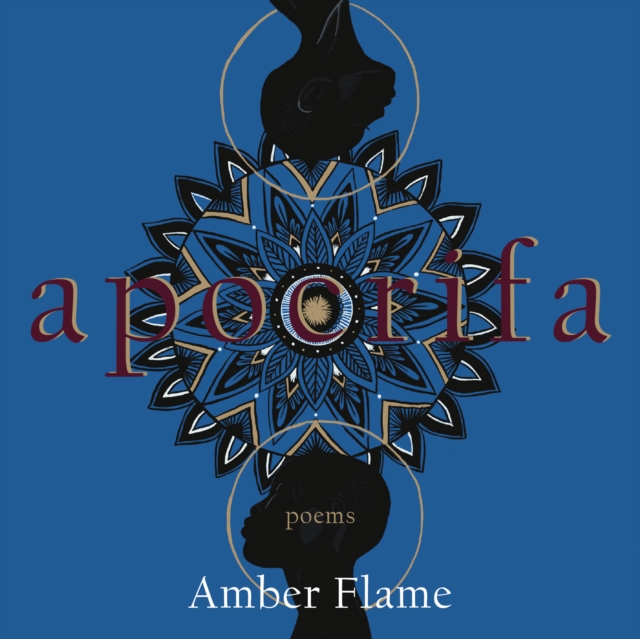
Apocrifa: Poems
\"Apocrifa imagines a love that sits comfortably at the crossroads of commitment and freedom. The developing intimacy between a lover and their beloved is propelled by a compendium of words for love, romance, sex, relationships, and affection that do not lend to direct translation in English. Serving as both titles and markers of the progression of time, these poetically defined words highlight the growing tension of one who claims \"i cannot love you enough/to unlove the wide world\" and yet is inextricably drawn to the offer of \"a place of sustenance, rest, and my delight in your very bones.\" Heavily inspired by the metaphors and structures of Song of Songs (or Song of Solomon), from the Apocryphal books of the Bible, the characters speak to each other with contrapuntal call-and-response while letting us into their private thoughts through epistles, sestinas, odes, and other poetic forms\"--.
eBook