
Catalogue Search | MBRL


Are you sure you want to remove the book from the shelf?

{{itemTitle}}
804
result(s) for
"Lunar probes."
Sort by:

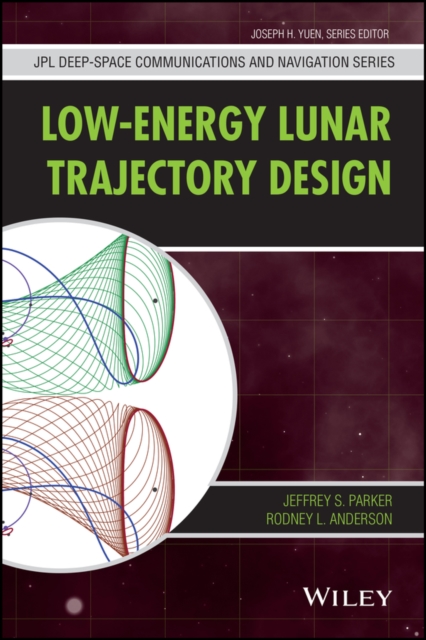
Low-energy lunar trajectory design
Based on years of research conducted at the NASA Jet Propulsion Laboratory, Low-Energy Lunar Trajectory Design provides high-level information to mission managers and detailed information to mission designers about low-energy transfers between Earth and the moon. The book answers high-level questions about the availability and performance of such transfers in any given month and year. Low-energy lunar transfers are compared with various other types of transfers, and placed within the context of historical missions.
Using this book, designers may reconstruct any transfer described therein, as well as design similar transfers with particular design parameters.
An Appendix, \"Locating the Lagrange Points, \" and a useful list of terms and constants completes this technical reference.
* Surveys thousands of possible trajectories that may be used to transfer spacecraft between Earth and the moon, including transfers to lunar libration orbits, low lunar orbits, and the lunar surface
* Provides information about the methods, models, and tools used to design low-energy lunar transfers
* Includes discussion about the variations of these transfers from one month to the next, and the important operational aspects of implementing a low-energy lunar transfer
* Additional discussions address navigation, station-keeping, and spacecraft systems issues
eBook

Lunar soil hydration constrained by exospheric water liberated by meteoroid impacts
Analyses of samples from the Apollo missions suggest that the Moon formed devoid of native water. However, recent observations by Cassini, Deep Impact, Lunar Prospector and Chandrayaan-1 indicate the existence of an active water cycle on the Moon. Here we report observations of this water cycle, specifically detections of near-surface water released into the lunar exosphere by the Neutral Mass Spectrometer on the Lunar Atmosphere and Dust Environment Explorer. The timing of 29 water releases is associated with the Moon encountering known meteoroid streams. The intensities of these releases reflect the convoluted effects of the flux, velocity and impact location of the parent streams. We propose that four additional detected water releases represent the signature of previously undiscovered meteoroid streams. We show that water release from meteoroid impacts is indicative of a lunar surface that has a desiccated soil layer of several centimetres on top of uniformly hydrated soil. We infer that the Moon is currently in the process of losing water that was either delivered long ago or present at its formation.Water is uniformly present at low concentrations in the Moon’s subsoil and is emitted by meteoroid impacts, according to analysis of water releases detected by NASA’s Lunar Atmosphere and Dust Environment Explorer.
Journal Article

Lunar Gravitational-Wave Detection
A new era of lunar exploration has begun bringing immense opportunities for science as well. It has been proposed to deploy a new generation of observatories on the lunar surface for deep studies of our Universe. This includes radio antennas, which would be protected on the far side of the Moon from terrestrial radio interference, and gravitational-wave (GW) detectors, which would profit from the extremely low level of seismic disturbances on the Moon. In recent years, novel concepts have been proposed for lunar GW detectors based on long-baseline laser interferometry or on compact sensors measuring the lunar surface vibrations caused by GWs. In this article, we review the concepts and science opportunities for such instruments on the Moon. In addition to promising breakthrough discoveries in astrophysics and cosmology, lunar GW detectors would also be formidable probes of the lunar internal structure and improve our understanding of the lunar geophysical environment.
Journal Article

PRIVATE MOON LANDER DIES BEFORE REACHING LUNAR SURFACE
NASA partnerships Peregrine is the first of many Moon missions planned as partnerships between NASA and the US aerospace industry. Most failures have come as probes attempted to descend to the Moon's surface, under lower gravity and a much thinner atmosphere than on Earth. \"If we havea bad day somewhere along the mission, we're going to be gatheringall of the data that we received up to that point, and we're going to learn from it,\" said chief executivejohn Thornton. [...]the propellant problems began, Peregrine's launch went nearly perfectly.
Journal Article
Widespread distribution of OH/H2O on the lunar surface inferred from spectral data
Remote-sensing data from lunar orbiters have revealed spectral features consistent with the presence of OH or H2O on the lunar surface. Analyses of data from the Moon Mineralogy Mapper spectrometer onboard the Chandrayaan-1 spacecraft have suggested that OH/H2O is recycled on diurnal timescales and persists only at high latitudes. However, the spatial distribution and temporal variability of the OH/H2O, as well as its source, remain uncertain. Here we incorporate a physics-based thermal correction into analysis of reflectance spectra from the Moon Mineralogy Mapper and find that prominent absorption features consistent with OH/H2O can be present at all latitudes, local times and surface types examined. This suggests the widespread presence of OH/H2O on the lunar surface without significant diurnal migration. We suggest that the spectra are consistent with the production of OH in space-weathered materials by the solar wind implantation of H+ and formation of OH at crystal defect sites, as opposed to H2O sourced from the lunar interior. Regardless of the specific composition or formation mechanism, we conclude that OH/H2O can be present on the Moon under thermal conditions more wide-ranging than previously recognized.
Journal Article
Remote detection of widespread indigenous water in lunar pyroclastic deposits
Laboratory analyses of lunar samples provide a direct means to identify indigenous volatiles and have been used to argue for the presence of Earth-like water content in the lunar interior. Some volatile elements, however, have been interpreted as evidence for a bulk lunar mantle that is dry. Here we demonstrate that, for a number of lunar pyroclastic deposits, near-infrared reflectance spectra acquired by the Moon Mineralogy Mapper instrument onboard the Chandrayaan-1 orbiter exhibit absorptions consistent with enhanced OH- and/or H
2
O-bearing materials. These enhancements suggest a widespread occurrence of water in pyroclastic materials sourced from the deep lunar interior, and thus an indigenous origin. Water abundances of up to 150 ppm are estimated for large pyroclastic deposits, with localized values of about 300 to 400 ppm at potential vent areas. Enhanced water content associated with lunar pyroclastic deposits and the large areal extent, widespread distribution and variable chemistry of these deposits on the lunar surface are consistent with significant water in the bulk lunar mantle. We therefore suggest that water-bearing volcanic glasses from Apollo landing sites are not anomalous, and volatile loss during pyroclastic eruptions may represent a significant pathway for the transport of water to the lunar surface.
Volcanic glasses sampled by Apollo missions display high water contents. Remotely sensed spectral data show that pyroclastic deposits are generally enriched in water across the Moon, suggesting significant amounts of water in the lunar interior.
Journal Article

From SMART1 and recent probes towards Artemis and a human/robotic Moon Village
This paper describes highlights of some of the European Space Agency (ESA) missions to the Moon, such as the 2003 ESA SMART-1 Mission to the Moon and the fleet of orbital missions from 2007 that changed our views of the Moon. It discusses the International Lunar Exploration Working Group (ILEWG) MoonVillage roadmap towards a series of landers or a robotic village, and then a Moon Village with human and robotic permanent presence. The paper shows some technical developments as well as laboratory and habitat simulations, and EuroMoonMars Field campaigns developed to prepare for Artemis, future lunar research stations and the MoonVillage. The new initiatives MVA, ArtMoonMars, EMMPOL, EuroSpaceHub are also described.
Journal Article