
Catalogue Search | MBRL


Are you sure you want to remove the book from the shelf?

{{itemTitle}}
73,792
result(s) for
"Luther, Martin"
Sort by:


Ring out freedom! : the voice of Martin Luther King, Jr. and the making of the civil rights movement
Martin Luther King, Jr. was more than the civil rights movement's most visible figure, he was its voice. This book describes what went into the creation of that voice. It explores how King used words to define a movement. From a place situated between two cultures of American society, King shaped the language that gave the movement its identity and meaning. Fredrik Sunnemark shows how materialistic, idealistic, and religious ways of explaining the world coexisted in King's speeches and writings. He points out the roles of God, Jesus, the church, and the Beloved Community in King's rhetoric. Sunnemark examines King's use of allusions, his strategy of employing different meanings of key ideas to speak to different members of his audience, and the way he put into play international ideas and events to achieve certain rhetorical goals. The book concludes with an analysis of King's development after 1965, examining the roots, content, and consequences of his so-called radicalization.
eBook


Misremembering Dr. King
We all know the name. Martin Luther King Jr., the great American civil rights leader. But most people today know relatively little about King, the campaigner against militarism, materialism, and racism-what he called the \"giant triplets.\" Jennifer J. Yanco takes steps to redress this imbalance. \"My objective is to highlight the important aspects of Dr. King's work which have all but disappeared from popular memory, so that more of us can really 'see' King.\" After briefly telling the familiar story of King's civil rights campaigns and accomplishments, she considers the lesser-known concerns that are an essential part of his legacy. Yanco reminds us that King was a strong critic of militarism who argued that the United States should take the lead in promoting peaceful solutions rather than imposing its will through military might; that growing materialism and an ethos of greed was damaging the moral and spiritual health of the country; and that in a nation where racism continues unabated, white Americans need to educate themselves about racism and its history and take their part in the weighty task of dismantling it.
eBook

The Cambridge companion to Martin Luther
\"This Companion provides an accessible introduction to Martin Luther for students of theology and history and everyone interested in the life, work and thought of the first great Protestant reformer.\"--Publisher.
Book

“Ich Werdend Spreche Ich Du”: Creative Dialogue in the Relational Anthropologies of Martin Luther and Martin Buber
This article compares the relational anthropologies of Martin Luther and Martin Buber and suggests that both thinkers presuppose a notion of creative dialogue. This notion captures the understanding in the Hebrew Bible of the world as created and sustained through God’s utterance and, thus, of reality as spoken and human existence as reliant upon dialogue with God. It argues that this common grounding led Luther and Buber to suggest anthropologies that focus on relation rather than substance, on the role of language, and on creative dialogue as the kernel of sound interpersonal relationships, which articulate the human relationship with God. The perception of reality as constituted through dialogical relationships made them both question the prevailing philosophical ontology of their time: in Luther’s case, Aristotelean substance ontology, and in Buber’s case, Kantian subject–object dualism.
Journal Article

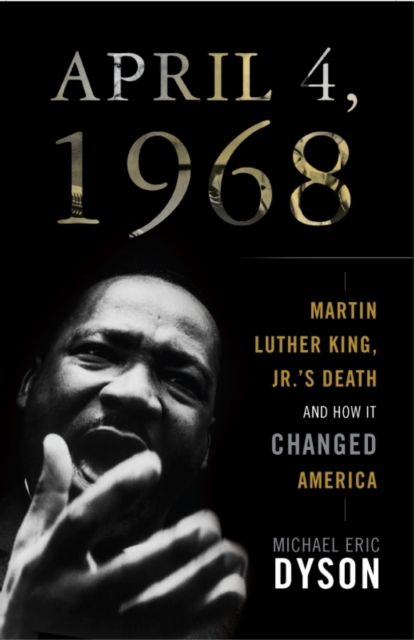
April 4, 1968 : Martin Luther King, Jr.'s death and how it changed America
On April 4, 1968, at 6:01 p.m., while he was standing on a balcony at a Memphis hotel, Martin Luther King Jr. was shot and fatally wounded. Only hours earlier King ended his final speech with the words, I may not get there with you, but I want you to know tonight, that we as a people will get to the Promised Land.\" Acclaimed public intellectual and best-selling author Michael Eric Dyson examines how King fought, and faced, his own death, and how America can draw on his legacy in the twenty-first century. April 4, 1968 celebrates the leadership of Dr. King, and challenges America to renew its commitment to his vision.
eBook


The Two Reformations
In this last collection of his vital, controversial, and accessible writings, Heiko A. Oberman seeks to liberate and broaden our understanding of the European Reformation, from its origins in medieval philosophy and theology through the Puritan settlers who brought Calvin's vision to the New World. Ranging over many topics, Oberman finds fascinating connections between aspects of the Reformation and twentieth-century history and thought-most notably the connection to Nazism and the Holocaust. He revisits his earlier work on the history of anti-Semitism, rejects the notion of an unbroken line from Luther to Hitler to the Holocaust, and offers a new perspective on the Christian legacy of anti-Semitism and its murderous result in the twentieth century.Oberman demonstrates how the simplifications and rigidities of modern historiography have obscured the existential spirits of such great figures as Luther and Calvin. He explores the debt of both Luther and Calvin to medieval religious thought and the impact of diverse features of \"the long fifteenth century\"-including the Black Death, nominalism, humanism, and the Conciliar Movement-on the Reformation.
eBook