
Catalogue Search | MBRL


Are you sure you want to remove the book from the shelf?

{{itemTitle}}
30
result(s) for
"Luwians"
Sort by:


Morphosyntax of the Noun Phrase in Hieroglyphic Luwian
In this book, Anna H. Bauer provides a full and detailed analysis of the noun phrases found in the Hieroglyphic Luwian corpus.
eBook

The Luwians of Western Anatolia
A study focussing on the Luwians of Western Anatolia, the geography of their habitat, and their neighbours and predecessors in the region. A reconstruction of western Luwian history and a sketch of their language is presented, based on linguistic data taken from hieroglyphic inscriptions and cuneiform script.
eBook

Unpublished Hieroglyphic Luwian Inscriptions from Adıyaman Museum
In this article we present the first edition of five Hieroglyphic Luwian inscriptions of Ancoz and Samsat provenance from the Adıyaman Museum, provide clarification on the records of previously published inscriptions from Ancoz and Samsat, suggest a join with an existing Ancoz inscription, and offer a discussion on the nature of the rulers of Kummuh.
Journal Article

δίννεντες (Sappho fr. 1.11) and related forms
Abstract
This paper strives to achieve three goals: (1) to examine Sappho’s use of the verb δῑνέω / δίν(ν)ημι to refer to sparrows in the context of comparative Indo-European poetics, (2) to reassess the morphology of the verb δῑνέω / δίν(ν) ημι, which is traditionally but, in my opinion, wrongly derived from *dīneu̯e/o-, and to examine other related verbal and nominal forms (δινεύω, δῑν́ ω, δίννω, δινάκω, διννάεντ’), and (3) to address the vexing question of the geminate in δίννεντες.
Journal Article


Children of Kubaba: Serious Games, Ritual Toys, and Divination at Iron Age Carchemish
This paper presents an analysis of a ritual event memorialised on stone reliefs at the ancient city of Carchemish around 800 BC. It is argued that the reliefs represent a ceremony of investiture, in which boys of royal lineage are handed out toys as oracular instruments to elicit favourable omens for the heir apparent. The inclusion of boys and their toys in the visual commemoration of a political ritual has bearings on three levels of meaning. First, it testifies to a hitherto unrecognised cult practice, involving grouping boys in age classes and harnessing their ludic practices for ritual purposes. Second, it reflects local political preoccupations connected with dynastic controversies, in an attempt to silence counternarratives through the emphatic staging of children. Finally, the chosen imagery conveys complex philosophical ideas about life, education, and individual destiny, connecting with issues of material religion and childhood studies. The study integrates interpretive perspectives from visual semiotics, architectural analysis, and ancient studies to show how, upon specific occasions, marginal groups and everyday material items, such as children and their toys, may play critical roles in collective ritual events.
Journal Article

KIZZUWATNEAN RITUALS UNDER THE INFLUENCE OF THE LUWIAN AND HURRIAN CULTURES
Hitit majik ritüelleri içinde Kizzuwatna kökenli ritüeller önemli bir yer teşkil etmektedir. Söz konusu ritüeller Orta Hitit döneminden itibaren Hitit arşivlerinde görülmektedir. Kizzuwatna Bölgesi coğrafikonumu nedeniyle, bir geçiş bölgesidir ve çok kültürlüdür. Bu çok kültürlülük Hitit majik ritüellerinde de kendini göstermektedir. Bölge Hurrili ve Luwili toplumlardan oluşmaktadır. Çalışmamızda ele alınan Kizzuwatna Bölgesi'ne ait iki ritüelden biri Hurri diğeri Luwi kökenli ritüellerdir. Bunlardan Šalašu Ritüeli Hurri kökenlidir. Söz konusu ritüelde inkantasyonlar Hurricedir. Elimizde inkantasyonların Hurrice-Hititçe çiftdilli olan kopyasında (KBo 19.145) Hurrice pasajları anlamak ve yorumlamak nispeten daha kolaydır. Çiftdilli olmayıp sadece Hurrice inkantasyonlar içeren pasajları anlamak ise oldukça zordur (KBo 11.19 gibi). Söz konusu ritüelde Mezopotamya bölgesine ait kültür ögeleri de bulunmaktadır ve bu unsur da bölgenin çok kültürlülüğünü göstermesi açısından önemlidir. Bir diğer ritüel, Kuwatalla Ritüeli (šalli aniur), Luwi kökenli bir ritüeldir. İçerdiği bazı kültürel ögelerden dolayı Kizzuwatna Bölgesi'ne ait bir ritüel olduğu düşünülmektedir. Ritüelin talimat kısımları Hititçe, inkantasyonlar Luwice olarak yazılmıştır. Ritüel iki ayrı alt ritüel içermektedir (hit. katta walḫuwaš/luw. dupaduparša ve ḫalliyattanza). Makalenin sonunda, aynı bölgeye fakat iki farklı kültür alanına ait bu iki ritüelde uygulanan baskın ritüel eylemlerin, genel bir karşılaştırılması yapılmıştır.
Journal Article
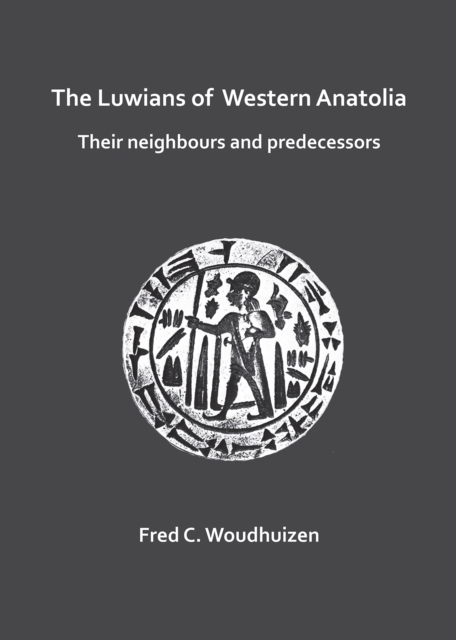
The Luwians of western Anatolia: their neighbours and predecessors
A study focusing on the Luwians of Western Anatolia, the geography of their habitat, and their neighbours and predecessors in the region. A reconstruction of western Luwian history and a sketch of their language is presented, based on linguistic data taken from hieroglyphic inscriptions and cuneiform script.
eBook
Binding and Smiting
The purpose of this paper is to offer evidence for a set of related formulaic expressions meaning ‘bond and blow’, ‘of binding and smiting’, and ‘the substitute for binding and smiting’ in Luvian cuneiform texts of the second millennium BCE. The passages where the relevant formulae are attested have resisted a coherent interpretation thus far. Our argumentation is three-pronged. First, we resort to the combinatorial method to show that these formulae occur in the vicinity of other merisms, and therefore are likely to constitute the same figure of speech. Furthermore, we endeavor to demonstrate based on context that they denote something related to strong physical impact. The argument involves a great deal of restored text, but although voluminous, the contexts are so repetitive that the restorations appear warranted. Second, we use the etymological method in order to justify the claim that the roots supplying their reflexes to our formulae are Proto-Indo-European *seh₂ ‘to bind’ and * wedh ‘to strike, smite’. The derivation of each of the derivatives occurring in the bipartite merisms under discussion is addressed in some detail, and additional evidence from a Luwian hieroglyphic inscription Kululu 1 is adduced to flesh out our hypothesis. Third, we provide typological discussion facilitating the interpretation of “binding” and “smiting” in the context of the Hittite-Luvian antiwitchcraft rituals. It turns out that hostile witchcraft has a potential to both “bind” (paralyze) and “smite” (cause to suffer) the body parts of its victim. As a whole, the paper represents a contribution to the ongoing decipherment of the Luvian language.
Journal Article