
Catalogue Search | MBRL


Are you sure you want to remove the book from the shelf?

{{itemTitle}}
21
result(s) for
"Médias Aspect politique Canada."
Sort by:

Framed : media and the coverage of race in Canadian politics
\"Framed is a wake-up call for those who think that race does not matter in Canada. Pushing the field of Canadian political science in new directions, this groundbreaking work combines an empirical analysis of print media with in-depth interviews of elected officials, former candidates, political staffers, and journalists to reveal the connections between race, media coverage, and politics in Canada. As Erin Tolley shows, overt racism rarely occurs on the pages of Canadian newspapers, but assumptions about race and diversity often influence media coverage. Consequently, as reporters go about selecting which political issues and events to cover, who to quote, and how to frame stories to make them resonate with the public, they give visible minorities less prominent and more negative media coverage than their white counterparts. Further, visible minority politicians are more likely to be portrayed as products of their socio-demographic backgrounds, as uninterested in pressing policy issues, and as less electorally viable. The resulting news coverage weakens Canada's commitment to a robust, inclusive democracy. The problem is systemic, but Tolley offers recommendations to politicians, pundits, journalists, and the public for challenging the racial assumptions that underpin news coverage. By drawing attention to the ways in which race continues to matter, this book provides a new foundation for thinking about diversity and equality in Canada.\"-- Provided by publisher.
BOOK

Agenda-setting dynamics in Canada
One of the first empirical analyses of the interaction of the media, the public, and policymakers in Canada, this book makes an important contribution to the study of political communications and policymaking well beyond the Canadian context.
eBook

The Toronto School of Communication Theory
While never formally recognized as a school of thought in its time, the work of a number of University of Toronto scholars over several decades - most notably Harold Adams Innis and Marshall McLuhan - formulated a number of original attempts to conceptualize communication as a phenomenon, and launched radical and innovative conjectures about its consequences. This landmark collection of essays re-assesses the existence, and re-evaluates the contribution, of the so-called Toronto School of Communication.
While the theories of Innis and McLuhan are notoriously resistant to neat encapsulation, some general themes have emerged in scholarly attempts to situate them within the discipline of communications studies that they helped to define. Three such themes - focus on the effects and consequences of communications, emphasis on communications as a process rather than as structure, and a sharp focus on the technology of communication, or the 'medium' - are the most fundamental in characterizing the unique perspective of the Toronto School. This collection not only represents a crucial step in defining the 'Toronto School,' it also provides close analysis of the ideas of its individual members.
eBook
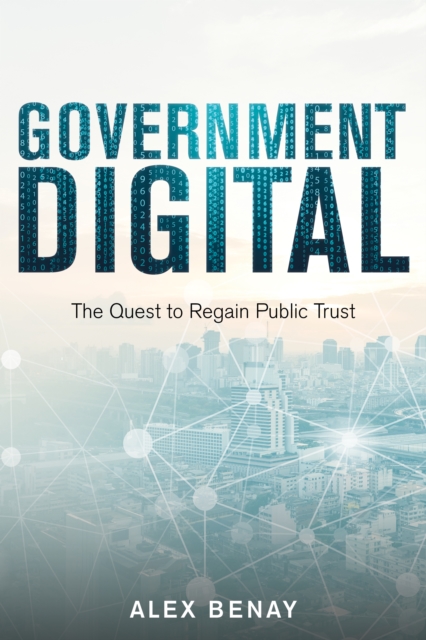
Government Digital
Industry, academic, and government experts present a roadmap for radical change in how we govern. Learnings and recommendations point the way forward for governments in an age where standing still and doing nothing equates failure.
eBook

Resistant Practices in Communities of Sound
Print – and by extension, visuality – has historically dominated the literary, artistic, and academic spheres in Canada; however, scholars and artists have become increasingly attuned to the creative and scholarly opportunities offered by paying attention to sound. Resistant Practices in Communities of Sound turns to a particular opportunity, interrogating the ways that sonic practices act as forms of aesthetic and political dissent. Chapters explore, on the one hand, critical methods of engaging with sound – particularly bodies of literary and artistic work in their specific materiality as read, recited, performed, mediated, archived, and remixed objects; on the other hand, they also engage with creative practices that mobilize sound as a political aesthetic, taking on questions of identity, racialization, ability, mobility, and surveillance. Divided into nine pairings that bring together works originating in oral/aural forms with works originating in writing, the book explores the creative and critical output of leading sonic practitioners. It showcases diverse approaches to the equally complex formations of sound, resistance, and community, bridging the too-often separate worlds of the practical and the academic in generative, resonant dialogue. Combining the oral and the written, the creative and the critical, and the mediated and the live, Resistant Practices in Communities of Sound asks us to attune ourselves as listeners as well as readers.
eBook

Fueling Culture
How has our relation to energy changed over time? What differences do particular energy sources make to human values, politics, and imagination? How have transitions from one energy source to another-from wood to coal, or from oil to solar to whatever comes next-transformed culture and society? What are the implications of uneven access to energy in the past, present, and future? Which concepts and theories clarify our relation to energy, and which just get in the way? Fueling Culture offers a compendium of keywords written by scholars and practitioners from around the world and across the humanities and social sciences. These keywords offer new ways of thinking about energy as both the source and the limit of how we inhabit culture, with the aim of opening up new ways of understanding the seemingly irresolvable contradictions of dependence upon unsustainable energy forms. Fueling Culture brings together writing that is risk-taking and interdisciplinary, drawing on insights from literary and cultural studies, environmental history and ecocriticism, political economy and political ecology, postcolonial and globalization studies, and materialisms old and new. Keywords in this volume include: Aboriginal, Accumulation, Addiction, Affect, America, Animal, Anthropocene, Architecture, Arctic, Automobile, Boom, Canada, Catastrophe, Change, Charcoal, China, Coal, Community, Corporation, Crisis, Dams, Demand, Detritus, Disaster, Ecology, Electricity, Embodiment, Ethics, Evolution, Exhaust, Fallout, Fiction, Fracking, Future, Gender, Green, Grids, Guilt, Identity, Image, Infrastructure, Innervation, Kerosene, Lebenskraft, Limits, Media, Metabolism, Middle East, Nature, Necessity, Networks, Nigeria, Nuclear, Petroviolence, Photography, Pipelines, Plastics, Renewable, Resilience, Risk, Roads, Rubber, Rural, Russia, Servers, Shame, Solar, Spill, Spiritual, Statistics, Surveillance, Sustainability, Tallow, Texas, Textiles, Utopia, Venezuela, Whaling, Wood, Work For a full list of keywords in and contributors to this volume, please go to: http://ow.ly/4mZZxV
eBook

The Official Picture
Mandated to foster a sense of national cohesion The National Film Board of Canada's Still Photography Division was the country's official photographer during the mid-twentieth century. Like the Farm Security Administration and other agencies in the US, the NFB used photographs to serve the nation. Division photographers shot everything from official state functions to images of the routine events of daily life, producing some of the most dynamic photographs of the time, seen by millions of Canadians - and international audiences - in newspapers, magazines, exhibitions, and filmstrips. In The Official Picture, Carol Payne argues that the Still Photography Division played a significant role in Canadian nation-building during WWII and the two decades that followed. Payne examines key images, themes, and periods in the Division's history - including the depiction of women munitions workers, landscape photography in the 1950s and 60s, and portraits of Canadians during the Centennial in 1967 - to demonstrate how abstract concepts of nationhood and citizenship, as well as attitudes toward gender, class, linguistic identity, and conceptions of race were reproduced in photographs. The Official Picture looks closely at the work of many Division photographers from staff members Chris Lund and Gar Lunney during the 1940s and 1950s to the expressive documentary photography of Michel Lambeth, Michael Semak, and Pierre Gaudard, in the 1960s and after. The Division also produced a substantial body of Northern imagery documenting Inuit and Native peoples. Payne details how Inuit groups have turned to the archive in recent years in an effort to reaffirm their own cultural identity. For decades, the Still Photography Division served as the country's image bank, producing a government-endorsed \"official picture\" of Canada. A rich archival study, The Official Picture brings the hisotry of the Division, long overshadowed by the Board's cinematic divisions, to light.
eBook


Media, Structures, and Power
Containing introductions and contributions by other prominent scholars, this volume situates Babe's work within contemporary scholarship and underscores the extent to which he is one of Canada's most prescient thinkers.
eBook

Immigration Dialectic
Immigration is an integral part of national identity in settler societies such as Canada. But in countries where identity is defined more in ethnic terms, such as Germany, the presence of immigrants has only recently begun to be acknowledged. Taking these two countries as case studies, Immigration Dialectic explores the impact of immigration on national identity as imagined through media-based discourse.
Harald Bauder argues that while both countries rely on negative depictions of immigrants to construct a positive image of the self, the ways in which Canada and Germany construct national identity in relation to representations of immigrants are significantly different. Bauder introduces a sophisticated framework of Hegelian dialectics for the growing interdisciplinary literature regarding media perspectives on immigration and national identity. Providing close analysis of themes such as belonging, economic impacts, and national security, Immigration Dialectic will appeal to anyone interested in contemporary discussions on immigration.
eBook