
Catalogue Search | MBRL


Are you sure you want to remove the book from the shelf?

{{itemTitle}}
529
result(s) for
"Mémoire Histoire."
Sort by:

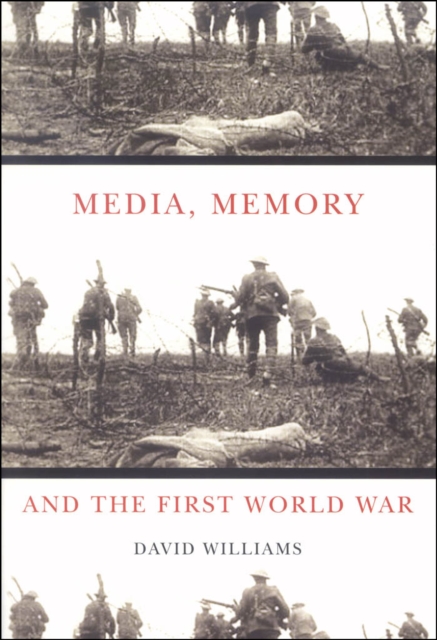
Media, Memory, and the First World War
Of interest to historians, classicists, media and digital theorists, literary scholars, museologists, and archivists, Media, Memory, and the First World War is a comparative study that shows how the dominant mode of communication in a popular culture - from oral traditions to digital media - shapes the structure of memory within that culture.
eBook


Memory and Change in Europe
In studies of a common European past, there is a significant lack of scholarship on the former Eastern Bloc countries. While understanding the importance of shifting the focus of European memory eastward, contributors to this volume avoid the trap of Eastern European exceptionalism, an assumption that this region's experiences are too unique to render them comparable to the rest of Europe. They offer a reflection on memory from an Eastern European historical perspective, one that can be measured against, or applied to, historical experience in other parts of Europe. In this way, the authors situate studies on memory in Eastern Europe within the broader debate on European memory.
eBook

Empireland : how imperialism has shaped modern Britain
\"In this brilliantly illuminating work exploring the realities and legacies of empire, Sathnam Sanghera demonstrates how so much of what we consider to be modern Britain is actually rooted in its imperial past. In prose that is at once both clear-eyed and full of acerbic wit, Sanghera shows how the past is everywhere in the United Kingdom, also drawing critical links to similarities in the United States and around the world. Empire--British or otherwise--informs nearly everything, from common thought processes to the routines that shape everyday life, from the foundation of the National Health Service (NHS), to the nature of racism in the UK, from the British distrust of intellectuals in public life to the exceptionalism that imbued the campaign for Brexit, and the government's early response to the COVID crisis--all while empire is a subject shockingly obscured from view. Revelatory and lucid, Sanghera suggests that cultivating a new, more honest relationship to the past is essential in moving forward\"-- Provided by publisher.
Book

Disciplining Germany
A look at how the discussions, debates, and controversies in Germany about youth and reeducation after World War II helped Germans come to terms with their Nazi past, negotiate Allied occupation, and construct postwar German identity.
During Hitler's reign, the Nazis deliberately developed and exploited a youthful image and used youth to define their political and social hierarchies. After the war, with Hitler gone but still requiring cultural exorcism, many intellectuals, authors, and filmmakers turned to these images of youth to navigate and negotiate the most difficult questions of Germany's recent, nefarious past. Focusing on youth, education, and crime allowed postwar Germans to claim one last realm of sovereignty against the Allies' own emphatic project of reeducation. Youth, reeducation, and reconstruction became important sites for the occupied to confront not only the recent past, but to negotiate the present occupation and, ultimately, direct the future of the German nation.
Disciplining Germany analyzes a variety of media, including literature, news media, intellectual history, and films, in order to argue that youth and education played a central role in Germany's coming to terms with the Nazi past. Although there has been a recently renewed interest in Germany's coming to terms with the past, this attention has largely ignored the role of youth and reeducation. This lacuna is particularly perplexing given that the Allies' reeducation project became, in many ways, a cipher for the occupational project as a whole. Disciplining Germany opens up the discussion and points toward more general conclusions not only about youth and education as sites for wider socio-political and cultural debates but also about the complexities of occupation and the intertwining of different national cultures. In this investigation, the study attends to both \"high\" and \"low\" cultural text—to specialized versus popular texts—to examine how youth was mobilized across the generic spectrum.
With these interdisciplinary approaches and timely interventions, Disciplining Germany will find a diverse readership, including upper-division and graduate courses in German studies and German history as well as those general readers interested in Nazi Germany, cultural history, film and literary studies, youth culture, American studies, and post-conflict and occupational situations.
eBook

Red memory : the afterlives of China's Cultural Revolution
\"'It is impossible to understand China today without understanding the Cultural Revolution,' Tania Branigan writes. During this decade of Maoist fanaticism between 1966 and 1976, children turned on parents, students condemned teachers, and as many as two million people died for their supposed political sins, while tens of millions were hounded, ostracized, and imprisoned. Yet in China this brutal and turbulent period exists, for the most part, as an absence; official suppression and personal trauma have conspired in national amnesia. Red Memory uncovers forty years of silence through the stories of individuals who lived through the madness\"-- Provided by publisher.
Book

Culture and Identity
This interdisciplinary study examines the impact of the emerging awareness of historicity on the concepts of modernity, identity, and culture as they developed in German thought around 1800. It shows how this awareness determined the German notion of the priority of cultural identity. Key texts from Sturm und Drang, Weimar Classicism, German Romanticism and German Idealism, including Goethe's Faust I and Wilhelm Meisters Lehrjahre, are contextualised in relation to post-Enlightenment debates on historicity and modernity. The study traces the modification of the Enlightenment concepts of perfectibility and universal ideals to accommodate the new notion of temporal particularity and impermanence. This is achieved by embedding these once static concepts in a historical process that is powered by a self-prompting internal dialectic. Through synthetic absorption within the historical succession the dialectical process allows for the continuity of values, while leaving room for discontinuity and difference by relying on oppositional successions. The study reveals close connections between the intellectual concerns, the literary ambitions, and the endeavours to construct a modern German identity during this period, which suggests a far greater intellectual coherence of the Goethezeit regarding intellectual challenges and objectives than has been previously assumed.
eBook

Memory, voice, and identity : Muslim women's writing from across the Middle East
\"Muslim women have been stereotyped by Western academia as oppressed and voiceless. This volume problematizes this Western academic representation. Muslim Women Writers from the Middle East from Out al-Kouloub al-Dimerdashiyyah (1899-1968) and Latifa al-Zayat (1923-1996) from Egypt, to current diasporic writers such as Tamara Chalabi from Iraq, Mohja Kahf from Syria, and even trendy writers such as Alexandra Chreiteh, challenge the received notion of Middle Eastern women as subjugated and secluded. The younger largely Muslim women scholars collected in this book present cutting edge theoretical perspectives on these Muslim women writers. This book includes essays from the conflict-ridden countries such as Iran, Iraq, Palestine, Syria, and the resultant diaspora. The strengths of Muslim women writers are captured by the scholars included herein. The approach is feminist, post-colonial, and disruptive of Western stereotypical academic tropes\"-- Provided by publisher.
Book

A Commonwealth of the People
In 1500 fewer than three million people spoke English; today English speakers number at least a billion worldwide. This book asks how and why a small island people became the nucleus of an empire 'on which the sun never set'. David Rollison argues that the 'English explosion' was the outcome of a long social revolution with roots deep in the medieval past. A succession of crises from the Norman Conquest to the English Revolution were causal links and chains of collective memory in a unique, vernacular, populist movement. The keyword of this long revolution, 'commonwealth', has been largely invisible in traditional constitutional history. This panoramic synthesis of political, intellectual, social, cultural, religious, economic, literary and linguistic movements offers a 'new constitutional history' in which state institutions and power elites were subordinate and answerable to a greater community that the early modern English called 'commonwealth' and we call 'society'.
eBook