
Catalogue Search | MBRL


Are you sure you want to remove the book from the shelf?

{{itemTitle}}
171,719
result(s) for
"MATHEMATICS / Probability "
Sort by:

Introduction to stochastic differential equations with applications to modelling in biology and finance
A comprehensive introduction to the core issues of stochastic differential equations and their effective application Introduction to Stochastic Differential Equations with Applications to Modelling in Biology and Finance offers a comprehensive examination to the most important issues of stochastic differential equations and their applications.
eBook

An introduction to discrete-valued time series
A much-needed introduction to the field of discrete-valued time series, with a focus on count-data time series Time series analysis is an essential tool in a wide array of fields, including business, economics, computer science, epidemiology, finance, manufacturing and meteorology, to name just a few. Despite growing interest in discrete-valued time series—especially those arising from counting specific objects or events at specified times—most books on time series give short shrift to that increasingly important subject area. This book seeks to rectify that state of affairs by providing a much needed introduction to discrete-valued time series, with particular focus on count-data time series. The main focus of this book is on modeling. Throughout numerous examples are provided illustrating models currently used in discrete-valued time series applications. Statistical process control, including various control charts (such as cumulative sum control charts), and performance evaluation are treated at length. Classic approaches like ARMA models and the Box-Jenkins program are also featured with the basics of these approaches summarized in an Appendix. In addition, data examples, with all relevant R code, are available on a companion website. • Provides a balanced presentation of theory and practice, exploring both categorical and integer-valued series • Covers common models for time series of counts as well as for categorical time series, and works out their most important stochastic properties • Addresses statistical approaches for analyzing discrete-valued time series and illustrates their implementation with numerous data examples • Covers classical approaches such as ARMA models, Box-Jenkins program and how to generate functions • Includes dataset examples with all necessary R code provided on a companion website An Introduction to Discrete-Valued Time Series is a valuable working resource for researchers and practitioners in a broad range of fields, including statistics, data science, machine learning, and engineering. It will also be of interest to postgraduate students in statistics, mathematics and economics.
eBook

Testing statistical assumptions in research
Comprehensively teaches the basics of testing statistical assumptions in research and the importance in doing so This book facilitates researchers in checking the assumptions of statistical tests used in their research by focusing on the importance of checking assumptions in using statistical methods, showing them how to check assumptions, and.
eBook
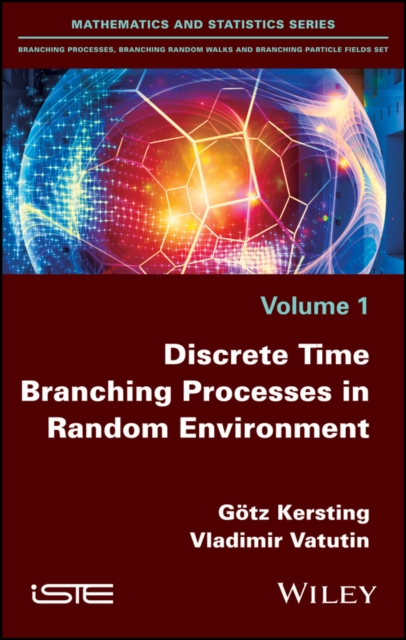
Discrete Time Branching Processes in Random Environment
Branching processes are stochastic processes which represent the reproduction of particles, such as individuals within a population, and thereby model demographic stochasticity. In branching processes in random environment (BPREs), additional environmental stochasticity is incorporated, meaning that the conditions of reproduction may vary in a random fashion from one generation to the next. This book offers an introduction to the basics of BPREs and then presents the cases of critical and subcritical processes in detail, the latter dividing into weakly, intermediate, and strongly subcritical regimes.
eBook
Deterministic Network Calculus
Deterministic network calculus is a theory based on the (min,plus) algebra. Its aim is to compute worst-case performance bounds in communication networks. Our goal is to provide a comprehensive view of this theory and its recent advances, from its theoretical foundations to its implementations. The book is divided into three parts. The first part focuses on the (min,plus) framework and its algorithmic aspects. The second part defines the network calculus model and analyzes one server in isolation. Different service and scheduling policies are discussed, particularly when data is packetized. The third part is about network analyses. Pay burst only once and pay multiplexing only once phenomena are exhibited, and different analyses are proposed and compared. This includes the linear programming approaches that compute tight performance bounds. Finally, some partial results on the stability are detailed.
eBook

Stationary stochastic processes : theory and applications
In recent years, applications of advanced stochastic processes have expanded greatly. Intended for students taking a second course in stochastic processes, this textbook presents an overview of theory with applications in engineering and science. This book covers key topics such as ergodicity, crossing problems, and extremes, and opens the doors to a selection of special topics for the teacher to expand on, like extreme value theory, filter theory, long-range dependence, and point processes, and includes many exercises and examples to illustrate the theory.
eBook
Uncertainty in Risk Assessment
Explores methods for the representation and treatment of uncertainty in risk assessment In providing guidance for practical decision-making situations concerning high-consequence technologies (e.g., nuclear, oil and gas, transport, etc.), the theories and methods studied in Uncertainty in Risk Assessment have wide-ranging applications from engineering and medicine to environmental impacts and natural disasters, security, and financial risk management. The main focus, however, is on engineering applications. While requiring some fundamental background in risk assessment, as well as a basic knowledge of probability theory and statistics, Uncertainty in Risk Assessment can be read profitably by a broad audience of professionals in the field, including researchers and graduate students on courses within risk analysis, statistics, engineering, and the physical sciences. Uncertainty in Risk Assessment: * Illustrates the need for seeing beyond probability to represent uncertainties in risk assessment contexts. * Provides simple explanations (supported by straightforward numerical examples) of the meaning of different types of probabilities, including interval probabilities, and the fundamentals of possibility theory and evidence theory. * Offers guidance on when to use probability and when to use an alternative representation of uncertainty. * Presents and discusses methods for the representation and characterization of uncertainty in risk assessment. * Uses examples to clearly illustrate ideas and concepts.
eBook

Markov Chains
A fascinating and instructive guide to Markov chains for experienced users and newcomers alike This unique guide to Markov chains approaches the subject along the four convergent lines of mathematics, implementation, simulation, and experimentation. It introduces readers to the art of stochastic modeling, shows how to design computer implementations, and provides extensive worked examples with case studies. Markov Chains: From Theory to Implementation and Experimentation begins with a general introduction to the history of probability theory in which the author uses quantifiable examples to illustrate how probability theory arrived at the concept of discrete-time and the Markov model from experiments involving independent variables. An introduction to simple stochastic matrices and transition probabilities is followed by a simulation of a two-state Markov chain. The notion of steady state is explored in connection with the long-run distribution behavior of the Markov chain. Predictions based on Markov chains with more than two states are examined, followed by a discussion of the notion of absorbing Markov chains. Also covered in detail are topics relating to the average time spent in a state, various chain configurations, and n-state Markov chain simulations used for verifying experiments involving various diagram configurations. • Fascinating historical notes shed light on the key ideas that led to the development of the Markov model and its variants • Various configurations of Markov Chains and their limitations are explored at length • Numerous examples—from basic to complex—are presented in a comparative manner using a variety of color graphics • All algorithms presented can be analyzed in either Visual Basic, Java Script, or PHP • Designed to be useful to professional statisticians as well as readers without extensive knowledge of probability theory Covering both the theory underlying the Markov model and an array of Markov chain implementations, within a common conceptual framework, Markov Chains: From Theory to Implementation and Experimentation is a stimulating introduction to and a valuable reference for those wishing to deepen their understanding of this extremely valuable statistical tool. Paul A. Gagniuc, PhD, is Associate Professor at Polytechnic University of Bucharest, Romania. He obtained his MS and his PhD in genetics at the University of Bucharest. Dr. Gagniuc's work has been published in numerous high profile scientific journals, ranging from the Public Library of Science to BioMed Central and Nature journals. He is the recipient of several awards for exceptional scientific results and a highly active figure in the review process for different scientific areas.
eBook

Maximum likelihood estimation and inference
\"Applied Likelihood Methods provides an accessible and practical introduction to likelihood modeling, supported by examples and software. The book features applications from a range of disciplines, including statistics, medicine, biology, and ecology. The methods are implemented in SAS--the most widely used statistical software package--and the data sets and SAS code are provided on a Web site, enabling the reader to use the methods to solve problems in their own work. This book serves as an ideal text for applied scientists and researchers and graduate students of statistics\"--
eBook
Basic and Advanced Bayesian Structural Equation Modeling
This book provides clear instructions to researchers on how to apply Structural Equation Models (SEMs) for analyzing the inter relationships between observed and latent variables. Basic and Advanced Bayesian Structural Equation Modeling introduces basic and advanced SEMs for analyzing various kinds of complex data, such as ordered and unordered categorical data, multilevel data, mixture data, longitudinal data, highly non-normal data, as well as some of their combinations. In addition, Bayesian semiparametric SEMs to capture the true distribution of explanatory latent variables are introduced, whilst SEM with a nonparametric structural equation to assess unspecified functional relationships among latent variables are also explored. Statistical methodologies are developed using the Bayesian approach giving reliable results for small samples and allowing the use of prior information leading to better statistical results. Estimates of the parameters and model comparison statistics are obtained via powerful Markov Chain Monte Carlo methods in statistical computing. * Introduces the Bayesian approach to SEMs, including discussion on the selection of prior distributions, and data augmentation. * Demonstrates how to utilize the recent powerful tools in statistical computing including, but not limited to, the Gibbs sampler, the Metropolis-Hasting algorithm, and path sampling for producing various statistical results such as Bayesian estimates and Bayesian model comparison statistics in the analysis of basic and advanced SEMs. * Discusses the Bayes factor, Deviance Information Criterion (DIC), and {dollar}L_\\nu{dollar}-measure for Bayesian model comparison. * Introduces a number of important generalizations of SEMs, including multilevel and mixture SEMs, latent curve models and longitudinal SEMs, semiparametric SEMs and those with various types of discrete data, and nonparametric structural equations. * Illustrates how to use the freely available software WinBUGS to produce the results. * Provides numerous real examples for illustrating the theoretical concepts and computational procedures that are presented throughout the book. Researchers and advanced level students in statistics, biostatistics, public health, business, education, psychology and social science will benefit from this book.
eBook