
Catalogue Search | MBRL


Are you sure you want to remove the book from the shelf?

{{itemTitle}}
3
result(s) for
"MC5 (Musical group)"
Sort by:

The hard stuff : dope, crime, the MC5 & my life of impossibilities
In January 1969, before the world heard a note of their music, The MC5 was on the cover of Rolling Stone. The missing link between free jazz and punk rock, they were raw, primal, and, when things were clicking, absolutely unstoppable. Led by legendary guitarist Wayne Kramer, The MC5 was a reflection of the times: exciting, sexy, violent, chaotic, and out of control, all but assuring their time in the spotlight would be short-lived. They toured the country, played with music legends, and had a rabid following, their music acting as the soundtrack to the blue collar youth movement springing up across the nation. Kramer wanted to redefine what a rock 'n' roll group was capable of, and there was power in reaching for that, but it was also a recipe for disaster, both personally and professionally. The band recorded three major label albums but, by 1972, it was all over. Kramer's story is (literally) a revolutionary one, but it's also the deeply personal struggle of an addict and an artist, a rebel with a great tale to tell. The '60s were not all peace and love, but Kramer shows that peace and love can be born out of turbulence and unrest. From the glory days of Detroit to the junk-sick streets of the East Village, from Key West to Nashville and sunny L.A., in and out of prison and on and off of drugs, his is the classic journeyman narrative, but with a twist: he's here to remind us that revolution is always an option.
Book

MC5
Along with the Stooges, the Velvet Underground, and the New York Dolls, the MC5 are recognized in music circles as one of the bands that paved the way for punk rock. While the group did not reach the heights of national celebrity or financial success during their seven years together, their musical legacy has never been more celebrated—with recently reissued recordings and documentary footage, as well as an unlikely reunion tour. In MC5: Sonically Speaking, author Brett Callwood delves into the MC5’s story from the band’s beginnings in 1960s Detroit to its 1972 break-up, the post-MC5 fates of its members, and the eventual reunion that cemented its legacy.
Callwood interviews the band’s surviving members and close associates to create a compelling firsthand picture of the MC5’s history and its music. He introduces readers to the band’s original members, Rob Tyner, Wayne Kramer, Fred “Sonic” Smith, Michael Davis, and Dennis Thompson, and links the power of the MC5 phenomenon to its early days as the raucous house band of Detroit’s legendary Grande Ballroom. Callwood also traces the MC5’s revolutionary political bent through their relationship with friend—and later, manager—John Sinclair, their firsthand experience of the 1967 Detroit riots, and the formation of Sinclair’s White Panther Party. Callwood surveys the three classic albums that came out of the band’s blend of political protest and hard driving rock ‘n’ roll, and he details the later projects of the ex-MC5 members, including Sonic’s Rendezvous Band, the influential art-punk band Destroy All Monsters, and Wayne Kramer’s solo recordings. He also recounts their personal struggles with drugs, incarceration, and estrangement from one another, as well as the untimely deaths of Smith and Tyner in the 1990s.
With the remaining members of the MC5 still making music and coming off a hugely successful string of performances as the DKT/MC5 in the last decade, Callwood proves that the band’s story and their music are as intriguing and relevant as ever. Anyone interested in musical history, Detroit rock ‘n’ roll, or American popular culture of the 1960s and beyond will appreciate this candid and fascinating look at the MC5, which was originally published in the UK and is available for the first time in the US in this updated version.
eBook
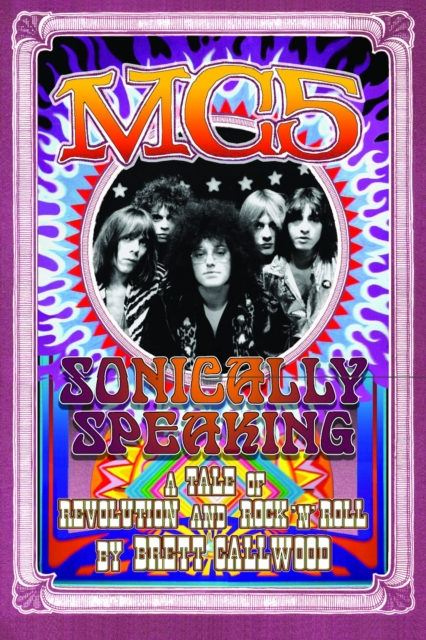
MC5: sonically speaking : a tale of revolution and rock 'n' roll
As a blizzard blankets the northeast United States, burying residents and shutting down airports, the Farrah family eagerly awaits the arrival of Eva, a cousin visiting from Lebanon after a long separation from the family. Over the course of several days, while Eva is stranded in New York City, Chehade's nuanced story unfolds.
eBook