
Catalogue Search | MBRL


Are you sure you want to remove the book from the shelf?

{{itemTitle}}
1,708
result(s) for
"MEDICAMENT"
Sort by:
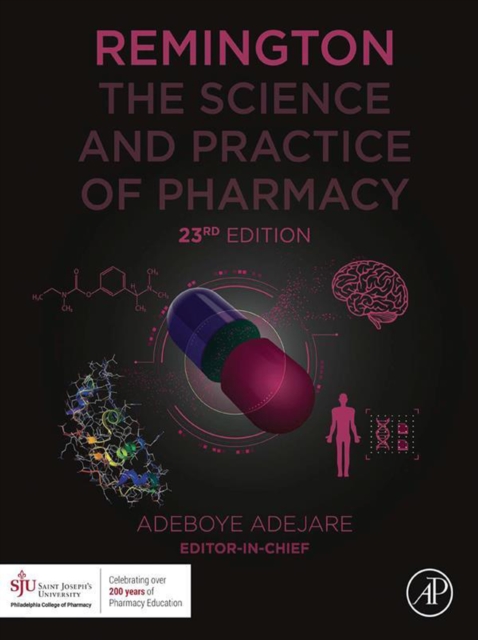
Remington
The PCP's Bicentennial EditionRemington: The Science and Practice of Pharmacy, Twenty Third Edition, offers a trusted, completely updated source of information for education, training, and development of pharmacists.
eBook

Advances in drug delivery systems for healthcare
Embracing the enhanced features of an ebook, the authors provide a primer on quantum optics for students and those wanting an introduction to the topic. Whereas standard texts employ complex mathematics and static images, the authors use interactivity to augment understanding via a visual hands-on experience. Forty interactive figures allow exploration of different themes, while multiple representations give a window on quantum dynamics both at the microscopic and macroscopic level, connecting understanding across length scales. A historical introduction and examples from modern research set these concepts firmly into both original and contemporary research context. This is an ideal text for final year undergraduate quantum optics students, and new graduate students in AMO physics, and researchers in physics and electrical/optical engineering. Part of IOP Series in Quantum Technology.
New delivery technologies, green chemistry, computational intelligence, simulation know-how and Internet of Things have risen substantially within the healthcare domain over the past two decades. This reference text offers a comprehensive overview of cutting-edge technologies such as green synthesis schemes, medical electronics, artificial intelligence, machine learning and simulation modelling, all aimed at fostering sustainable healthcare advancements. Overall, this book stands as an essential reference for individuals seeking insights into forthcoming developments within the healthcare sector. Part of IPEM-IOP Series in Physics and Engineering in Medicine and Biology.
eBook

Effect of three intracanal medicaments used in pulp regeneration on the push-out bond strength of mineral trioxide aggregate and calcium-enriched mixture: An in vitro study
Background. The bond strength of the materials used as a cervical barrier in the pulp regeneration is essential for the success of treatment. This study aimed to evaluate the effects of triple antibiotic paste (TAP), double antibiotic paste (DAP), and simvastatin as intracanal medicaments on the dislodgement resistance of mineral trioxide aggregate (MTA) and calcium-enriched mixture (CEM). Methods. A total of 160 extracted human single-rooted teeth were selected, and root canal preparation was carried out. The teeth in each group were randomly divided into four subgroups: TAP, DAP, simvastatin, and the control group (without intracanal medicament). Four weeks after placing the medicaments, it was removed by sodium hypochlorite, and MTA and CEM were placed in the coronal third of the root canals. After a week, 2-mm-thick dentin disks were prepared from the coronal third of the roots, and the push-out test was performed using a universal testing machine. The data were analyzed using two-way ANOVA and independent t-test at a significance level of 0.05. Results. Regardless of the intracanal medicament, there was no significant difference between the overall bond strength of MTA (59.3±10 MPa) and CEM (55.8±11 MPa) (P=0.6). Furthermore, there were no significant differences in bond strength between the two intracanal medicament groups and the control group (P>0.05). Conclusion. Under the limitations of the current study, DAP, simvastatin, and TAP, as intracanal medicaments, did not adversely affect the push-out bond strength of CEM and MTA.
Journal Article

Antibiofilm efficacy of a calcium silicate-based intracanal medicament against Fusobacterium nucleatum strains
This study evaluated the antibiofilm efficacy of a calcium silicate-based intracanal medicament (Bio-C Temp) against
Fusobacterium nucleatum
(
F. nucleatum
). Dentin slices (n = 88) were inoculated with
F. nucleatum
biofilms and divided into experimental groups (n = 24 each) treated with Bio-C Temp, triple antibiotic paste (TAP), or Ca(OH)
2
for 1 or 2 weeks. Untreated dentin slices exposed to saline served as a positive control, while sterile dentin slices incubated anaerobically served as a negative control. Bacterial viability was assessed using confocal laser scanning microscopy after staining with LIVE/DEAD
®
Bac
Light
™
dye. Samples treated with TAP demonstrated the highest percentage of dead bacteria (95%). The antibiofilm effect of TAP and Bio-C Temp significantly increased from Week 1 to Week 2. At Week 2, samples treated with Bio-C Temp showed a significantly higher percentage of dead bacteria (75.25%) than those treated with Ca(OH)
2
(58.65%). TAP showed superior efficacy against
F. nucleatum
biofilms. After an application time of 2 weeks, the antibiofilm efficacy of Bio-C Temp was superior to that of Ca(OH)
2
.
Journal Article

A survey of the knowledge, attitude, and awareness about the principal choice of intracanal medicaments among the general dental practitioners and nonendodontic specialists
Background: Removal of the microbial organisms from the root canal system is a prerequisite for the successful outcome of any root canal treatment. Use of an effective intracanal medicament will assist in the disinfection of the root canal system. Intracanal medicaments have been used to disinfect root canals between appointments and reduce interappointment pain. Materials and Methods: A questionnaire survey was conducted to evaluate the knowledge, attitude, and awareness about the principal choice of intracanal medicaments among general dental practitioners and nonendodontic specialists. The questionnaire consisted of 11 questions related to intracanal medicaments in Endodontics. It was distributed to 75 general dental practitioners and 75 other specialists (nonendodontists). Results: In the present study, the authors observed that the knowledge level among the study participants was moderately satisfying. However, the need for more education of the dentists with regard to the intracanal medicaments was perceived. Discussion: Correct knowledge of intracanal medicaments would help the practitioners to decide the apt material of choice as intracanal medicaments in different clinical situations. Conclusion: The present study highlighted the need for more continuing dental education programs with active participation of general practitioners and nonendodontic specialists to update themselves.
Journal Article
Efficacy of various techniques in calcium silicate-based intracanal medicament removal: a micro-CT analysis
The purpose of this study was to evaluate the efficacy of different techniques in removing calcium silicate intracanal medicament (Bio-C Temp). Forty human single-canaled premolars were randomly distributed into five groups (n = 8). All root canals were instrumented, then filled with Bio-C Temp. Following 1-week incubation, the intra-canal medicament was removed using one of five techniques according to tooth group: conventional syringe irrigation, Endo Activator, passive ultrasonic irrigation (PUI), ProTaper Universal F3 and XP-endo Finisher (XPF). Micro-CT scanning was performed before and after removal of Bio-C Temp. All techniques significantly reduced the volume of Bio-C Temp (p < 0.001) without reaching complete elimination. The percentage of Bio-C Temp removed was significantly higher in the XPF group (98.2%) compared to conventional syringe irrigation (70.6%), the Endo Activator (75.7%), and the ProTaper Universal (76.6%). There was no significant difference between the XPF and PUI (95.1%) groups. None of the removal techniques were able to completely remove Bio-C Temp from the root canal. However, XPF was the most effective method, but was not statistically significant when compared to PUI. Clinical Relevance: This study demonstrated that both XPF and PUI outperform conventional irrigation in removing Bio-C Temp intracanal medicament.
Journal Article

Size-Dependent Bioactivity of Silver Nanoparticles and Calcium Hydroxide Mixtures Against hDPSCs: An In Vitro Study
This study aimed to assess the biocompatibility and bioactivity of three different silver nanoparticles (AgNPs) and calcium hydroxide [Ca(OH)2] mixtures against human dental pulp stem cells (hDPSCs). hDPSCs were treated with one of the following medicaments: 2 nm mixture, 5 nm mixture, 10 nm mixture, Ca(OH)2 alone, and triple antibiotic paste (TAP). Cell viability was evaluated using the Cell Counting Kit-8 and LIVE/DEAD Viability/Cytotoxicity Kit. Reactive oxygen species (ROS) were quantified using the 2′,7′-dichlorofluorescein diacetate redox probe. Transforming growth factor (TGF)-β1, interleukin (IL)-1β, tumor necrosis factor (TNF)-α>, and alkaline phosphatase (ALP) were quantified using enzyme-linked immunosorbent assays. Mineralization was assessed using Alizarin Red S staining. Data were compared across groups using the Kruskal–Wallis test and within groups using the Wilcoxon signed-rank test (p < 0.05). Ca(OH)2 alone and the 10 nm mixture demonstrated the highest cell viability and lowest ROS release (p < 0.05), while the 2 nm and 5 nm mixtures resulted in decreased viability and significant morphological distortion of the cells. Ca(OH)2 alone and the 10 nm mixture comparably demonstrated the highest production of anti-inflammatory cytokine TGF-β1 (p < 0.05), the lowest production of proinflammatory cytokines IL-1β and TNF-α (p < 0.05), and the highest ALP release and mineralization (p < 0.05). Within the limitations of this in vitro study, Ca(OH)2 alone and the 10 nm mixture improved hDPSCs’ viability, proliferation, differentiation, and mineralization. Both illustrated a significantly higher anti-inflammatory response by the residing stem cell population.
Journal Article

An update on newer pulpotomy agents in primary teeth: A literature review
Primary molars with asymptomatic reversible pulpitis are commonly treated by pulpotomy procedure. Different pulpotomy materials used so far for pulpotomy that have been mentioned in the literature have been included in this article. This literature review includes all medicaments including natural alternatives. Many significant medicaments with their success rates have been mentioned in this paper. To increase the therapeutic success of pulpotomy procedure, it is necessary to identify a novel effective and preferably natural pulpotomy medicament.
Journal Article

Bortezomib-Based Therapy for Newly Diagnosed Mantle-Cell Lymphoma
The substitution of bortezomib for vincristine in R-CHOP resulted in higher rates of complete response and nearly a doubling in progression-free survival among patients with advanced mantle-cell lymphoma not eligible for stem-cell transplantation.
Mantle-cell lymphoma is an incurable, aggressive hematologic cancer with a poor prognosis (median survival, 4 to 5 years).
1
,
2
It comprises 5 to 6% of all non-Hodgkin's lymphomas, including approximately 5000 cases per year in the United States.
3
For previously untreated patients who are either ineligible or not considered for intensive chemotherapy and stem-cell transplantation, R-CHOP (rituximab, cyclophosphamide, doxorubicin, vincristine, and prednisone) is a standard of care
4
–
6
and produces complete response rates of up to 48%. However, progression-free survival is limited (median, 16.6 months).
7
The proteasome inhibitor bortezomib was initially approved for the treatment of relapsed mantle-cell lymphoma in . . .
Journal Article

Ipatasertib plus paclitaxel for PIK3CA/AKT1/PTEN-altered hormone receptor-positive HER2-negative advanced breast cancer: primary results from cohort B of the IPATunity130 randomized phase 3 trial
Purpose
PI3K/AKT pathway alterations are frequent in hormone receptor-positive (HR+) breast cancers. IPATunity130 Cohort B investigated ipatasertib–paclitaxel in PI3K pathway-mutant HR+ unresectable locally advanced/metastatic breast cancer (aBC).
Methods
Cohort B of the randomized, double-blind, placebo-controlled, phase 3 IPATunity130 trial enrolled patients with HR+ HER2-negative
PIK3CA
/
AKT1/PTEN
-altered measurable aBC who were considered inappropriate for endocrine-based therapy (demonstrated insensitivity to endocrine therapy or visceral crisis) and were candidates for taxane monotherapy. Patients with prior chemotherapy for aBC or relapse < 1 year since (neo)adjuvant chemotherapy were ineligible. Patients were randomized 2:1 to ipatasertib (400 mg, days 1–21) or placebo, plus paclitaxel (80 mg/m
2
, days 1, 8, 15), every 28 days until disease progression or unacceptable toxicity. The primary endpoint was investigator-assessed progression-free survival (PFS).
Results
Overall, 146 patients were randomized to ipatasertib–paclitaxel and 76 to placebo–paclitaxel. In both arms, median investigator-assessed PFS was 9.3 months (hazard ratio, 1.00, 95% CI 0.71–1.40) and the objective response rate was 47%. Median paclitaxel duration was 6.9 versus 8.8 months in the ipatasertib–paclitaxel versus placebo–paclitaxel arms, respectively; median ipatasertib/placebo duration was 8.0 versus 9.1 months, respectively. The most common grade ≥ 3 adverse events were diarrhea (12% with ipatasertib–paclitaxel vs 1% with placebo–paclitaxel), neutrophil count decreased (9% vs 7%), neutropenia (8% vs 9%), peripheral neuropathy (7% vs 3%), peripheral sensory neuropathy (3% vs 5%) and hypertension (1% vs 5%).
Conclusion
Adding ipatasertib to paclitaxel did not improve efficacy in
PIK3CA/AKT1/PTEN
-altered HR+ HER2-negative aBC. The ipatasertib–paclitaxel safety profile was consistent with each agent’s known adverse effects.
Trial registration
NCT03337724.
Journal Article