
Catalogue Search | MBRL


Are you sure you want to remove the book from the shelf?

{{itemTitle}}
6,095,394
result(s) for
"MERGERS"
Sort by:

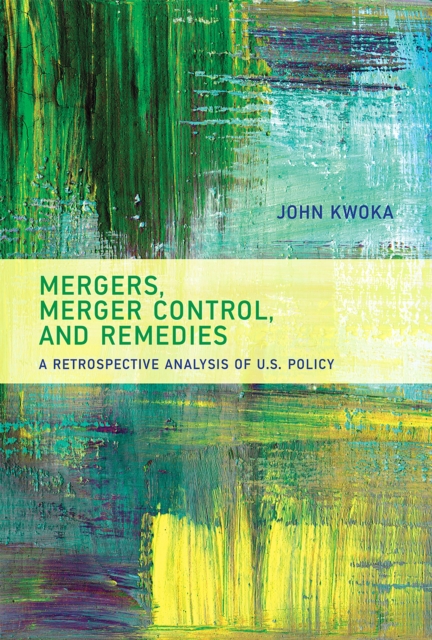
Mergers, Merger Control, and Remedies
In recent decades, antitrust investigations and cases targeting mergers -- including those involving Google, Ticketmaster, and much of the domestic airline industry -- have reshaped industries and changed business practices profoundly. And yet there has been a relative dearth of detailed evaluations of the effects of mergers and the effectiveness of merger policy. In this book, John Kwoka, a noted authority on industrial organization, examines all reliable empirical studies of the effect of specific mergers and develops entirely new information about the policies and remedies of antitrust agencies regarding these mergers. Combined with data on outcomes, this policy information enables analysis of, and creates new insights into, mergers, merger policies, and the effectiveness of remedies in preventing anticompetitive outcomes.After an overview of mergers, merger policy, and a common approach to merger analysis, Kwoka offers a detailed analysis of the studied mergers, relevant policies, and chosen remedies. Kwoka finds, first and foremost, that most of the studied mergers resulted in competitive harm, usually in the form of higher product prices but also with respect to various non-price outcomes. Other important findings include the fact that joint ventures and code sharing arrangements do not result in such harm and that policies intended to remedy mergers -- especially conduct remedies -- are not generally effective in restraining price increases. The book's uniquely comprehensive analysis advances our understanding of merger decisions and policies, suggests policy improvements for competition agencies and remedies, and points the way to future research.
eBook

Titans of industrial agriculture : how a few giant corporations came to dominate the farm sector and why it matters
\"A deeply researched book revealing how a handful of giant transnational corporations has come to dominate the farm sector, why it matters, and what might be done about it\"-- Provided by publisher
BOOK

Horizontal Mergers in Multitier Decentralized Supply Chains
The well-known economic theory predicts that consumer price will fall after a horizontal merger when the amount of marginal cost reduction from operating synergies exceeds the premerger markup of a merging firm. However, when a horizontal merger occurs in a multitier decentralized supply chain where a finite number of firms compete at each tier, we show that this result holds only when a merger occurs at the tier that acts as the leader in the supply chain. In this supply chain, a horizontal merger at any other tier will decrease consumer price when the cost reduction exceeds a certain threshold that is larger than the premerger markup. Moreover, this threshold is increasing as the supply chain gets longer and can be substantially larger than the premerger markup. When accounting for subsequent entry after a merger in long-run equilibrium, contrary to a common belief, a larger synergy from a merger does not necessarily benefit consumers more.
This paper was accepted by Yossiv Aviv, operations management.
Journal Article


The Human Factor in Mergers, Acquisitions, and Transformational Change
Balancing theory with practice, this book looks at the financial due diligence, cultural compatibility, and emotional sensitivity at various stages of the M&A and offers a practical process model. Business leaders, change agents, coaching and mentoring practitioners will find the rare combination of great interest.
eBook

Mergers, acquisitions, and strategic alliances : understanding the process
\"This book tackles the strategic, financial and procedural aspects of planning and executing mergers, acquisitions and strategic alliances. It also explores the similarities and differences between these various types of transaction and illustrates each with case studies, to help students from final year undergraduate to MBA. \"-- Provided by publisher.
Book

Corporate Innovations and Mergers and Acquisitions
Using a large and unique patent-merger data set over the period 1984 to 2006, we show that companies with large patent portfolios and low R&D expenses are acquirers, while companies with high R&D expenses and slow growth in patent output are targets. Further, technological overlap between firm pairs has a positive effect on transaction incidence, and this effect is reduced for firm pairs that overlap in product markets. We also show that acquirers with prior technological linkage to their target firms produce more patents afterwards. We conclude that synergies obtained from combining innovation capabilities are important drivers of acquisitions.
Journal Article

American Airlines, US Airways and the creation of the world's largest airline
\"The 2013 merger of American Airlines and US Airways marked a major step in the consolidation of the U.S. airline industry. A young management team that began plotting mergers a decade earlier designed a strategy to seize an industry prize and it enlisted the help of unions who engineered one of the labor movement's biggest corporate victories\"-- Provided by publisher.
Book
Target Firm-Specific Information and Acquisition Efficiency
This study investigates whether firm-specific information about targets improves acquisition efficiency. We define acquisition efficiency as the total surplus generated by an acquisition and measure it as the difference in the value of the merged firm and the sum of the two firms operating separately. We find a positive association between target firm-specific information and acquisition efficiency that is driven mainly by diversifying acquisitions. Additional evidence suggests that both the likelihood of the withdrawal of an announced acquisition and the likelihood of a future divestiture of a target decrease with target firm-specific information. Taken together, our findings suggest that the availability of this information improves merger and acquisitions efficiency.
This paper was accepted by Mary Barth, accounting
.
Journal Article