
Catalogue Search | MBRL


Are you sure you want to remove the book from the shelf?

{{itemTitle}}
741
result(s) for
"MICROSCOPIA"
Sort by:

Three-dimensional electron microscopy of macromolecular assemblies
In this book, the mathematical principles and working methods of single-particle reconstruction are described; a method designed to retrieve three-dimensional structural information from electron micrographs showing thousands of “copies” of biological molecules trapped in a thin layer of ice. This technique is uniquely suited to obtain three-dimensional images of molecular machines in different functional states, as it dispenses with the need for crystals. The book starts with an introduction of image formation in the electron microscope, which includes the definition of the contrast transfer function. Next, averaging techniques and tools for image alignment, multivariate data analysis, and classification are described. An introduction into the mathematical principles underlying reconstruction of an object from its projections is followed by detailed accounts on how projection angles are determined, and how reconstruction is done in practice. The book concludes with a chapter on interpretation of density maps reconstructed, including methods for segmentation as well as fitting and docking of atomic coordinates.
eBook

Microstructure influence on crack propagation behavior of nodular cast iron
This paper offers a comprehensive analysis of the crack propagation behavior of a specific type of Nodular Cast Iron (NCI) and its correlation with microstructural morphology. To estimate da/dN vs K curves, crack propagation tests were conducted utilizing Compact Test Specimens (CTS). Additionally, Scanning Electron Microscopy Analysis was employed to characterize the microstructure morphology on the surfaces of the fractured specimens, with specific attention to the size and distribution of graphite nodules within the ferritic matrix. The findings of the study suggest that the position from which the CTS is extracted is contingent upon the graphite distribution, which could have a noteworthy impact on the crack propagation behavior of the investigated NCI alloy. Este artículo ofrece un análisis exhaustivo del comportamiento de propagación de grietas de un tipo específico de fundición nodular (NCI) y su correlación con la morfología microestructural. Para estimar las curvas da/dN vs K, se realizaron pruebas de propagación de grietas utilizando muestras de prueba compactas (CTS). Además, se empleó análisis de microscopía electrónica de barrido para caracterizar la morfología de la microestructura en las superficies de las muestras fracturadas, con atención específica al tamaño y la distribución de los nódulos de grafito dentro de la matriz ferrítica. Los hallazgos del estudio sugieren que la posición desde la cual se extrae el CTS depende de la distribución del grafito, lo que podría tener un impacto notable en el comportamiento de propagación de grietas de la aleación NCI investigada.
Journal Article

Principles and practice of variable pressure/environmental scanning electron microscopy (VP-ESEM)
Offers a simple starting point to VPSEM, especially for new users, technicians and students containing clear, concise explanations Crucially, the principles and applications outlined in this book are completely generic: i.e.applicable to all types of VPSEM, irrespective of manufacturer.
eBook

Upgrade and Modification of a Machine for Micro-Abrasion Wear Testing in Simulated Biological Environments with Oscillatory Motion
Aiming to evaluate the useful life of biomaterials used in joint prostheses, this study performed different wear tests in stainless steel 316L, a biomaterial used in hip joint replacements. The tests were carried out in a dry medium, with the help of an equipment that was improved regarding some of its characteristics and allows conducting wear tests via the contact of two bodies, one of them being the biomaterial under study and the other one a sphere of a harder material. For the evaluation, a device was developed to change the rotation of the sphere, varying the angle it traveled and the frequency with which it did it. Once the improvements were made to the aforementioned equipment, tests were conducted which involved obtaining wear tracks in order to observe the surface morphology through scanning electron microscopy (SEM) and to measure the length and the width of the tracks, with which the biomaterial wear coefficient was obtained for each case studied. In these tests, the wear coefficient showed variations with respect to the sphere’s angle of travel.
Journal Article

Structure and properties of the cellulose microfibril
The current structural models of the cellulose microfibril as well as its mechanical and thermal properties are reviewed. The cellulose microfibril can be considered as a single thin and long crystalline entity with highly anisotropic physical properties. The contribution and limit of different methods employed such as electron microscopy, infrared spectroscopy, X-ray scattering and diffraction, solid state nuclear magnetic resonance spectroscopy, and molecular modeling are also discussed.
Journal Article

Florisgrafía: Interacciones microscópicas entre tintas y materiales orgánicos
Este estudio explora la florisgrafía como una práctica experimental en la intersección del arte, la ciencia y la tecnología. A través de la microscopía óptica y de fluorescencia, se analizan las interacciones entre tintas y materiales orgánicos en la bioimpresión sobre pétalos de rosa. Se examinan los cambios estructurales de la epidermis, la absorción de pigmentos y la modificación de la morfología celular debido a la aplicación de solventes y presión. Los hallazgos sugieren que la florisgrafía no solo amplía las posibilidades gráficas, sino que también redefine los límites entre materialidad, temporalidad y representación en el arte contemporáneo.
Journal Article

Protein N-glycosylation, protein folding, and protein quality control
Quality control of protein folding represents a fundamental cellular activity. Early steps of protein N-glycosylation involving the removal of three glucose and some specific mannose residues in the endoplasmic reticulum have been recognized as being of importance for protein quality control. Specific oligosaccharide structures resulting from the oligosaccharide processing may represent a glycocode promoting productive protein folding, whereas others may represent glyco-codes for routing not correctly folded proteins for dislocation from the endoplasmic reticulum to the cytosol and subsequent degradation. Although quality control of protein folding is essential for the proper functioning of cells, it is also the basis for protein folding disorders since the recognition and elimination of non-native conformers can result either in loss-of-function or pathological-gain-of-function. The machinery for protein folding control represents a prime example of an intricate interactome present in a single organelle, the endoplasmic reticulum. Here, current views of mechanisms for the recognition and retention leading to productive protein folding or the eventual elimination of misfolded glycoproteins in yeast and mammalian cells are reviewed.
Journal Article

Intrapuparial Development of Hemilucilia semidiaphana (Diptera: Calliphoridae) and Its Use in Forensic Entomology
In forensic entomology, the minimum postmortem interval (PMImin) estimative is usually based on the oldest immature recovered from a local of death. The time spent by fly immatures in the intrapuparial period comprises more than 50% of their complete life cycles. An accurate estimate of the duration of this period will improve PMImin estimates. The blow fly Hemilucilia semidiaphana (Rondani 1850) was found in six criminal cases in the city of Curitiba. Even though there is data on the morphology of the larval instars and developmental rate of H. semidiaphana, the intrapuparial period has not been investigated. Here, we provide a detailed description of the intrapuparial morphological changes of H. semidiaphana, which might be useful to estimate minimum PMI. Samples of H. semidiaphana in the intrapuparial period were obtained from immatures reared on an artificial diet in incubators adjusted to 25°C or 20°C temperature regimes. Blow fly puparia of H. semidiaphana were fixed at intervals of 3 and 6 h until emergence of the adult. The external morphological traits of sampled immatures were analyzed using light microscopy. Our analysis of the intrapuparial period of H. semidiaphana provided 21 traits from which nine were age informative. These nine characteristics divide the developmental time (144 h at 25°C and 192 h at 20°C) into smaller sections. The developmental data provided, together with the time line allows a practical way to make interspecific comparisons as well as to estimate the age of H. semidiaphana based on the intrapuparial development.
Journal Article
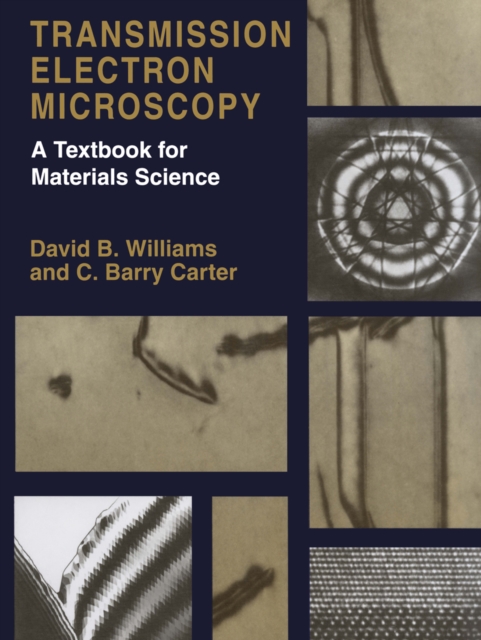
Transmission electron microscopy: a textbook for materials science
Electron microscopy has revolutionized our understanding the extraordinary intellectual demands required of the mi- of materials by completing the processing-structure-prop- croscopist in order to do the job properly: crystallography, erties links down to atomistic levels. It now is even possible diffraction, image contrast, inelastic scattering events, and to tailor the microstructure (and meso structure ) of materials spectroscopy. Remember, these used to be fields in them- to achieve specific sets of properties; the extraordinary abili- selves. Today, one has to understand the fundamentals ties of modem transmission electron microscopy-TEM- of all of these areas before one can hope to tackle signifi- instruments to provide almost all of the structural, phase, cant problems in materials science. TEM is a technique of and crystallographic data allow us to accomplish this feat. characterizing materials down to the atomic limits. It must Therefore, it is obvious that any curriculum in modem mate- be used with care and attention, in many cases involving rials education must include suitable courses in electron mi- teams of experts from different venues. The fundamentals croscopy. It is also essential that suitable texts be available are, of course, based in physics, so aspiring materials sci- for the preparation of the students and researchers who must entists would be well advised to have prior exposure to, for carry out electron microscopy properly and quantitatively.
eBook

High-Resolution Electron Microscopy
This book covers both practical and theoretical aspects of atomic resolution transmission electron microscopy. The discovery of the carbon nanotube, the three-dimensional imaging of the ribosome, and the imaging of a single foreign atom inside a thin crystal by energy-filtered transmission electron microscopy have all demonstrated the immense power of this technique. The recent development of aberration-correction devices has brought the spatial resolution of the method below one Angstrom. The emphasis throughout is on a clear presentation of fundamental concepts, and practical advice. The chapters review simple electron optics, phase contrast theory, coherence theory, and imaging theory for thin crystals. The multiple scattering theory is given in full, and the relationship between the various formulations (Bloch-wave, multislice, scattering matrix, Howie–Whelan equations, phase grating etc) is explained. Applications in biology and materials science are covered, with discussions of radiation damage, sample preparation, image processing and super-resolution, electron holography, and aberration correction. The theory of high-angle annular dark field Z-contrast imaging by scanning transmission electron microscopy is given in full. Additional chapters are devoted to electron sources and detectors, fault diagnosis, experimental methods and associated techniques such as channelling effects in X-ray microanalysis, microdiffraction, cathodoluminescence, environmental microscopy and electron energy-loss spectroscopy.
eBook