
Catalogue Search | MBRL


Are you sure you want to remove the book from the shelf?

{{itemTitle}}
8,236
result(s) for
"MODERN MUSIC"
Sort by:


Bringing 'Musicque into the tableture': machine-learning models for polyphonic transcription of 16th-century lute tablature
A large corpus of music written in lute tablature, spanning some three-and-a-half centuries, has survived. This music has so far escaped systematic musicological research because of its notational format. Being a practical instruction for the player, tablature reveals very little of the polyphonic structure of the music it encodes—and is therefore relatively inaccessible to non-specialists. Automatic polyphonic transcription into modern music notation can help unlock the corpus to a larger audience, and thus facilitate musicological research. In this study we present four variants of a machine-learning model for voice separation and duration reconstruction in 16th-century lute tablature. These models are intended to form the heart of an interactive system for automatic polyphonic transcription that can assist users in making editions tailored to their own preferences. Additionally, such models can provide new methods for analysing different aspects of polyphonic structure. We have experimented with modelling only voice and modelling voice and duration simultaneously, applying each in a forward- and in a backward-processing approach. The models are evaluated on a dataset containing 15 three- and four-voice intabulations. Each processing approach has its advantages, and the results vary between the models. With accuracy rates between approximately 80 and 90 per cent, both for voice prediction and for duration prediction, the best models' performance is promising. Even in this early stage of the research, such models yield a useful initial transcription system.
Journal Article


'NEVER OUT OF DATE AND NEVER MODERN': AESTHETIC DEMOCRACY, RADICAL MUSIC CRITICISM, AND 'THE SACKBUT'
Despite historical attempts to construe the practices of musicology in terms of music criticism, there is still a marked reticence to include essays in music criticism in the history of the discipline, or to treat critical thought on music with the same seriousness and contemporary relevance with which, for example, literary studies treats historical literary criticism. Far from being mere ephemera, early twentieth-century discussions about the proper function of the music critic in evaluating modern music became a means by which writers explored and debated some of the most significant concerns of the day. Central to these discussions were questions about how to drive a middle way between tradition and innovation, and the possibility of genius and its relationship with processes of history and culture. By exploring the notion of 'aesthetic democracy' and drawing from contemporary aesthetic/anti-aesthetic debates in the humanities, this article provides a template for the exploration of the interaction between historical ideas about music criticism and these broader questions of historiography and aestheticism. It does so by examining the work of a collection of radical music critics published in the formative issues of the English music journal The Sackbut during 1920–1. The aim is to highlight ways in which the current 'aesthetic turn' and its attendant claims regarding autonomy, self-determination, history, and ideology were prefigured by inter-war discussions about the reform of music criticism in Britain.
Journal Article

Immanence and immersion : on the acoustic condition in contemporary art
\"A critique of immersive aesthetics in the arts, with particular emphasis placed upon sound and new media art\"-- Provided by publisher.
Book

Música moderna y divulgación cultural en la revista de la Radio Nacional de Colombia, 1960
This paper explores the notion of modernism, based on a series of articles published by the periodical Boletín de programas de la Radiodifusora Nacional de Colombia between 1959 and 1961 under the title Introduction to modern music. The discursive configuration that emerges from its texts, images and political environment in the middle of the last century, allows us to observe how in its pages various visions of what it means to be a culturally modern nation were put in tension, particularly those involving contemporary music, technological advances and the integration of popular traditions. El presente artículo explora la noción de modernismo a partir de una serie de textos publicados por la publicación periódica Boletín de programas de la Radiodifusora Nacional de Colombia entre 1959 y 1961 bajo el título de Introducción a la música moderna. La configuración discursiva que se desprende de sus textos, imágenes y el entorno político a mediados del siglo pasado, permite observar cómo en sus páginas se ponían en tensión diversas visiones de lo que significa ser una nación culturalmente moderna, en particular las que comprometen la música contemporánea, los avances tecnológicos y la integración de las tradiciones populares.
Journal Article

Into the night : cabarets and clubs in modern art
\"Ranging from the 1880s to the 1960s, this richly illustrated history of cafâes, cabarets and clubs in modern art includes both famed and little-known sites of the avant-garde. Organised by city, 'Into the Night' presents an exhilarating journey into a selection of social spaces across the world, from New York to Tehran, Paris, Mexico City, London, Berlin, Vienna, Ibadan and beyond. Bringing together painting, drawing, photography, sculpture, performance, film and archival material, this publication highlights the work of artists, performers, designers, musicians and writers such as Henri de Toulouse-Lautrec, Loèie Fuller, Josef Hoffmann, Wyndham Lewis and Giacomo Balla, as well as Ramâon Alva de la Canal, Theo van Doesburg, Sophie Taeuber-Arp, Jeanne Mammen, Anita Berber, Aaron Douglas, Jacob Lawrence, Colette Omogbai, Twins Seven-Seven and Parviz Tanavoli. Fourteen newly commissioned essays, accompanied by numerous artworks and rarely seen ephemera, explore how these unique spaces fostered a spririt of experimentation and collaboration, sparking new forms of artistic expression.\" --publisher's description, lower cover.
Book
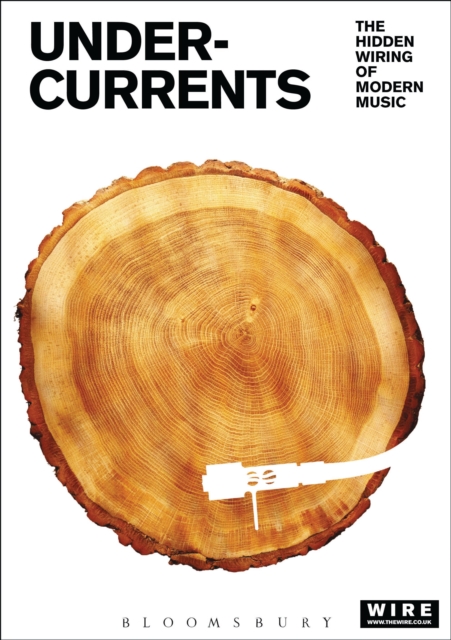
Undercurrents
For the last twenty years The Wire has fearlessly bypassed fashion in it's search to expose the most innovative, radical, and compelling music from every genre all across the world. As listeners have grown increasingly eclectic and adventurous in their tastes, The Wire has emerged as the most authoritative source on modern music.In Undercurrents some of the best music writers of our time uncover the hidden wiring of the past century's most influential music. Ian Penman discusses how the microphone transformed the human voice and made phantom presences of great singers such as Billie Holiday, Robert Johnson, and Brian Wilson. Christoph Cox demonstrates how the pioneers of live electronic music, the West Coast ensemble Sonic Arts Union, redefined virtuosity for the electronic age. Philip Smith and Peter Shapiro examine Harry Smith's Smithsonian Anthology of American Folk Music, which led to a massive reappraisal of musical values that went far beyond the folk music revival.>Music explored in Undercurrents ranges through avant rock, jazz, hiphop, electronica, global music, and contemporary \"classical.\"
eBook

Honest bodies : revolutionary modernism in the dances of Anna Sokolow
\"A critical analysis of the work of choreographer Anna Sokolow\"-- Provided by publisher.
Book

The role of a teacher in modern music education: can a student learn music with the help of modernized online educational technologies without teachers?
Music education is aimed at the development of musical abilities, emotionality during the performance of musical compositions, and all-round development. The aim of the article is to determine the possibilities of schoolchildren obtaining musical knowledge with the help of modernized online technologies, as well as to determine the importance of a teacher in modern music education. The indicators were determined by a questionnaire, the data collection for which was done using a Likert scale. Initially, the paper identified approaches to teaching students prior to the study. The results showed that more emphasis was placed on the use of book-based theoretical materials (46%), which allowed only 21% of students to achieve a high level of knowledge. The use of information technology was common among 9% of students, which allowed 76% of students to achieve high results, which is based on acquiring knowledge in a shorter time. The authors concluded that it is necessary to provide improved stages of learning, which will expand the use of modernized technology. Work on the theoretical basics of piano playing can be implemented with the Vivace app; Flow app helps one to work on sound features; Functional Ear Trainer app is about developing rhythm and hearing; and Chordana Play app helps one to work on a piece of music. After training, by calculating the coefficient of effectiveness, it was found that students in group #1 (0.791), who mastered the skills of playing the piano according to the developed training stages and without a teacher, showed the quality of acquired knowledge lower than students in group #2 (0.853), who were trained under the direct influence of a teacher. The data obtained confirm the high quality of learning in the groups, as the educational process was built with the correct distribution of workload and providing opportunities for the development of musical skills. It is established that the students of group 1 to a greater extent developed independence (29%), and group 2 was good at the accuracy of musical tasks’ sequence (28%). The practical significance of the work is based on the possibility of transforming the music learning system with the help of modern technology. Prospects for the study can be based on a comparison of the quality of teaching the piano and vocal training, excluding the participation of a teacher in the learning process.
Journal Article