
Catalogue Search | MBRL


Are you sure you want to remove the book from the shelf?

{{itemTitle}}
19,006
result(s) for
"MOSAICS"
Sort by:

Making mosaics
Learn how to make mosaics in this volume of Sally Henry's Make your own art series.
Book

Development and Application of Attenuated Plant Viruses as Biological Control Agents in Japan
In 1929, it was reported that yellowing symptoms caused by a tobacco mosaic virus (TMV) yellow mosaic isolate were suppressed in tobacco plants that were systemically infected with a TMV light green isolate. Similar to vaccination, the phenomenon of cross-protection involves a whole plant being infected with an attenuated virus and involves the same or a closely related virus species. Therefore, attenuated viruses function as biological control agents. In Japan, many studies have been performed on cross-protection. For example, the tomato mosaic virus (ToMV)-L11A strain is an attenuated isolate developed by researchers and shows high control efficiency against wild-type ToMV in commercial tomato crops. Recently, an attenuated isolate of zucchini yellow mosaic virus (ZYMV)-2002 was developed and registered as a biological pesticide to control cucumber mosaic disease. In addition, attenuated isolates of pepper mild mottle virus (PMMoV), cucumber mosaic virus (CMV), tobacco mild green mosaic virus (TMGMV), melon yellow spot virus (MYSV), and watermelon mosaic virus (WMV) have been developed in Japan. These attenuated viruses, sometimes called plant vaccines, can be used not only as single vaccines but also as multiple vaccines. In this review, we provide an overview of studies on attenuated plant viruses developed in Japan. We also discuss the application of the attenuated strains, including the production of vaccinated seedlings.
Journal Article
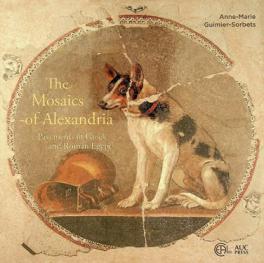
Mosaics of Alexandria : pavements of Greek and Roman Egypt
\"The art of the mosaic was developed by the Greeks, notably within the royal court of Macedonia, and was initially unknown to the Egyptians. Macedonian mosaicists then established busy workshops in the capital, Alexandria, and in the new towns of Greek Egypt. Under the stimulus of commissions from the Ptolemaic court, these workshops soon showed that they were capable of innovation. Beginning with pebbles, they then used tesserae of different sizes, and adopted new materials (glass, faience, paint) in order to transpose onto the floor images from grand paintings, which was the major art form of the time and was characterized by the vivid use of color. Alexandrian mosaicists were at the forefront of creativity during the Hellenistic period and their influence spread around the Mediterranean. After the Roman conquest of Egypt they adapted to the tastes of their new sponsors and to changes in architecture and were able to retain an important place within this art as it developed across the entire empire, in Rome and from east to west. The Mosaics of Alexandria provides the first overview of the mosaics and pavements of Egypt that were created between the end of the fourth century BC and the sixth century AD. It presents a selection of some seventy mosaics and pavements from Alexandria and Greco-Roman Egypt. Generally little known and more often than not unpublished, these works are illustrated here in full color, some for the first time. The aim is to better understand the artistic and artisanal production of a type of decoration that played an important role within the living environment of the ancients.\"-- Provided by publisher.
Book

OCCURRENCES OF WHEAT CURL MITE ACERIA TOSICHELLA KEIFER 1969 (ERIOPHYIDAE) AND THE ASSOCIATED VIRUSES, (WSMV, HPWMoV, TriMV) IN IRAQ
This study was aimed to investigate the significant wheat yield losses in northern and central Iraq. The cause of these losses was examining the presence of wheat curl mite Aceria tosichella and three viruses vectored by this species – Wheat streak mosaic virus (WSMV), High Plains wheat mosaic virus (HPWMoV), and Triticum mosaic virus (TriMV). Mite specimens were collected from Erbil, Mosul, and Baghdad over three years (2020-2022) and identified using morphological characterization and DNA sequencing of the ITS region. Virus presence was determined using Double Antibody Sandwich-Enzyme-Linked Immunosorbent Assay (DAS-ELISA). Mites were identified conclusively as A. tosichella, providing the first record of this species in Iraq. All three viruses were found to be present, with WSMV having the largest presence as it was detected in 99.56%, then HPWMoV (79.5%) of mite colonies. This is the first record of HPWMoV anywhere in Eurasia besides Ukraine and its widespread presence in Iraq in all three sampled provinces. TriMV was detected only in Erbil. To date this virus has been recorded only in North America and its limited presence in Iraq. The confirmed presence of A. tosichella and three vectored-viruses in Iraq are all new records and critical information for reducing wheat yield losses in this country.
Journal Article


Applicability of crAssphage, pepper mild mottle virus, and tobacco mosaic virus as indicators of reduction of enteric viruses during wastewater treatment
This study was conducted to evaluate the applicability of crAssphage, pepper mild mottle virus (PMMoV), and tobacco mosaic virus (TMV) as indicators of the reduction of human enteric viruses during wastewater treatment. Thirty-nine samples were collected from three steps at a wastewater treatment plant (raw sewage, secondary-treated sewage, and final effluent) monthly for a 13-month period. In addition to the three indicator viruses, eight human enteric viruses [human adenoviruses, JC and BK polyomaviruses, Aichi virus 1 (AiV-1), enteroviruses, and noroviruses of genogroups I, II, and IV] were tested by quantitative PCR. Indicator viruses were consistently detected in the tested samples, except for a few final effluents for crAssphage and TMV. The mean concentrations of crAssphage were significantly higher than those of most tested viruses. The concentrations of crAssphage in raw sewage were positively correlated with the concentrations of all tested human enteric viruses (
p
<0.05), suggesting the applicability of crAssphage as a suitable indicator to estimate the concentrations of human enteric viruses in raw sewage. The reduction ratios of AiV-1 (1.8 ± 0.7 log
10
) were the lowest among the tested viruses, followed by TMV (2.0 ± 0.3 log
10
) and PMMoV (2.0 ± 0.4 log
10
). Our findings suggested that the use of not only AiV-1 and PMMoV but also TMV as indicators of reductions in viral levels can be applicable during wastewater treatment.
Journal Article


Sugarcane Mosaic Disease: Characteristics, Identification and Control
Mosaic is one of the most important sugarcane diseases, caused by single or compound infection of Sugarcane mosaic virus (SCMV), Sorghum mosaic virus (SrMV), and/or Sugarcane streak mosaic virus (SCSMV). The compound infection of mosaic has become increasingly serious in the last few years. The disease directly affects the photosynthesis and growth of sugarcane, leading to a significant decrease in cane yield and sucrose content, and thus serious economic losses. This review covers four aspects of sugarcane mosaic disease management: first, the current situation of sugarcane mosaic disease and its epidemic characteristics; second, the pathogenicity and genetic diversity of the three viruses; third, the identification methods of mosaic and its pathogen species; and fourth, the prevention and control measures for sugarcane mosaic disease and potential future research focus. The review is expected to provide scientific literature and guidance for the effective prevention and control of mosaic through resistance breeding in sugarcane.
Journal Article


A Viral Satellite RNA Induces Yellow Symptoms on Tobacco by Targeting a Gene Involved in Chlorophyll Biosynthesis using the RNA Silencing Machinery
Symptoms on virus-infected plants are often very specific to the given virus. The molecular mechanisms involved in viral symptom induction have been extensively studied, but are still poorly understood. Cucumber mosaic virus (CMV) Y satellite RNA (Y-sat) is a non-coding subviral RNA and modifies the typical symptom induced by CMV in specific hosts; Y-sat causes a bright yellow mosaic on its natural host Nicotiana tabacum. The Y-sat-induced yellow mosaic failed to develop in the infected Arabidopsis and tomato plants suggesting a very specific interaction between Y-sat and its host. In this study, we revealed that Y-sat produces specific short interfering RNAs (siRNAs), which interfere with a host gene, thus inducing the specific symptom. We found that the mRNA of tobacco magnesium protoporphyrin chelatase subunit I (ChlI, the key gene involved in chlorophyll synthesis) had a 22-nt sequence that was complementary to the Y-sat sequence, including four G-U pairs, and that the Y-sat-derived siRNAs in the virus-infected plant downregulate the mRNA of ChlI by targeting the complementary sequence. ChlI mRNA was also downregulated in the transgenic lines that express Y-sat inverted repeats. Strikingly, modifying the Y-sat sequence in order to restore the 22-nt complementarity to Arabidopsis and tomato ChlI mRNA resulted in yellowing symptoms in Y-sat-infected Arabidopsis and tomato, respectively. In 5'-RACE experiments, the ChlI transcript was cleaved at the expected middle position of the 22-nt complementary sequence. In GFP sensor experiments using agroinfiltration, we further demonstrated that Y-sat specifically targeted the sensor mRNA containing the 22-nt complementary sequence of ChlI. Our findings provide direct evidence that the identified siRNAs derived from viral satellite RNA directly modulate the viral disease symptom by RNA silencing-based regulation of a host gene.
Journal Article