
Catalogue Search | MBRL


Are you sure you want to remove the book from the shelf?

{{itemTitle}}
28
result(s) for
"Macedonia Kings and rulers Biography."
Sort by:

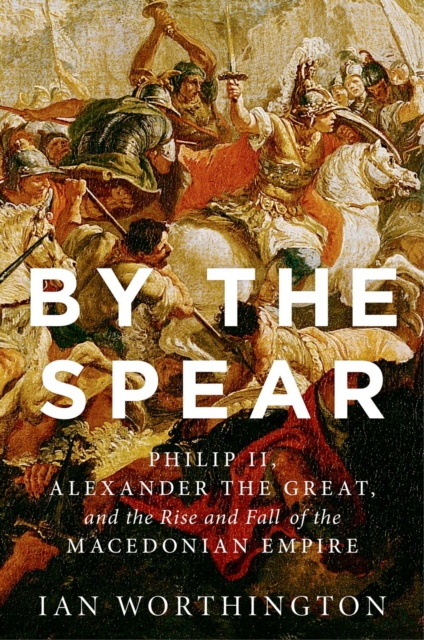
By the spear : Philip II, Alexander the Great, and the rise and fall of the Macedonian empire
Alexander the Great, arguably the most exciting figure from antiquity, waged war as a Homeric hero and lived as one, conquering native peoples and territories on a superhuman scale. From the time he invaded Asia in 334 to his death in 323, he expanded the Macedonian empire from Greece in the west to Asia Minor, the Levant, Egypt, Central Asia and \"India\" (Pakistan and Kashmir) in the east. Although many other kings and generals forged empires, Alexander produced one that was without parallel, even if it was short-lived. And yet, Alexander could not have achieved what he did without the accomplishments of his father, Philip II (r. 359-336). It was Philip who truly changed the course of Macedonian history, transforming a weak, disunited, and economically backward kingdom into a military powerhouse. A warrior king par excellence, Philip left Alexander with the greatest army in the Greek world, a centralized monarchy, economic prosperity, and a plan to invade Asia. For the first time, By the Spear offers an exhilarating military narrative of the reigns of these two larger-than-life figures in one volume. Ian Worthington gives full breadth to the careers of father and son, showing how Philip was the architect of the Macedonian empire, which reached its zenith under Alexander, only to disintegrate upon his death. By the Spear also explores the impact of Greek culture in the East, as Macedonian armies became avatars of social and cultural change in lands far removed from the traditional sphere of Greek influence. In addition, the book discusses the problems Alexander faced in dealing with a diverse subject population and the strategies he took to what might be called nation building, all of which shed light on contemporary events in culturally dissimilar regions of the world. The result is a gripping and unparalleled account of the role these kings played in creating a vast empire and the enduring legacy they left behind.
eBook

Philip II of Macedonia
Alexander the Great is probably the most famous ruler of antiquity, and his spectacular conquests are recounted often in books and films. But what of his father, Philip II? This biography brings Philip to life, exploring the details of his life and legacy.
Book
Brill's Companion to the Reception of Alexander the Great
Brill's Companion to the Reception of Alexander the Great offers a considerable range of topics, of interest to students and academics alike, in the long tradition of this subject's significant impact, across a sometimes surprising and comprehensive variety of areas. Arguably no other historical figure has cast such a long shadow for so long a time. Every civilisation touched by the Macedonian Conqueror, along with many more that he never imagined, has scrambled to \"own\" some part of his legacy. This volume canvasses a comprehensive array of these receptions, beginning from Alexander's own era and journeying up to the present, in order to come to grips with the impact left by this influential but elusive figure.
eBook

Dividing the spoils : the war for Alexander the Great's empire
\"Dividing the spoils\" revives the memory of Alexander's Successors, whose fame has been dimmed only because they stand in his enormous shadow. In fact, Alexander left things in a mess at the time of his death, with no guaranteed succession, no administration in place suitable for such an enormous realm, and huge untamed areas both bordering and within his 'empire'. The Successors consolidated the Conqueror's gains. Their competing ambitions, however, meant that consolidation inevitably led to the break-up of the empire.
Book

Curtius Rufus, Histories of Alexander the Great, Book 10
A translation, with detailed commentary, of Book 10 of Curtius Rufus' Histories, a major Roman source on the end of the reign of Alexander the Great. The Introduction establishes a profile of Curtius, and his agenda as a historian. Both translation and commentary are designed for the reader without Latin.
eBook


Dividing the Spoils
The story of one of the great forgotten wars of history, Dividing the Spoils serves up a fast-paced narrative that revives the memory of the Successors of Alexander and their bloody, forty-year struggle to divide his empire. Drawing on a wide range of historical materials, Robin Waterfield illuminates the actions of the Successors--battle-tested companions of Alexander such as Ptolemy, Perdiccas, Seleucus, and Antigonus the One-Eyed--as he provides the first account that makes complete sense of this highly complex period.
eBook

Philip and Alexander : kings and conquerors
\"Alexander the Great's conquests staggered the world. He led his army across thousands of miles, from northern Greece to modern Pakistan, overthrowing the greatest empires of his time and building a new one in their place. He led from the front and was often wounded. He claimed to be the son of a god, but he was actually the son of Philip II. In Philip and Alexander: Kings and Conquerors, classical historian Adrian Goldsworthy argues that without the work and influence of his father, it is very doubtful that Alexander would have achieved so much. Philip II of Macedon is often remembered as an old man, one-eyed and lame from wounds. But he was young and inexperienced when he came to power. Philip inherited a minor kingdom that was on the verge of being dismembered. He succeeded in making Macedonia dominant throughout Greece and preparing Alexander to lead his army into war against Persia. Philip, Goldsworthy shows, created the armies that won Alexander's victories. A bold new interpretation, Philip and Alexander will be the definitive dual biography of two men who together reshaped the ancient world.\"-- Provided by publisher.
BOOK
Antigonus II Gonatas
Antigonus Gonatas assumed the title of King of Macedonia in 283 BC; he became the undisputed ruler of Macedonia in 276 BC and reigned for more than forty years.Blunt, honest and tenacious, Antigonus won not only Macedonia, but also its people.Pragmatic and occasionally ruthless, he was a well-educated man with a keen interest in philosophy.
eBook