
Catalogue Search | MBRL


Are you sure you want to remove the book from the shelf?

{{itemTitle}}
17
result(s) for
"Machiavelli, Niccolò, 1469-1527 Political and social views."
Sort by:

The Cambridge companion to Machiavelli
\"Niccolo Machiavelli (1469-1527) is the most famous and controversial figure in the history of political thought and one of the iconic names of the Renaissance. The Cambridge Companion to Machiavelli brings together sixteen original essays by leading experts, covering his life, his career in Florentine government, his reaction to the dramatic changes that affected Florence and Italy in his lifetime, and the most prominent themes of his thought, including the founding, evolution, and corruption of republics and principalities, class conflict, liberty, arms, religion, ethics, rhetoric, gender, and the Renaissance dialogue with antiquity. In his own time Machiavelli was recognized as an original thinker who provocatively challenged conventional wisdom.\"--Provided by publisher.
BOOK
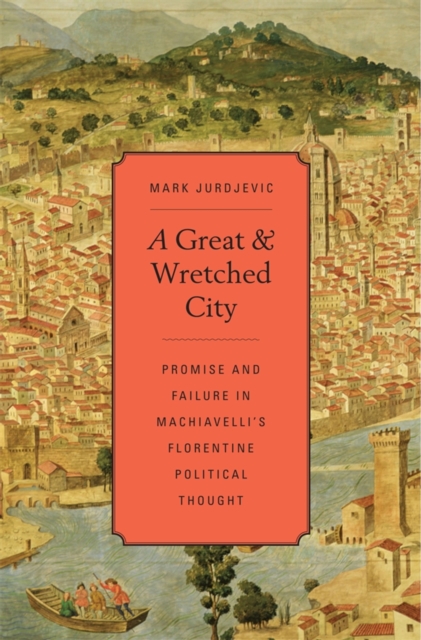
A great and wretched city : promise and failure in Machiavelli's Florentine political thought
Dispelling the myth that Florentine politics offered only negative lessons, Mark Jurdjevic shows that significant aspects of Machiavelli's political thought were inspired by his native city. Machiavelli's contempt for Florence's shortcomings was a direct function of his considerable estimation of the city's unrealized political potential.
eBook

Machiavelli and the politics of democratic innovation
This book critically reevaluates the political thought of Niccolò Machiavelli, demonstrating the extent to which he can be seen to formulate a unique ethical foundation for democratic practice that is grounded in the creative orientation of all individuals.
BOOK

The Cambridge Companion to Machiavelli
Niccolò Machiavelli (1469–1527) is the most famous and controversial figure in the history of political thought and one of the iconic names of the Renaissance. The Cambridge Companion to Machiavelli brings together sixteen original essays by leading experts, covering his life, his career in Florentine government, his reaction to the dramatic changes that affected Florence and Italy in his lifetime, and the most prominent themes of his thought, including the founding, evolution, and corruption of republics and principalities, class conflict, liberty, arms, religion, ethics, rhetoric, gender, and the Renaissance dialogue with antiquity. In his own time Machiavelli was recognized as an original thinker who provocatively challenged conventional wisdom. With penetrating analyses of The Prince, Discourses on Livy, Art of War, Florentine Histories, and his plays and poetry, this book offers a vivid portrait of this extraordinary thinker as well as assessments of his place in Western thought since the Renaissance.
eBook

Machiavelli on war
\"An interpretation of war and foreign affairs in Machiavelli's writings\"-- Provided by publisher.
BOOK
Shakespeare between Machiavelli and Hobbes
\"Shakespeare between Machiavelli and Hobbes explores Shakespeare's political outlook by comparing some of the playwright's best-known works to the works of Italian political theorist Niccolao Machiavelli and English social contract theorist Thomas Hobbes. This ultimately reveals the materialist principles that underpin Shakespeare's imaginary states.\"--
eBook

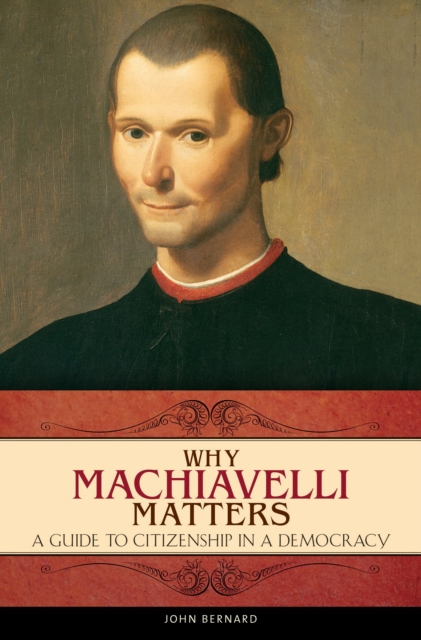
Why Machiavelli Matters
Machiavelli (1469-1527) is the seminal figure in early modern intellectual history for those living, or wishing to live, in a functional democracy. What Machiavelli is primarily about, and what makes him indispensable to those of us living in and struggling to preserve democracy in America, is the sum of individual and collective qualities required of a citizen, or what he termed virtu: a host of traits ranging from manliness to boldness, ingenuity, excellence, self-esteem, and even stoic resignation. In a narrative spanning Machiavelli's life and work as one of the world's most fascinating philosophers, Bernard illuminates for the modern reader just how relevant his insights are to our own evolving debate on the appropriate relations between religion and politics, church and state. Besides offering a detailed sketch of Machiavelli as a chancellor in the Italian Soderini Republic (1498-1512), this book examines the man's political philosophy, particularly his complex view of republics and principalities, in The Prince, the Discourses, and the Florentine Histories. It also establishes the importance of Machiavelli's writing as it evolved during his exile, especially in the reflexive passages of his plays Mandragola and Clizia. The book concludes with the potential uses of Machiavellism in 21st-century mass democracies, as well as presenting ways in which his legacy lives on in our own activities as citizens in a democracy.
eBook

Machiavelli’s Art of Politics
In Machiavelli's Art of Politics Alejandro Bárcenas offers a reexamination of Niccolò Machiavelli's political thought in order to propose a concise and historically accurate portrayal of his ideas and intellectual context.
eBook